10 citations
,
November 2024 in “Animals” More research is needed to improve wool and cashmere quality through genetics.
 9 citations
,
March 2022 in “Antioxidants”
9 citations
,
March 2022 in “Antioxidants” Synthetic antioxidants are effective, cheap, and stable, with some like zinc and cholecalciferol reducing child and cancer deaths, but the safety of additives like BHA, BHT, TBHQ, and PEG needs more research.
 April 2016 in “Journal of The American Academy of Dermatology”
 A woman's skin symptoms led to a diagnosis of systemic AL amyloidosis, but she died from sepsis shortly after.
Minoxidil can cause hair to turn yellow.
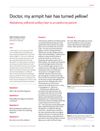
A 15-year-old boy's smelly, yellow armpit hair improved with clindamycin treatment.
 1 citations
,
May 2023 in “Cutis”
1 citations
,
May 2023 in “Cutis” Eating disorders can cause skin problems, which may help with early diagnosis and treatment.
1 citations
,
January 2014 in “Indian journal of dermatology, venereology, and leprology” Papular mucinosis can cause eyebrow hair loss, but treatment can lead to regrowth.
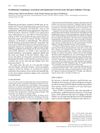
January 1962 in “Archives of Dermatology” A 5-year-old girl has lipoid proteinosis, causing voice issues, hair thinning, skin lesions, and tongue movement problems.
 17 citations
,
January 2010 in “Acta Dermato Venereologica”
17 citations
,
January 2010 in “Acta Dermato Venereologica” EGFR inhibitors can cause yellowish skin eruptions.
4 citations
,
January 2015 in “Dermatology Online Journal” Smoking can cause yellowing of upper lip hair.
13 citations
,
January 2018 in “Skin Appendage Disorders” Dermoscopy improves diagnosis and treatment planning for trichostasis spinulosa.
6 citations
,
March 2020 in “Anais Brasileiros de Dermatologia” Thyroid disease can cause skin and hair changes, treatable with levothyroxine.
1 citations
,
August 1992 in “Proceedings annual meeting Electron Microscopy Society of America” Mammoth hair from different ages shows distinct surface textures and elemental compositions.
May 2026 in “Inovasi Kesehatan Global” A 7-year-old boy's fungal infection was treated successfully, but some hair loss was permanent.
 December 2025 in “Journal of Pakistan Association of Dermatologists”
 Stopping afatinib improved a rare scalp condition in a patient.
January 2024 in “Veterinary Science and Medicine Journal” The Pomeranian recovered well after treatment for pneumonia and demodecosis.
 January 2023 in “Indian dermatology online journal”
 Leukemia can sometimes appear as unusual skin issues in children.
December 2022 in “Journal of Paediatrics and Child Health” The girl's itchy armpit and pubic lesions didn't improve with antifungal cream.
 4 citations
,
January 2016 in “Dermatology online journal”
4 citations
,
January 2016 in “Dermatology online journal” Using bacitracin zinc and selenium sulfide one after the other can temporarily turn white hair yellow.
6 citations
,
January 2017 in “International Journal of Dermoscopy” Dermoscopy is useful for early diagnosis and monitoring of nail diseases.
3 citations
,
July 2020 in “International Journal of Applied Pharmaceutics” The banana corm extract shampoos are stable and may effectively promote hair growth.
2 citations
,
June 2010 in “Medicina de Familia SEMERGEN” The girl's "dandruff" was actually harmless hair casts, not a hygiene issue.
2 citations
,
August 2004 Early diagnosis and proper treatment improve outcomes for methylmalonic acidemia.

A 12-year-old girl was misdiagnosed with alopecia areata but actually had a nevus sebaceus with a genetic mutation.

Candlenut oil nanoemulsion increases hair growth in male rats and remains stable for 14 days at room temperature.
Tricholemmoma is linked to Cowden syndrome and can be benign or malignant.
 September 2016 in “Journal of Dermatological Science”
 A specific mutation known for causing cancer is also found to cause a skin condition in a young girl.
 April 2016 in “Journal of the American Academy of Dermatology”
 Dermoscopy helped correctly diagnose a skin condition that was previously misidentified as a different hair loss disease.
 May 2011 in “British Journal of Dermatology”
 The 1891 epidemic skin disease was likely caused by arsenic poisoning, possibly from beer or fish.
3 citations
,
May 2011 in “Facial plastic surgery clinics of North America” Laser treatments can effectively reduce fine wrinkles and improve skin texture.