September 2025 in “Al-Nahrain Journal of Science” Aloe vera-based zinc oxide nanoparticles can kill bacteria but may harm human cells at high doses.
 2 citations
,
October 2025 in “Journal of Materials Science Materials in Medicine”
2 citations
,
October 2025 in “Journal of Materials Science Materials in Medicine” The composite speeds up skin healing and is safe for use in wound dressings.
 2 citations
,
September 2023 in “Scientific reports”
2 citations
,
September 2023 in “Scientific reports” The nanocomposite films with vitamins and nanoparticles are promising for fast and effective burn wound healing.
 January 2026 in “Nanoscale Advances”
 The nanocomposite effectively targets lung cancer cells without harming normal cells.
 September 2025 in “Cell Biochemistry and Function”
 Mg-doped ZnO nanoparticles from plant extract effectively heal second-degree burns.
 December 2024 in “Mağallaẗ ʻulūm al-rāfidayn”
 Adding more zinc oxide nanoparticles increases sunblock SPF.
 22 citations
,
September 2019 in “ACS omega”
22 citations
,
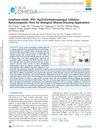
September 2019 in “ACS omega” The new nanocomposite films are stronger, protect against UV, speed up wound healing, and are antibacterial without being toxic.
 January 2026 in “Journal of Emerging Technologies and Innovative Research”
 Zinc oxide nanoparticles made from Tridax procumbens leaves show strong antibacterial and anticancer effects.
1 citations
,
October 2022 in “Surface Engineering and Applied Electrochemistry” Zinc oxide nanoparticles made from Monotheca buxifolia leaves showed strong antibacterial, antioxidant, and moderate hair growth effects.
 62 citations
,
October 2010 in “Journal of biomedical nanotechnology”
62 citations
,
October 2010 in “Journal of biomedical nanotechnology” Nanoparticles can enter the skin, potentially causing toxicity, especially in damaged skin.
 November 2023 in “Journal of Basic Microbiology”
 Green-synthesized zinc oxide nanoparticles effectively inhibit common fungi found on human scalp hair.
 14 citations
,
August 2016 in “Journal of nanomedicine research”
14 citations
,
August 2016 in “Journal of nanomedicine research” Zinc oxide nanoparticle biscuits improved growth and health in zinc-deficient rats without toxicity.
 1 citations
,
January 2026 in “Frontiers in Bioengineering and Biotechnology”
1 citations
,
January 2026 in “Frontiers in Bioengineering and Biotechnology” Ionizable lipid nanoparticles are the best for delivering gene-editing therapies.
 17 citations
,
June 2021 in “Molecules”
17 citations
,
June 2021 in “Molecules” Melatonin-loaded nanocarriers improve melatonin delivery and effectiveness for various medical treatments.
 2 citations
,
January 2024 in “Journal of Pharmacognosy and Phytochemistry”
2 citations
,
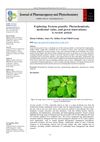
January 2024 in “Journal of Pharmacognosy and Phytochemistry” Teak has valuable compounds for medicine, cosmetics, and industry, with potential in cancer treatment and biodiesel production.
 2 citations
,
December 2022 in “PÄDI Boletín Científico de Ciencias Básicas e Ingenierías del ICBI”
2 citations
,
December 2022 in “PÄDI Boletín Científico de Ciencias Básicas e Ingenierías del ICBI” Bioceramic and biopolymer composites are promising for advanced wound care, promoting healing and cell growth.
 1 citations
,
January 2025 in “BIO Integration”
1 citations
,
January 2025 in “BIO Integration” Combining ultrasound and microneedles improves drug delivery through the skin.
 1 citations
,
January 2019 in “International Journal of ChemTech Research”
1 citations
,
January 2019 in “International Journal of ChemTech Research” Eclipta prostrata has many medicinal benefits, but more research is needed to understand how it works.
 May 2026 in “Scientific and Technical Bulletin оf State Scientific Research Control Institute of Veterinary Medical Products and Fodder Additives аnd Institute of Animal Biology”
 Zinc carbonate nanoparticles are not irritating or absorbed by the skin.
 November 2025 in “Nanoscale Advances”
 Inorganic nanoparticle-based scaffolds can improve wound healing by fighting bacteria and helping tissue grow.
 January 2025 in “Journal of Materials Chemistry B”
  November 2022 in “CARDIOMETRY”
 A group has developed therapies that show promise for treating cancer and various other conditions.
164 citations
,
September 2010 in “PLANT PHYSIOLOGY” Nitric oxide helps Solanum nigrum adapt to long-term zinc toxicity by changing root growth and metal balance.
4 citations
,
February 2023 in “Frontiers in Oncology” Nano-Pulse Stimulation™ Therapy is more effective and less damaging than cryoablation for treating melanoma tumors in mice.
 April 2017 in “Journal of Investigative Dermatology”
 The PON1 192R gene variant is linked to a higher risk of psoriasis and heart disease in Western Mexico.
 March 1998 in “Journal of dermatological science”
 Protease Nexin-1 is found in human hair growth cells and is affected by male hormones.
Nano-Zinc oxide on skin reduces hair follicle stem cell differentiation.
14 citations
,
August 2014 in “The FASEB Journal” CAP1/Prss8 does not activate PAR2 or inhibit PN-1.
 264 citations
,
January 2008 in “Journal of biomedical optics”
264 citations
,
January 2008 in “Journal of biomedical optics” Zinc oxide nanoparticles in sunscreen do not penetrate deep into the skin.
16 citations
,
November 2024 in “Human Genetics and Genomics Advances” Nociplastic pain is a complex, heritable trait with genetic links to chronic and neuropathic pain.