 March 2025 in “The Open Dermatology Journal”
 Trichorrhexis nodosa is common hair breakage, often due to styling, and new treatments are being explored.
11 citations
,
July 2015 in “Journal of Anatomy” SLVs help maintain muscle stretch sensitivity and could aid in treating hypertension and muscle spasticity.
January 2016 in “Huanjing yu Jiankang Zazhi”  November 2022 in “The journal of investigative dermatology/Journal of investigative dermatology”
 Deleting the CD271 gene in mouse skin cells leads to disorganized skin and increased hair growth, suggesting CD271 is important for skin health.
11 citations
,
June 2024 in “Molecules” Alpinia zerumbet has different medicinal properties in its parts due to varying chemicals.
1 citations
,
February 2023 in “Ibrain” Black cumin and its nanoformulations show promise in treating neurodegenerative diseases.
1 citations
,
January 2017 in “Science” A new method was developed to create complex molecular knots using iron ions.
 January 2026 in “Drug Delivery and Translational Research”
 Multicomponent crystals in microneedles improve drug delivery for hair loss treatment.
 1 citations
,
February 2002 in “Dermatologic Surgery”
1 citations
,
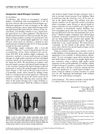
February 2002 in “Dermatologic Surgery” A cheap stainless steel container from a retail store can store liquid nitrogen effectively for 8-12 hours, saving money for medical practitioners.
59 citations
,
September 2021 in “Journal of Allergy and Clinical Immunology” Netherton syndrome has two subtypes with shared immune traits but different allergic and immune responses, suggesting targeted treatments.
September 2023 in “World Rabbit Science” The FRZB gene slows hair growth in rabbits.
16 citations
,
February 1986 in “Clinica Chimica Acta” Zinc deficiency is linked to respiratory infections in children.
 January 2019 in “Applied Organometallic Chemistry”
 The compound (NH4)2Mn0.17Cu0.83Cl4.2H₂O has a specific structure, shows weak magnetism at low temperatures, and undergoes phase changes at high temperatures.
3 citations
,
September 2023 in “Journal of Photochemistry and Photobiology A Chemistry”  11 citations
,
March 2024 in “Cell and Tissue Research”
11 citations
,
March 2024 in “Cell and Tissue Research” Telocytes have potential in therapy and tissue regeneration, but challenges in identification and cultivation remain.
1 citations
,
April 2021 in “IOP Conference Series Earth and Environmental Science” Two rice strains showed stable high yield and Zinc content in different climates.
21 citations
,
March 2022 in “Pharmaceuticals” The new Brigatinib nanocarrier is more effective against lung cancer cells than the free drug.
 January 2025 in “Nature Communications”
 Large-scale reconstructions enhance understanding of vibrissal sensory mapping in the brain.
1 citations
,
February 2026 in “ACS Omega” Self-powered nanogenerators could revolutionize healthcare by enabling devices that operate without external power.
 August 2023 in “Gadua Journal of Pure and Allied Science”
 Ziziphus spina-christi leaf extract lowered blood sugar and protected organs in diabetic rats.
24 citations
,
November 2015 in “Frontiers in Genetics” Nitroxide drugs can safely and effectively treat age-related diseases like macular degeneration and cardiovascular issues.
 1 citations
,
July 2022 in “Journal of Drug Delivery Science and Technology”
1 citations
,
July 2022 in “Journal of Drug Delivery Science and Technology” Niosomes and ethosomes can effectively carry the drug spironolactone, potentially improving treatment for hair loss and reducing side effects.
25 citations
,
July 2022 in “Pharmaceutics” Spanlastic nanovesicles can improve efinaconazole delivery through nails.
95 citations
,
July 2007 in “Journal of Experimental Botany” Root hairs help barley grow better in zinc-deficient soil.
1 citations
,
May 2020 in “bioRxiv (Cold Spring Harbor Laboratory)” The fer-ts mutation in plants prevents root hair growth at high temperatures.
 2 citations
,
July 2022 in “Asian Journal of Microbiology, Biotechnology & Environmental Sciences”
2 citations
,
July 2022 in “Asian Journal of Microbiology, Biotechnology & Environmental Sciences” Zinc is essential for plant growth and human health.
January 2026 in “SSRN Electronic Journal” August 2016 in “Journal of Investigative Dermatology” EZH2 is essential for hair growth and skin cell development.
May 2021 in “Zenodo (CERN European Organization for Nuclear Research)”  103 citations
,
January 2009 in “Carbon”
103 citations
,
January 2009 in “Carbon” Pure carbon nanotubes are safe for mice, but impure ones cause immune issues and hair loss.