 January 2019 in “Arabian Journal of Chemistry”
 Method found to accurately identify finasteride impurities using liquid chromatography.
 January 2020 in “Medpulse International Journal of General Medicine”
 Trichoscopy helps diagnose and monitor hair loss, showing different signs at various stages of hair thinning.
November 2024 in “Journal of Investigative Dermatology” The research aims to better understand hair follicle regulation and find new treatments for hair loss.
 December 2023 in “International Journal of Medical Sciences And Clinical Research”
 Dermoscopy is a useful tool for diagnosing female pattern hair loss.
1 citations
,
February 2025 in “Journal of the Neurological Sciences” Beta-trace protein may help diagnose and predict treatment response in certain nerve disorders.
8 citations
,
October 2022 in “International Journal of Legal Medicine” Drugs in drowned bodies' hair remain stable in natural water, aiding forensic analysis.
Trichohyalin, a protein from pig tongue, was purified and found to have a filamentous structure.
24 citations
,
December 2023 in “Gels” 3D-printed hydrogels show promise in medicine but face challenges in resolution, cell viability, cost, and regulations.
 1 citations
,
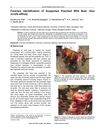
August 2016 in “Journal of Buffalo Science”
1 citations
,
August 2016 in “Journal of Buffalo Science” The animal was likely a wild boar.
68 citations
,
February 2011 in “European Journal of Pharmaceutics and Biopharmaceutics” Keratin films from human hair can potentially replace human nail plates for drug testing.
 14 citations
,
November 1963 in “The journal of investigative dermatology/Journal of investigative dermatology”
14 citations
,
November 1963 in “The journal of investigative dermatology/Journal of investigative dermatology” Pathologic tissues have more soluble proteins than normal tissues.
 March 2026 in “International Journal of Advanced Biochemistry Research”
 German shepherd hair varies in color and pattern but is flat with a consistent internal structure.
January 2020 in “Asian Journal of Chemistry” Raman spectroscopy can identify finasteride polymorphs in tablets.
Granzyme B accelerates skin aging and impairs healing by breaking down important skin components.
Human hair can effectively absorb arsenic from water.
49 citations
,
January 2023 in “Gels” Hydrogels are crucial for 3D bioprinting in tissue engineering.
3 citations
,
June 2023 in “Modern Pathology” GLI1 RNA CISH effectively identifies basal cell carcinoma but is less specific for benign follicular tumors.
43 citations
,
August 1994 in “Journal of Investigative Dermatology” November 2025 in “Archaeometry” Animal hair from 18th-century Mazamet burial sites shows locals used goat, badger, cow, or horse fur for clothing, indicating modest economic status.
24 citations
,
June 2003 in “Journal of Structural Biology” Sheet formation is key to macrofibril structure differences in wool.
January 2006 in “프로그램북(구 초록집)”  4 citations
,
May 2013 in “Dermatologic Surgery”
4 citations
,
May 2013 in “Dermatologic Surgery” Three new techniques simplify and improve the preparation of tissue samples for skin cancer surgery.
Chemical treatments weaken hair's thermal stability and structure.
18 citations
,
August 2009 in “Skin Research and Technology” OCT can identify hair structures, but chemical treatments can damage them.
9 citations
,
August 2023 in “Molecules” Two peptides, RMYYY and VMYMI, may be effective anti-inflammatory drugs.
62 citations
,
October 1999 in “Journal of Investigative Dermatology” New mutations in hair keratin genes can change hair structure and cause monilethrix, with nail issues more common in certain gene mutations.
10 citations
,
January 2020 in “Royal Society Open Science” A new automated method accurately measures hair damage using microscopic images.
10 citations
,
January 2011 in “Journal of biomedical optics” OCT is a reliable, noninvasive way to measure hair thickness.
May 2024 in “International journal of medicine and psychology.” Monoclonal antibodies LT-1, LT-2, and LT-7 help diagnose certain blood cancers.
January 2026 in “International Journal of Biological Macromolecules” Keratin in people with androgenetic alopecia shows specific changes that could help develop new treatments.