117 citations
,
September 2003 in “Molecular & cellular proteomics” The technology can help diagnose and subtype autoimmune diseases by identifying specific autoantibodies.
103 citations
,
February 1972 in “Proceedings of the National Academy of Sciences” A unique enzyme in guinea pig hair follicles helps form protein cross-links in hair.
 14 citations
,
May 2020 in “Drug Testing and Analysis”
14 citations
,
May 2020 in “Drug Testing and Analysis” A new method was created to measure metformin in hair, showing potential for monitoring treatment and medical investigations.
7 citations
,
January 2009 in “Indian Journal of Dermatology Venereology and Leprology” Hair changes may indicate disease activity in pemphigus patients.
 January 1963 in “Stain technology”
 Ziehl-Neelsen's stain helps identify different parts of hair in sheep and goats.
January 1990 in “Advances in forensic haemogenetics” Human hair protein patterns are inherited genetically.
Normal cells stain well with fluorescent globulin, but tumor cells do not.
4 citations
,
October 2001 in “Mycoses” A young cat had a rare fungal infection caused by Microsporum gypseum.
50 citations
,
February 2004 in “Journal of Investigative Dermatology” January 1995 in “Journal of the Society of Cosmetic Chemists” Transglutaminase does not modify human hair.
 7 citations
,
February 2014 in “Talanta”
7 citations
,
February 2014 in “Talanta” Researchers developed a method to identify and analyze cyclosporin compounds and their structures effectively.
 27 citations
,
April 2011 in “International journal of legal medicine”
27 citations
,
April 2011 in “International journal of legal medicine” In situ DNA labeling in hair can help predict forensic DNA analysis success.

The new method can tell how hair fibers react to moisture after treatments.

A reliable method was developed to measure gemcitabine and olaparib in pancreatic tissue, aiding pancreatic cancer treatment.
18 citations
,
March 2010 in “Therapeutic Drug Monitoring” A new method quickly detects alcohol use from hair in under an hour.
30 citations
,
April 2009 in “Mycoses” Microsporum gypseum fungus breaks down keratin in hair by digesting it enzymatically, starting with less keratinized parts.
 28 citations
,
October 1992 in “JEADV. Journal of the European Academy of Dermatology and Venereology/Journal of the European Academy of Dermatology and Venereology”
28 citations
,
October 1992 in “JEADV. Journal of the European Academy of Dermatology and Venereology/Journal of the European Academy of Dermatology and Venereology” SIP is a better method for measuring hair growth accurately.
January 2022 in “Skin appendage disorders” Trichoscopy effectively visualizes scalp micropigmentation without invasive methods.
28 citations
,
June 2003 in “Applied immunohistochemistry & molecular morphology” Combining cell conditioning with mild protease digestion effectively shows versican mRNA in mouse skin sections.
32 citations
,
February 2018 in “Spectrochimica acta. Part A, Molecular and biomolecular spectroscopy” Cosmetic residues on individual hairs can be identified and differentiated using ATR FT-IR microspectroscopy.
4 citations
,
January 2006 in “International Journal of Cosmetic Science” The method shows how hair lipids form specific patterns and their roles in hair structure.
Keratin peptide signatures in hair may help identify gender and ethnicity.
 10 citations
,
June 2018 in “Journal of visualized experiments”
10 citations
,
June 2018 in “Journal of visualized experiments” The document concludes that the technique allows for the detection of LDH activity in various tissues, showing where cells are actively metabolizing glucose.
 19 citations
,
November 1971 in “Clinica Chimica Acta”
19 citations
,
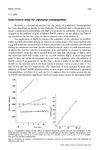
November 1971 in “Clinica Chimica Acta” The document concludes that measuring γ-glutamyl transpeptidase activity is more accurate with a higher substrate concentration and using diluted acetic acid to stop the reaction.
14 citations
,
July 1994 in “Journal of Investigative Dermatology”  December 2025 in “International Journal For Multidisciplinary Research”
 Microscopic hair analysis is important in forensics but has limitations; new technologies are improving its accuracy.
 1 citations
,
March 2015 in “Journal of Visualized Experiments”
1 citations
,
March 2015 in “Journal of Visualized Experiments” Researchers developed a new, precise method to measure hair loss in mice using image analysis.
26 citations
,
April 2011 in “British Journal of Dermatology” New mutations in the DSG4 gene cause a rare hair condition.
5 citations
,
January 2015 in “Molecular Genetics and Metabolism” 25 citations
,
March 2002 in “Scanning” Confocal microscopy is better than scanning electron microscopy for studying hair in its natural state and understanding hair products' effects.