Search
for
Sort by
Research
960-990 / 1000+ resultsresearch Association of prior 5-α-reductase inhibitor exposure with ICI benefit in metastatic RCC: Multicentre cohort with single-cell immune profiling.
Using 5-α-reductase inhibitors before treatment improves outcomes for patients with metastatic renal cell carcinoma.
research Alfatradiol/minoxidil/trichofoam
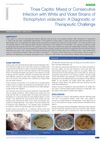
research Tinea Capitis: Mixed or Consecutive Infection with White and Violet Strains of Trichophyton violaceum : A Diagnostic or Therapeutic Challenge
Treating a boy's scalp infection was challenging because two different colors of the same fungus appeared.

research 170 Forecasting Phase 3 Dose-Response for Abrocitinib, an Oral Janus Kinase 1 Selective Inhibitor, Using Investigator’s Global Assessment and Eczema Area and Severity Index
Abrocitinib at 100 mg and 200 mg daily may significantly improve moderate-to-severe atopic dermatitis in patients 12 years and older.
research Unraveling Translational Insights into Systemic Multi-Organ Toxicity of Cytosine Arabinoside (Ara-C): A Systematic Review of Preclinical Animal Evidence
Cytarabine can cause multiple organ toxicities, especially neurotoxicity, but better research methods are needed to fully understand and predict these effects.

research Switching between tofacitinib and baricitinib in alopecia areata: A review of clinical response
Switching between the medications tofacitinib and baricitinib can be effective for treating hair loss in alopecia areata.

research Upadacitinib: A New Weapon for the Treatment of Twenty-Nail Dystrophy
Upadacitinib may effectively treat twenty-nail dystrophy without causing pain.

research Plerixafor Biases CXCR4 Signaling Through β-Arrestin to Promote Melanogenesis via β-Catenin–MITF Activation
Plerixafor may help treat pigmentation disorders by promoting skin repigmentation.

research 0557 Possible Contributory and Protective Factors in Medication Associated Obstructive Sleep Apnea (OSA): Results from the US Food and Drug Administration (FDA) Adverse Events Reporting System (FAERS)
Some drugs may increase the risk of obstructive sleep apnea, while others like certain biologics might decrease it.
research Impact of COVID-19 on patients receiving chemotherapy for gynecological cancer
COVID-19 affects patients on chemotherapy for gynecological cancer negatively.
research pMB FLASH - Status and Perspectives of Combining Proton Minibeam with FLASH Radiotherapy
Combining Proton Minibeam with FLASH Radiotherapy may improve cancer treatment by reducing side effects and increasing effectiveness.
research Cuprorivaite/hardystonite/alginate composite hydrogel with thermionic effect for the treatment of peri-implant lesion
The hydrogel effectively treats dental implant issues by killing bacteria, reducing inflammation, and improving implant success.
research Sometimes Marketing Efforts by Advocacy Organizations Can Lose Touch with the Nuances of Appropriateness
Advocacy groups should avoid marketing partnerships that may imply drug endorsements.
research Alopecia induced by lopinavir plus ritonavir therapy in an HIV patient.
An HIV patient's complete hair loss was reversed after switching from lopinavir/ritonavir to nelfinavir.
research Drug repurposing: A novel strategy to target cancer stem cells and therapeutic resistance
Repurposing existing drugs and using micronutrients may effectively target cancer stem cells and improve cancer treatment.

research Methotrexate/tacrolimus/voriconazole
A 65-year-old man developed a serious skin cancer linked to a drug he was taking for a fungal infection after a bone marrow transplant.

research Tofacitinib for the treatment of alopecia areata in preadolescent children
Tofacitinib helped some young children with severe hair loss grow their hair back without bad side effects.
research Ketoconazole in the treatment of dermatomycosis in cats and dogs
Ketoconazole effectively treats skin fungus in cats and dogs with minimal side effects.
research Ruxolitinib 1.5% Topical Cream for the Treatment of Pediatric Alopecia Areata
Ruxolitinib cream may help treat severe hair loss in children.
research 15460 Perifollicular pink halo: A potential dermoscopic marker of inflammation in central centrifugal cicatricial alopecia
Certain immune markers may predict chemotherapy response in mesothelioma, and nivolumab is a tolerable and effective treatment for advanced non-small cell lung cancer.
research Correlation of toxicity with pharmacokinetics of pegylated liposomal doxorubicin (Doxil) in metastatic breast carcinoma
Doxil's toxicity varies with dose and schedule, and pharmacokinetic guidance can optimize dosing.

research Hyaluronic acid-FGF2-derived peptide bioconjugates for suppression of FGFR2 and AR simultaneously as an acne antagonist
The new anti-acne treatment HA-P5 effectively reduces acne by targeting two key receptors and avoids an enzyme that can hinder treatment.
research Spironolactone, a Classic Potassium-Sparing Diuretic, Reduces Survivin Expression and Chemosensitizes Cancer Cells to Non-DNA-Damaging Anticancer Drugs
Spironolactone may make some cancer treatments more effective by blocking a protein that helps cancer cells survive.
research A 2018 Approach to Combating Methotrexate Toxicity Folic Acid and Beyond.
New strategies like vitamin A and dextromethorphan can help reduce methotrexate side effects and improve patient adherence.
research Hydroxychloroquine and Chloroquine in Prophylaxis and Treatment of COVID-19
Hydroxychloroquine and chloroquine are not recommended for COVID-19 treatment due to insufficient evidence and safety concerns.
research Successful treatment of resistant alopecia totalis with tofacitinib
Tofacitinib helped a 21-year-old regrow hair after alopecia totalis.
research The antiandrogen enzalutamide downregulates TMPRSS2 and reduces cellular entry of SARS-CoV-2 in human lung cells
The drug enzalutamide may reduce the ability of the virus causing COVID-19 to enter lung cells.
research FINASTERIDE (PLUS ORAL CONTRACEPTIVE PILL) VS METFORMIN IN TREATMENT OF POLYCYSTIC OVARY SYNDROME-RELATED INFERTILITY: A PROSPECTIVE RANDOMIZED TRIAL

research Clin-Alert
In 2002, various drugs caused serious side effects, including vitamin B12 deficiency, heart issues, blindness, hypersexuality, allergic reactions, blood clotting problems, pupil dilation, capillary leak syndrome, muscle breakdown, hepatitis, skin reactions, and lupus.