TLDR Polynucleotides show promise for improving skin conditions safely but need more research.
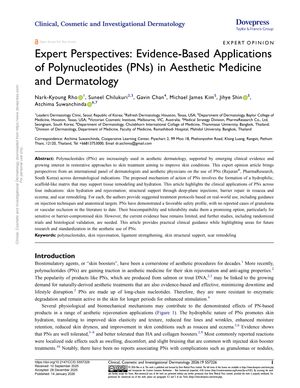
Polynucleotides (PNs) are gaining traction in aesthetic dermatology for their potential in improving skin conditions through mechanisms like tissue remodeling and hydration. This article compiles expert opinions on using PNs (Rejuran ®) for skin hydration, structural support, barrier repair in conditions like rosacea and eczema, and scar remodeling. PNs are noted for their safety, with no reported granuloma or vascular occlusion cases, making them suitable for sensitive skin. Despite promising applications, the evidence is limited, necessitating further research, including randomized trials, to validate their efficacy and standardize treatment protocols.

July 2025 in “JOJ Dermatology & Cosmetics” Both treatments improved hair quality and thickness equally, with mild side effects.
February 2025 in “Archives of Dermatological Research” Polynucleotides effectively promote hair regrowth in androgenetic alopecia without serious side effects.
17 citations
,
December 2024 in “Journal of Cosmetic Dermatology” Polynucleotides might work well in esthetic medicine, but more research is needed.
22 citations
,
July 2024 in “Archives of Plastic Surgery” Injectable skin boosters effectively rejuvenate aging skin by improving hydration and elasticity.
14 citations
,
August 2020 in “Journal of cosmetic dermatology” Experts recommend using PN-HPT™ for skin rejuvenation in various body areas but have less agreement on initial facial treatment cycles.
2 citations
,
August 2025 in “Pharmaceutics” PN hydrates skin; PDRN heals and regenerates skin and hair.
96 citations
,
September 2021 in “International Journal of Molecular Sciences” Chitosan, a natural substance, can be used to create tiny particles that effectively deliver various types of drugs, but more work is needed to improve stability and control of drug release.
January 2024 in “Clinical, cosmetic and investigational dermatology” Dermatologists should customize cosmetic treatments for dark-skinned patients to minimize risks and complications.
February 2026 in “Plastic and Aesthetic Research” Regenerative aesthetic medicine aims to restore tissue function, but needs more consistent evidence and standardized practices.
February 2026 in “Journal of Cutaneous and Aesthetic Surgery” Most emerging dermatological treatments lack strong evidence and require more research.