46 citations
,
December 1998 in “Journal of Biological Chemistry” Keratin 19 forms less stable and shorter filaments than keratin 14, giving unique traits to certain skin cells.
3 citations
,
July 2022 in “Brain and Behavior” The HtrA1L364P mutation causes brain dysfunction and blood vessel damage.
 40 citations
,
January 2013 in “Frontiers in Endocrinology”
40 citations
,
January 2013 in “Frontiers in Endocrinology” Finger length ratios are not linked to the number of specific gene repeats affecting testosterone sensitivity.
 April 2017 in “Journal of Investigative Dermatology”
 A boy with Oculodentodigital syndrome had a unique GJA1 gene mutation causing his symptoms.
May 2022 in “Current Enzyme Inhibition” Compound 7b is a promising candidate for treating benign prostatic hyperplasia and prostate cancer.
2 citations
,
July 2013 in “Journal of Life Sciences” A 2-year-old girl with a rare vitamin D disorder had rickets and hair loss, but treatment was ineffective due to poor compliance.
21 citations
,
September 2005 in “The anatomical record. Part A, Discoveries in molecular, cellular, and evolutionary biology/Anatomical record. Part A, Discoveries in molecular, cellular, and evolutionary biology” Caspase-14 is important for skin and hair development in all mammals.
 December 2023 in “Research Square (Research Square)”
 These specific gene polymorphisms are not linked to Alopecia Areata in Egyptians.
 27 citations
,
July 2017 in “Scientific Reports”
27 citations
,
July 2017 in “Scientific Reports” N-WASP is essential for healthy skin and preventing inflammation.
 August 2025 in “International Journal of Contemporary Pediatrics”
 HLD10 can include increased body hair and Mongolian spots.
August 2024 in “American Journal of Medical Genetics Part A” Variants in the CCDC47 gene are linked to trichohepatoneurodevelopmental syndrome.
 January 2019 in “Applied Organometallic Chemistry”
 The compound (NH4)2Mn0.17Cu0.83Cl4.2H₂O has a specific structure, shows weak magnetism at low temperatures, and undergoes phase changes at high temperatures.
 April 2023 in “The journal of investigative dermatology/Journal of investigative dermatology”
 HPV8 causes hair follicle stem cells to grow, leading to skin lesions.
11 citations
,
May 2013 in “Journal of Investigative Dermatology” KRTAP10 proteins help form the hair shaft's tough outer layer by interacting with specific hair keratins.
88 citations
,
June 2000 in “Journal of Investigative Dermatology” Keratin 17 is important for hair and nail structure and affects pachyonychia congenita symptoms.
 April 2019 in “Journal of Investigative Dermatology”
 Non-coding RNA boosts retinoic acid production and signaling, aiding regeneration.
 7 citations
,
June 2016 in “Bone Research”
7 citations
,
June 2016 in “Bone Research” A Chinese family had a child with a specific gene mutation causing vitamin D-resistant rickets, but the child improved with calcium and low-dose calcitriol.
 June 2026 in “Research Square”
 THBS4 helps hair grow by activating hair follicle stem cells.
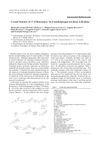 February 1999 in “Analytical Sciences”
 A new antiandrogen compound was made and its detailed three-dimensional shape was described.
13 citations
,
April 1994 in “Baillière's clinical endocrinology and metabolism” Some people have genetic mutations that make them resistant to vitamin D, leading to rickets even with enough vitamin D intake.
17 citations
,
September 2018 in “Matrix Biology” Laminin-511 is essential for proper melanocyte movement and development in mice.
12 citations
,
January 2000 in “Biochemical and Biophysical Research Communications” The study mapped keratin 15 and 19 genes, aiding future genetic disorder research.
5 citations
,
April 2022 in “Genes” miR-129-5p affects hair growth by targeting the HOXC13 gene.
18 citations
,
February 1992 in “Molecular Biology Reports” A specific type II hair keratin was identified and found in hair cortex and tongue cells.
 169 citations
,
May 2006 in “Genes & Development”
169 citations
,
May 2006 in “Genes & Development” Keratin 17 is crucial for normal hair growth by regulating hair cycle transitions with TNFα.
 30 citations
,
December 2011 in “Journal of biological chemistry/The Journal of biological chemistry”
30 citations
,
December 2011 in “Journal of biological chemistry/The Journal of biological chemistry” Keratin 17 is modified by RSK1 in response to growth and stress, affecting skin growth and stress response.
SMAD4 is crucial for muscle repair in young adults but not in aged mice.
21 citations
,
January 2006 in “Hormone Research in Paediatrics” A mutation in the VDR gene affects hair cycling without needing ligand binding.
 May 2026 in “BMC Medicine”
 ACOD1 deficiency worsens hair loss by causing cell aging and mitochondrial problems, but 4-OI may help.