 4 citations
,
January 1989 in “Journal of Steroid Biochemistry”
4 citations
,
January 1989 in “Journal of Steroid Biochemistry” Women with hyperandrogenism have higher androgen levels and lower SHBG, which may contribute to conditions like excessive hair growth and early puberty.
January 2009 in “ScholarlyCommons (University of Pennsylvania)” The P133R mutation in AKR1D1 enzyme causes harmful bile acid buildup, explaining related health issues.
10 citations
,
January 2014 in “Journal of Pediatric Endocrinology and Metabolism” Three new gene mutations cause rickets and hair loss, treatable with high calcium and calcidol, but hair regrowth is rare.
3 citations
,
April 2020 in “American Journal of Case Reports” A new mutation in the HJV gene was found in a young woman with juvenile hemochromatosis, causing unusual symptoms like secondary hypothyroidism.
 4 citations
,
January 2017 in “Journal of pediatric endocrinology & metabolism/Journal of pediatric endocrinology and metabolism”
4 citations
,
January 2017 in “Journal of pediatric endocrinology & metabolism/Journal of pediatric endocrinology and metabolism” Two different mutations in the vitamin D receptor gene cause different symptoms and responses to treatment in Lebanese patients with hereditary rickets.
3 citations
,
December 2010 in “Annals of tropical paediatrics” A boy's hair loss and bone issues improved with specific vitamin D treatment and calcium.
46 citations
,
October 2012 in “Seminars in reproductive medicine” Genetic defects in androgen production are linked to male developmental disorders and are improving treatment understanding.
 63 citations
,
November 1999 in “British journal of dermatology/British journal of dermatology, Supplement”
63 citations
,
November 1999 in “British journal of dermatology/British journal of dermatology, Supplement” Hair sensitivity to androgens is partly controlled by specific enzyme expressions in different hair areas.
54 citations
,
May 2015 in “Endocrinology” Manipulating 5α-reductase type 2 can affect liver fat production and glucocorticoid effects.
 151 citations
,
December 2004 in “Annals of the New York Academy of Sciences”
151 citations
,
December 2004 in “Annals of the New York Academy of Sciences” Congenital Adrenal Hyperplasia is a genetic disorder with two forms, causing symptoms like early puberty and severe acne, but can be identified through screening and treated with glucocorticoids.
 20 citations
,
July 2017 in “Scientific Reports”
20 citations
,
July 2017 in “Scientific Reports” A single amino acid change in the vitamin D receptor can disrupt its function and lead to hair loss.
 45 citations
,
August 2010 in “Hormone Molecular Biology and Clinical Investigation”
45 citations
,
August 2010 in “Hormone Molecular Biology and Clinical Investigation” Type 3 5α-reductase is more common and finasteride and dutasteride strongly inhibit it.
 13 citations
,
May 1996 in “Archives of Disease in Childhood”
13 citations
,
May 1996 in “Archives of Disease in Childhood” Siblings with signs of virilization should be tested for non-classical congenital adrenal hyperplasia, which does not affect adult height but may impact fertility and well-being if untreated.
41 citations
,
March 2016 in “The Journal of Clinical Endocrinology & Metabolism” In STSD patients, the body compensates for low androgen levels by increasing another enzyme's activity.
 21 citations
,
January 2020 in “General and Comparative Endocrinology”
21 citations
,
January 2020 in “General and Comparative Endocrinology” Lack or blocking of SRD5a, a key component in hormone creation, can lead to conditions like pseudohermaphrodism and affect hair growth, bone mass, muscle strength, and reproductive health. More research is needed on its regulation from fertilization to adulthood.
69 citations
,
August 1988 in “Journal of Investigative Dermatology” August 2025 in “American Journal of Case Reports” Accurate diagnosis and early specialist referral are crucial for managing 46,XY Disorders of Sex Development.
 April 2017 in “The journal of investigative dermatology/Journal of investigative dermatology”
 HSD11b1 affects skin nerves and increases non-histaminergic itch.
16 citations
,
March 2022 in “Clinica Chimica Acta” Idiopathic hirsutism may be linked to increased enzyme activity.
 49 citations
,
January 2004 in “Journal of steroid biochemistry and molecular biology/The Journal of steroid biochemistry and molecular biology”
49 citations
,
January 2004 in “Journal of steroid biochemistry and molecular biology/The Journal of steroid biochemistry and molecular biology” Selective non-steroidal inhibitors of 5α-reductase type 1 can help treat DHT-related disorders.
 94 citations
,
July 2020 in “European Journal of Human Genetics”
94 citations
,
July 2020 in “European Journal of Human Genetics” The guidelines ensure accurate genetic testing and reporting for 21-hydroxylase deficiency.
 October 2024 in “Journal of the Endocrine Society”
 Certain genetic variants reduce enzyme activity, contributing to non-classic congenital adrenal hyperplasia.
13 citations
,
January 1997 in “Biochemical Pharmacology” Human liver enzyme DHEA ST helps process minoxidil.
 October 2024 in “Journal of the Endocrine Society”
 Certain genetic variants impair enzyme activity, contributing to non-classic congenital adrenal hyperplasia.
10 citations
,
March 1973 in “Journal of Investigative Dermatology” 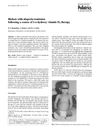 6 citations
,
August 1989 in “European journal of pediatrics”
6 citations
,
August 1989 in “European journal of pediatrics” Child with rickets improved with a specific vitamin D therapy, but alopecia did not change.
 6 citations
,
January 2014 in “Journal of pediatric endocrinology & metabolism/Journal of pediatric endocrinology and metabolism”
6 citations
,
January 2014 in “Journal of pediatric endocrinology & metabolism/Journal of pediatric endocrinology and metabolism” Three siblings with a genetic form of rickets showed different symptoms of the disease.
 25 citations
,
September 2015 in “Clinical Endocrinology”
25 citations
,
September 2015 in “Clinical Endocrinology” Using 17-hydroxyprogesterone levels to diagnose nonclassic congenital adrenal hyperplasia can result in many incorrect diagnoses.
 August 2022 in “IntechOpen eBooks”
 Congenital Adrenal Hyperplasia is a rare inherited disease causing hormone imbalances, affecting growth, fertility, and heart health, diagnosed through blood tests and treated with medication and lifestyle changes.
15 citations
,
June 2019 in “Biochemical Journal” A new genetic disorder caused by an ODC1 mutation can be treated with DFMO.