
PmtHEE is a better model for studying pigmented skin because it includes melanocytes and shows improved cell differentiation.
 April 2025 in “International Journal of General Medicine”
 The G allele of IFITM3 rs12252 is linked to more severe COVID-19.
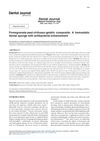 March 2025 in “Dental Journal (Majalah Kedokteran Gigi)”
 The sponge effectively controls bleeding and prevents infection after tooth extraction.
 January 2025 in “Acta Dermato Venereologica”
 Mothers with alopecia areata have a higher risk of adverse birth outcomes.
 December 2024 in “Frontiers in Veterinary Science”
 Dorper sheep's wool shedding is linked to specific genes and pathways, which may help understand human hair growth.

COVID-19 pneumonia may cause lasting lung damage like fibrosis.

ARHGEF3 is essential for proper hair follicle development.
 April 2024 in “Journal of cancer research and clinical oncology”
 Tissue-derived extracellular vesicles are crucial for cancer diagnosis, prognosis, and treatment.
 March 2024 in “Research Square (Research Square)”
 Combining genetic and physical trait analysis improves diagnosis accuracy for monogenic diabetes.
 February 2024 in “Planta”
 TRM21 helps control flavonoid production and root hair growth in Arabidopsis thaliana.
 January 2024 in “Journal of applied biological chemistry”
 Glehnia littoralis and Andrographis paniculata extracts can significantly boost hair growth.
 January 2024 in “Wiadomości Lekarskie”
 AI and robotics are improving treatment and monitoring of neurodegenerative disorders like Parkinson's.
 January 2024 in “Wiadomości Lekarskie”
 Urban children in western Belarus had more severe COVID-19 cases in 2021.
 January 2024 in “Wiadomości Lekarskie”
 New markers can detect tumors, aid drug delivery, and treat cancer effectively and safely.
 January 2024 in “Wiadomości Lekarskie”
 AI can help diagnose Follicular Lymphoma by accurately identifying specific cell types.
 January 2024 in “Wiadomości Lekarskie”
 Point of Care in radiology speeds up diagnosis and treatment by performing tests where the patient is.
 January 2024 in “Wiadomości Lekarskie”
 Using a protocol with LH improves pregnancy rates in patients with low ovarian reserve.
 January 2024 in “Wiadomości Lekarskie”
 AI improves vascular surgery by enhancing diagnostics, planning, and monitoring.
 January 2024 in “Wiadomości Lekarskie”
 AI and advanced technologies are improving medical diagnostics and treatments.
 January 2024 in “Wiadomości Lekarskie”
 Male sperm disorders significantly contribute to infertility.
 January 2024 in “Wiadomości Lekarskie”
 Augmented reality improves vascular surgery by reducing risks and operation times.
 January 2024 in “Wiadomości Lekarskie”
 Influencers impact medical communication both positively and negatively.
 January 2024 in “Wiadomości Lekarskie”
 Pemigatinib may be effective for treating ZMYM2::FGFR1 fusion-positive leukemia.
 January 2024 in “Wiadomości Lekarskie”
 Glioma treatment may improve with new therapies and technologies.
 January 2024 in “Wiadomości Lekarskie”
 AI and new therapies show promise in medicine, especially for cancer and regenerative treatments.
 January 2024 in “Wiadomości Lekarskie”
 AI in heart scans improves diagnosis and treatment but has risks like misdiagnosis and high costs.
 January 2024 in “Wiadomości Lekarskie”
 Structured prevention strategies and Brain Health Clinics can help prevent Alzheimer's.
 January 2024 in “Wiadomości Lekarskie”
 Effective epilepsy management involves accurate diagnosis, understanding seizure types, identifying causes, and choosing the right treatment.
 January 2024 in “Wiadomości Lekarskie”
 AI is transforming healthcare by improving diagnostics and therapy, despite challenges with data and trust.
 January 2024 in “Wiadomości Lekarskie”
 Low-penetration genes might help personalize colorectal cancer prevention.