Search
for
Sort by
Research
600-630 / 1000+ resultsresearch Association of prior 5-α-reductase inhibitor exposure with ICI benefit in metastatic RCC: Multicentre cohort with single-cell immune profiling.
Using 5-α-reductase inhibitors before treatment improves outcomes for patients with metastatic renal cell carcinoma.
research Lymphocytes, neuropeptides, and genes involved in alopecia areata
Alopecia areata is an autoimmune disease where T cells attack hair follicles.
research Participation of CD34-enriched mouse adipose cells in hair morphogenesis
CD34+ cells from fat tissue help form hair follicles and blood vessels in skin.
research What is your diagnosis? Fine‐needle aspirate from a subcutaneous preputial mass in a ferret
The ferret had a malignant apocrine gland tumor and did not survive surgery.
research Regulatory T‐cells in alopecia areata
People with alopecia areata have fewer regulatory T-cells than those with other skin conditions.
research A novel monoclonal antibody to the outer root sheath cells
The new antibody, TYHF-1, specifically targets certain hair-related structures.
research Wnt Signaling Influences the Development of Murine Epidermal Langerhans Cells
Wnt signaling affects the development and growth of Langerhans cells in mice.
research Adipose-derived stem cells alleviate radiation-induced dermatitis by suppressing apoptosis and downregulating cathepsin F expression
Adipose-derived stem cells help heal radiation skin damage by reducing cell death and inflammation.

research Isolation and Characterization of Sweat Gland Myoepithelial Cells from Human Skin
Human sweat glands contain stem cells capable of self-renewal and forming different cell types.
research Autoimmune polyendocrinopathy-candidiasis-ectodermal dystrophy syndrome (APECED) due to AIRET16M mutation in a consanguineous Greek girl
An 11-year-old Greek girl was diagnosed with a rare genetic disorder, highlighting the importance of genetic testing and family history.
research HtrA1L364P leads to cognitive dysfunction and vascular destruction through TGF‐β/Smad signaling pathway in CARASIL model mice
The HtrA1L364P mutation causes brain dysfunction and blood vessel damage.
research WNT10A promotes an invasive and self-renewing phenotype in esophageal squamous cell carcinoma
WNT10A helps esophageal cancer cells spread and keep renewing themselves.
research Non-small cell lung carcinoma spheroid models in agarose microwells for drug response studies
The platform effectively grows lung cancer cell spheroids for drug testing.
research Characteristics and predictive values of super-responders in alopecia areata under tofacitinib treatment: A single-center retrospective study
Older patients without prior JAK inhibitor treatment respond best to tofacitinib for alopecia areata.

research Identification and single-cell analysis of prognostic genes related to mitochondrial and neutrophil extracellular traps in bladder cancer
Six key genes can predict bladder cancer outcomes and may serve as prognostic biomarkers.
research Establishment of type II 5α-reductase over-expressing cell line as an inhibitor screening model
A reliable model for screening type II 5α-reductase inhibitors was created and validated.
research Comprehensive single-cell transcriptomic profiling of the scalp from patients with moderate-to-severe alopecia areata
Alopecia areata involves immune system issues and specific cell types that disrupt hair growth, leading to hair loss.
research Multiplex matrix network analysis of protein complexes in the human TCR signalosome
Alopecia areata patients show unique protein activity patterns, suggesting imbalanced signaling pathways.

research Telocytes: current methods of research, challenges and future perspectives
Telocytes have potential in therapy and tissue regeneration, but challenges in identification and cultivation remain.
research 5a Trichoepithelioma
Trichoepithelioma and desmoplastic trichoepithelioma have distinct features that can be identified using reflectance confocal microscopy.
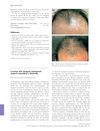
research A woman with iatrogenic androgenetic alopecia responding to finasteride
EF and PXE not closely related.

research Depletion of S100A4+ stromal cells results in abnormal nipple development and nursing failure
Lack of certain cells causes abnormal nipple development and nursing failure.
research 546 Gene expression signatures and ALADIN score correlates with response of alopecia areata patients to treatment with JAK inhibitors
The ALADIN score can predict how well patients with alopecia areata will respond to JAK inhibitor treatments.

research The effect of low-level laser therapy on severe acute respiratory syndrome coronavirus-2 infected cells
Low-level laser therapy may help uninfected cells but has different effects on coronavirus-infected cells.
research Author response: Interplay of opposing fate choices stalls oncogenic growth in murine skin epithelium
The balance between cell renewal and differentiation controls the growth of cancerous cells in mouse skin.
research Exploring differential gene expression and biomarker potential in systemic lupus erythematosus: a retrospective study
FCER1A and RGS1 may help diagnose and treat systemic lupus erythematosus.
research Altered expression of intracellular Toll-like receptors in peripheral blood mononuclear cells from patients with alopecia areata
Increased Toll-like receptors in blood cells may contribute to alopecia areata and could be a target for new treatments.
research Adenomatous Polyposis Coli (APC) Is Required for Normal Development of Skin and Thymus
The Apc gene is crucial for normal skin and thymus development.
research LB922 CyTOF immune profiling uncovers sex- and race-specific differences and cellular biomarkers for biologic response in Hidradenitis suppurativa
Sex and race affect immune responses and treatment outcomes in Hidradenitis suppurativa.