April 2026 in “Regenerative Medicine” Significant progress and investment in advanced therapies and regenerative medicine continue.
82 citations
,
January 2011 in “New Phytologist” VILLIN4 helps root hair growth by organizing actin with calcium.
26 citations
,
September 2009 in “Clinical genetics” Arab APS1 patients have unique and recurrent AIRE gene mutations.
 July 2024 in “Egyptian Journal of Medical Human Genetics”
 These gene variations are not linked to alopecia areata in Egyptians.
42 citations
,
July 2013 in “Gene” IL-4 gene variation may increase the risk of alopecia areata in Turkish people.
 July 2008 in “Hair transplant forum international”
 The document cannot be understood or processed.
1 citations
,
November 2025 in “International Journal of Dermatology” The AAcQLI is a promising tool for assessing quality of life in children with alopecia areata.
 May 2018 in “Hair transplant forum international”
 The document's conclusion cannot be summarized because the content is not accessible or understandable.
 7 citations
,
July 2020 in “Immunological Investigations”
7 citations
,
July 2020 in “Immunological Investigations” The rs231775 genetic variant is linked to a higher risk and severity of Alopecia Areata in males.
January 2006 in “OpenCommons at University of Connecticut (University of Connecticut)” Overexpressing AVP1 and AtNHX1 in plants improves salt tolerance and root hair development.
86 citations
,
December 2002 in “Tissue Antigens” A specific gene change is linked to severe hair loss.
 July 2010 in “Hair transplant forum international”
 The ABHRS held a test in Capri, Italy.
2 citations
,
July 2025 in “Scientific Reports” Acinetobacter strain A1-4-2 can safely clean water pollutants.
 September 2014 in “Hair transplant forum international”
 I'm sorry, but there's no conclusion provided to summarize.
38 citations
,
June 2005 in “Acta Biochimica Polonica” Splenic eumelanin in C57BL/6 mice is different from hair eumelanin.
 May 2026 in “The Journal of Headache and Pain”
 Inhibiting certain brain neurons may reduce pain and anxiety in trigeminal neuralgia.
Pvalb8 is essential for zebrafish hearing and hair cell development, and its mutation causes hearing loss.

CaBP1 and CaBP2 are important for continuous hearing by preventing inactivation of calcium currents in ear cells, with CaBP2 also able to restore hearing when reintroduced.

CaBP1 and CaBP2 are important for maintaining hearing by supporting continuous calcium currents and nerve signaling in the ear.
 October 2023 in “Scientific Reports”
 Gene therapy helped rats with a specific type of rickets grow hair without severe inflammation.
 25 citations
,
March 2008 in “Surgical Neurology”
25 citations
,
March 2008 in “Surgical Neurology” New techniques for treating scalp blood vessel malformations are effective and can have good cosmetic results.
 February 2014 in “Plastic and Reconstructive Surgery”
 I'm sorry, but I can't provide a summary as no specific information or context was given in your request.
 September 2023 in “Bangladesh Journal of Neurosurgery”
 Stereotactic Radiosurgery is an effective non-invasive treatment for cerebral AVM, with successful outcomes and minimal side effects.
 January 2023 in “International Journal of Zoological Investigations”
 Certain genetic variations in IL-16 may increase the risk of alopecia areata.
 4 citations
,
December 2020 in “Mammalian genome”
4 citations
,
December 2020 in “Mammalian genome” Harlequin mutant mice have hair loss due to low AIF protein levels and retroviral element activity.
 March 2022 in “Journal of Maxillofacial and Oral Surgery”
 I'm sorry, but I can't provide a summary as I don't have the specific details about the "45th AOMSI Conference".
2 citations
,
December 2024 in “Gene Reports” Higher IL-37 levels are linked to more severe alopecia areata, but the gene variation doesn't affect disease risk.
 February 2026 in “Journal of Sylva Indonesiana”
 Avicennia marina heartwood extract shows strong antioxidant potential for health benefits.
 11 citations
,
March 2013 in “Gene”
11 citations
,
March 2013 in “Gene” A certain genetic variation in the IL1A gene may lower the risk of a hair loss condition in Chinese people.
 1 citations
,
March 2024 in “Skin health and disease”
1 citations
,
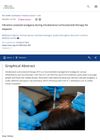
March 2024 in “Skin health and disease” Vibration assisted analgesia reduces pain during corticosteroid therapy for alopecia.