
Upadacitinib and oral minoxidil improved Crohn's disease and hair regrowth in a patient.
 234 citations
,
September 2004 in “Clinical cancer research”
234 citations
,
September 2004 in “Clinical cancer research” BAY 43-9006 helps control kidney cancer growth but doesn't significantly increase overall survival.
 42 citations
,
April 2021 in “Journal of clinical pharmacology”
42 citations
,
April 2021 in “Journal of clinical pharmacology” Baricitinib helps treat several diseases, including COVID-19, but has side effects and needs careful monitoring.
 2 citations
,
October 2022 in “British journal of haematology”
2 citations
,
October 2022 in “British journal of haematology” A girl with Evans' syndrome had her low platelet count successfully treated with zanubrutinib.
 40 citations
,
September 2018 in “Journal of the American Academy of Dermatology”
40 citations
,
September 2018 in “Journal of the American Academy of Dermatology” Tofacitinib helped some young children with severe hair loss grow their hair back without bad side effects.
March 2026 in “British Journal of Dermatology” Deucravacitinib did not significantly improve hair regrowth in alopecia areata patients.
2 citations
,
May 2017 in “Journal of the American Academy of Dermatology” Tofacitinib helped a 19-year-old regrow hair after other treatments failed.
 June 2017 in “Journal of the American Academy of Dermatology”
 Tofacitinib is effective and safe for treating severe alopecia areata and related conditions.
 January 2024 in “Dermatologic therapy”
 Tofacitinib is a safe treatment for hair loss in children, but long-term use may be needed for best results.
June 2025 in “British Journal of Dermatology” Ruxolitinib helped a woman with a genetic mutation regrow her hair and improved her health.
 1 citations
,
July 2022 in “The journal of investigative dermatology/Journal of investigative dermatology”
1 citations
,
July 2022 in “The journal of investigative dermatology/Journal of investigative dermatology” Tofacitinib helps improve skin conditions in people with Down syndrome, especially alopecia areata.
 January 2016 in “The Australian Pharmacist”
 Tofacitinib might be used to treat hair loss.

Low-dose sorafenib can cause severe facial acne, treatable with topical medication.
4 citations
,
January 2025 in “JAAD reviews.” Janus kinase inhibitors are promising for treating scarring alopecia, but more research is needed for safety and personalized treatments.

Baricitinib helps regrow hair in teens with severe alopecia areata.
 1 citations
,
September 2025 in “Clinical Cosmetic and Investigational Dermatology”
1 citations
,
September 2025 in “Clinical Cosmetic and Investigational Dermatology” Upadacitinib is effective and safe for treating severe Alopecia Areata in adolescents.
 February 2024 in “PloS one”
 Tofacitinib and adalimumab are promising treatments for cicatricial alopecia with few side effects.
 2 citations
,
November 2021 in “ACG Case Reports Journal”
2 citations
,
November 2021 in “ACG Case Reports Journal” Tofacitinib successfully treated hair loss in a Crohn's disease patient who previously used adalimumab.
 55 citations
,
October 2019 in “Dermatology and therapy”
55 citations
,
October 2019 in “Dermatology and therapy” Drugs targeting the JAK/STAT pathway can improve atopic dermatitis but vary in effectiveness for vitiligo and alopecia areata, with generally mild safety concerns.
 March 2026 in “Frontiers in Medicine”
 New therapies for rare skin diseases show promise but need more research.
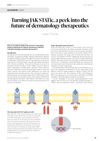 August 2024 in “New Zealand Medical Student Journal”
 JAK inhibitors show promise for treating skin diseases effectively and safely.
 66 citations
,
December 2018 in “Dermatology”
66 citations
,
December 2018 in “Dermatology” Both ruxolitinib and tofacitinib are effective and safe for treating severe alopecia areata, but relapses are common.
 3 citations
,
August 2025 in “Frontiers in Pharmacology”
3 citations
,
August 2025 in “Frontiers in Pharmacology” Oral JAK inhibitors are safe for alopecia areata, but baricitinib may cause more acne and infections.
 January 2025 in “Frontiers in Pediatrics”
 Baricitinib significantly improved hair regrowth and skin condition in a 14-year-old with alopecia areata and atopic dermatitis.
January 2019 in “프로그램북(구 초록집)” Both tofacitinib and ruxolitinib are effective and tolerable for treating alopecia areata.
 13 citations
,
November 2021 in “Pediatric Dermatology”
13 citations
,
November 2021 in “Pediatric Dermatology” Tofacitinib taken by mouth helps treat hair loss in children.
September 2023 in “Journal of the American Academy of Dermatology” Oral Janus kinase inhibitors are effective for treating alopecia areata in adults.
15 citations
,
October 2014 in “The journal of investigative dermatology/Journal of investigative dermatology” Erlotinib causes skin inflammation through IL-1, which can be reduced by anakinra.
 1 citations
,
August 2021 in “Journal of The American Academy of Dermatology”
1 citations
,
August 2021 in “Journal of The American Academy of Dermatology” Baricitinib helped improve hair, eyebrow, and eyelash growth in alopecia areata patients.
 1 citations
,
January 2023 in “Cutis”
1 citations
,
January 2023 in “Cutis” The paper concludes that the new medication baricitinib needs further testing in a more diverse group of patients with alopecia areata.