 5 citations
,
January 2022 in “Scientific reports”
5 citations
,
January 2022 in “Scientific reports” The research identified two types of keratinocytes in chicken scales: one for hard scales and another for soft skin, with similarities to human skin differentiation.
4 citations
,
July 2024 in “Pharmacology Research & Perspectives” Ritlecitinib is safe and may effectively treat alopecia areata.
 1 citations
,
September 2023
1 citations
,
September 2023 AMT® shows promise as a safe and effective treatment for early-stage knee osteoarthritis.
January 1980 in “中国科学A辑(英文版)” The protein structures in the hair and tendon were preserved, but their molecular arrangements changed.
June 2025 in “British Journal of Dermatology” Dual-targeting therapies like Janus kinase inhibitors may treat both alopecia areata and other immune diseases.
 September 2011 in “Clinical Biochemistry”
 The demineralized bone matrix scaffold is better for cell attachment than the mineralized bone allograft.
 14 citations
,
March 2016 in “Mechanisms of Development”
14 citations
,
March 2016 in “Mechanisms of Development” Basonuclin 2 is vital for the development of facial bones, hair follicles, and male germ cells in adult mice, and its absence can lead to dwarfism and abnormal follicles.
44 citations
,
June 2015 in “British Journal of Pharmacology” Betulinic acid can help treat hepatitis C by stopping virus replication.
1 citations
,
May 2022 in “European Journal of Dermatology” Longer treatment with vismodegib lowers relapse risk in basal cell carcinoma.
3 citations
,
March 2024 in “Journal of Dermatological Treatment” Baricitinib can lead to hair regrowth in alopecia areata but may also cause relapses.
January 1980 in “AFA Watchbird” Spectral-analysis can help diagnose mineral imbalances in birds.
20 citations
,
February 2004 in “Clinical & Experimental Immunology” SADBE treatment led to complete hair regrowth in mice with alopecia areata by altering immune cell movement.
 25 citations
,
October 1976 in “The BMJ”
25 citations
,
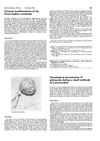
October 1976 in “The BMJ” A woman showed neurological symptoms from psittacosis linked to bird exposure, improving after antibiotic treatment.
 10 citations
,
May 2012 in “Journal of Craniofacial Surgery”
10 citations
,
May 2012 in “Journal of Craniofacial Surgery” Cerament effectively corrected forehead irregularities in one patient, and various surgical techniques successfully reconstructed perioral soft tissue in 14 patients.
November 2023 in “Journal of Investigative Dermatology” The study identified key immune cell differences between mild and severe alopecia areata.
 88 citations
,
July 2008 in “Development”
88 citations
,
July 2008 in “Development” BMP2 and BMP7 have opposite roles in feather formation.
 January 2022 in “Archiv für Tierzucht”
 EPHA4 and Ephrin A3 are found in the skin of Aohan fine-wool sheep.
 April 2016 in “Journal of Investigative Dermatology”
 Mice without the p21 gene can fully regenerate injured ears due to reduced Sdf1 increase and leukocyte recruitment, suggesting new ways to induce tissue regeneration in mammals.
15 citations
,
March 2023 in “Heliyon” Beehive extracts may help with anxiety, depression, and inflammation.
 1 citations
,
January 2024 in “Curēus”
1 citations
,
January 2024 in “Curēus” Upadacitinib significantly improved a man's severe scalp condition when other treatments failed.
 2 citations
,
January 2005 in “Elsevier eBooks”
2 citations
,
January 2005 in “Elsevier eBooks” The document describes skin diseases affecting the outer ear in dogs and cats, their spread to other body parts, and treatment options.
 January 2024 in “Biochemical and Biophysical Research Communications”
 Lack of zinc can cause hearing loss by damaging important parts of inner ear cells in mice.
 January 2026 in “MDPI (MDPI AG)”
 The hairy ear mutation in mice is linked to changes in gene expression affecting hair growth.
2 citations
,
September 2025 in “Journal of Dermatological Treatment” Shorter alopecia areata episodes lead to better baricitinib treatment outcomes.
2 citations
,
March 2025 in “Journal of Translational Autoimmunity” Targeting the AhR pathway may help treat alopecia areata.
 10 citations
,
May 2007 in “Journal of Prosthetic Dentistry”
10 citations
,
May 2007 in “Journal of Prosthetic Dentistry” Tattoo markers help place ear prostheses easily and improve acceptance.
 February 2026 in “Journal of Microbiology and Biotechnology”
 Abietic acid from pine rosin can effectively fight and reduce harmful skin microbes.
 January 2025 in “Open Medicine”
 High-concentration cell-free adipose extract reduces scar formation and improves scar appearance.
7 citations
,
November 2023 in “JAAD Case Reports” Baricitinib helped regrow hair in patients with severe alopecia areata after other treatments failed.