 14 citations
,
March 2014 in “Journal of The American Academy of Dermatology”
14 citations
,
March 2014 in “Journal of The American Academy of Dermatology” Symmetrical Acrokeratoderma (SAK) may be a unique skin condition in China, lacking specific treatment and needing long-term monitoring.
12 citations
,
July 2023 in “Journal of the European Academy of Dermatology and Venereology” Upadacitinib improved Crohn's disease, atopic dermatitis, and alopecia areata in one patient.
July 2024 in “Journal of Investigative Dermatology” Allergic contact dermatitis may promote hair growth by activating hair follicle stem cells.
6 citations
,
December 2022 in “Journal of Infection” The ACE1 gene variant doesn't affect long-COVID symptoms.
10 citations
,
September 2021 in “The FASEB Journal” ACKR2 helps prevent skin scarring and hair loss by controlling inflammation.
January 2000 in “The Journal of Trace Elements in Experimental Medicine” Zinc supplementation effectively treats acrodermatitis enteropathica symptoms.
69 citations
,
December 2006 in “Archives of dermatology” Adalimumab may cause severe hair loss in some patients.
 6 citations
,
January 2013 in “Case reports in endocrinology”
6 citations
,
January 2013 in “Case reports in endocrinology” The document concludes that AFA should be considered in patients with acromegaly-like features but normal hormone levels, and more cases need to be identified to understand the condition fully.
 June 2026 in “Frontiers in Immunology”
 Upadacitinib effectively treated severe atopic dermatitis, vitiligo, and alopecia areata in one patient.
2 citations
,
October 2000 in “Journal of Investigative Dermatology” AUC and APL are distinct conditions needing careful clinical assessment.
 December 2013 in “International Journal of Dermatology”
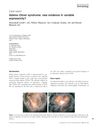
 The clinical signs of Adams-Oliver syndrome can vary greatly, even among family members.
 3 citations
,
February 2022 in “Frontiers in Genetics”
3 citations
,
February 2022 in “Frontiers in Genetics” The LncRNA AC010789.1 slows down hair loss by promoting hair follicle growth and interacting with miR-21 and the Wnt/β-catenin pathway.
 April 2024 in “Journal of asthma and allergy”
 Abrocitinib effectively treated severe atopic dermatitis and mild alopecia areata in a 12-year-old boy after dupilumab failed.
 February 2025 in “American Journal of Biomedical Science & Research”
 A rare combination of hair loss and excessive fine hair growth was found in celiac disease patients.
 1 citations
,
July 2022 in “The journal of investigative dermatology/Journal of investigative dermatology”
1 citations
,
July 2022 in “The journal of investigative dermatology/Journal of investigative dermatology” Tofacitinib helps improve skin conditions in people with Down syndrome, especially alopecia areata.
2 citations
,
May 2025 in “Journal of Clinical Medicine” Upadacitinib is safe and effective for treating alopecia areata and atopic dermatitis in children.
1 citations
,
September 2001 in “PubMed” Acitretin treats severe skin conditions but requires careful monitoring due to serious side effects.

An infant with a zinc deficiency skin disorder improved with zinc treatment.
 3 citations
,
August 2024 in “Cureus”
3 citations
,
August 2024 in “Cureus” Upadacitinib may cause hair loss.
48 citations
,
June 2000 in “Japanese Journal of Cancer Research” Dimethylarsinic acid speeds up skin tumor growth in certain mice.
39 citations
,
September 2018 in “American Journal of Medical Genetics Part A” A new genetic mutation in the ODC1 gene causes developmental delay and other symptoms in a young girl.
 130 citations
,
February 2018 in “Journal of Investigative Dermatology”
130 citations
,
February 2018 in “Journal of Investigative Dermatology” Tofacitinib may help treat severe hair loss, but more research is needed.
March 2025 in “JAAD International” Alopecia areata is rare in organ transplant patients and may be linked to the drug tacrolimus.
40 citations
,
August 2005 in “JEADV. Journal of the European Academy of Dermatology and Venereology/Journal of the European Academy of Dermatology and Venereology” Acitretin moderately improved skin and eye issues but not hair loss or light sensitivity in a 3-year-old with IFAP syndrome.
2 citations
,
September 2024 in “Internal Medicine Journal” Upadacitinib helped regrow hair and maintain ulcerative colitis remission.
 January 2026 in “Dermatology Reports”
 Upadacitinib improved symptoms and hair regrowth in a teen with multiple autoimmune conditions.
 April 2026 in “Clinical Journal of Gastroenterology”
 Upadacitinib can cause hypersensitivity that worsens ulcerative colitis symptoms.
 January 2014 in “Michigan telecommunications and technology law review”
 Zinc deficiency in alcoholic cirrhosis patients causes skin issues, and zinc treatment improves symptoms.
16 citations
,
January 2010 in “Journal of Korean medical science/Journal of Korean Medical Science” A Korean boy's skin and digestive symptoms were caused by a rare genetic disorder that affects zinc absorption, and he got better with zinc supplements.
 March 2026 in “International Journal of Dermatology and Venereology”
 Abrocitinib significantly improved hair regrowth in adolescents with alopecia areata without serious safety issues.