 August 2023 in “Stem Cell Research & Therapy”
 Using adipose-derived stem cell media with minoxidil may help regrow hair in men with hair loss.
April 2022 in “DOAJ (DOAJ: Directory of Open Access Journals)” Adipose-derived stem cell exosomes can boost hair growth by enhancing dermal papilla cell activity.
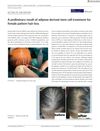 April 2021 in “Journal of Cosmetic Dermatology”
 Stem cell treatment improved hair density in female hair loss patient.
October 2021 in “Plastic and reconstructive surgery. Global open” Adipose-derived stem cells may help treat hair loss.
17 citations
,
August 2020 in “Stem Cell Research & Therapy” A 3D cell model can rejuvenate stem cells to improve wound healing.
 13 citations
,
January 2018 in “Cellular Physiology and Biochemistry”
13 citations
,
January 2018 in “Cellular Physiology and Biochemistry” Fat-derived stem cells can help protect and repair skin stem cells from aging caused by UV light.
June 2026 in “Frontiers in Cell and Developmental Biology” Expanded ADSCs improve fat graft survival better than SVF.
28 citations
,
January 2023 in “Cell Transplantation” Nanofat with stem cells is promising for treating hair loss, scars, and skin rejuvenation.
14 citations
,
November 2019 in “Mediators of inflammation” IL-6 from stem cells helps repair skin and grow hair.
10 citations
,
February 2022 in “Journal of cosmetic dermatology” Exosomes from fat-derived stem cells may help regrow hair.
4 citations
,
May 2015 in “Macedonian Veterinary Review” Canine stem cell aggregates can effectively replace natural dermal papillae for hair research.
3 citations
,
December 2007 in “Journal of Otology” Guinea pig fat stem cells can become hair cell-like cells in a lab.
July 2020 in “Research Square (Research Square)” A 3D co-culture model improved stem cell function and wound healing.
 1 citations
,
February 2024 in “ACS applied bio materials”
1 citations
,
February 2024 in “ACS applied bio materials” The new Exo/Gel dressing with stem cell-derived particles helps skin wounds heal faster.
13 citations
,
May 2025 in “Journal of Cosmetic Dermatology” Adipose mesenchymal stem cell-derived exosomes are as effective as platelet-rich plasma for improving photoaged skin and are a good option for those who prefer not to use needles.
24 citations
,
November 2023 in “International Journal of Molecular Sciences” PRP and ADSC therapies show promise in improving symptoms of genital lichen sclerosus with minimal side effects.
 2 citations
,
January 2018 in “Journal of clinical & experimental dermatology research”
2 citations
,
January 2018 in “Journal of clinical & experimental dermatology research” Both fat-derived stem cells and platelet-rich plasma are effective and safe for hair loss, but stem cells give better results with more side effects.
1 citations
,
July 2025 in “Journal of Cosmetic Dermatology” Exosome treatment from stem cells improved hair regrowth and reduced scalp issues in a woman with lichen planopilaris.
April 2018 in “Cytotherapy” Both treatments promote hair growth safely, but stem cells are slightly more effective.
December 2025 in “World Journal of Stem Cells” Exosome-based therapies could help treat hair loss, but more research is needed.
19 citations
,
January 2019 in “Molecular Medicine Reports” Store stem cells at 4°C in 10% human serum and use within 2-4 hours for best results.
October 2021 in “QJM: An International Journal of Medicine” ADSC injections improve hair density, thickness, and reduce inflammation in female pattern hair loss.
 1 citations
,
February 2022 in “Experimental Dermatology”
1 citations
,
February 2022 in “Experimental Dermatology” Certain proteins are found at higher levels in balding areas compared to non-balding areas, suggesting a link to hair loss. This could be useful for diagnosing and treating hair loss.
 55 citations
,
May 2017 in “Current stem cell research & therapy”
55 citations
,
May 2017 in “Current stem cell research & therapy” Using fat-derived stem cells for hair loss treatment is safe and effective, improving hair growth and patient satisfaction.
53 citations
,
April 2016 in “Stem cell research & therapy” LL-37 helps stem cells grow and move, aiding tissue regeneration and hair growth.
 28 citations
,
December 2012 in “The American Journal of Cosmetic Surgery”
28 citations
,
December 2012 in “The American Journal of Cosmetic Surgery” Proteins from stem cells improved hair growth in patients with hair loss.
 June 2026 in “Journal of Sulaimani Medical College”
 Adipose-derived stem cell exosomes are more effective and satisfying for treating hair loss than minoxidil.
 60 citations
,
June 2019 in “Ageing Research Reviews”
60 citations
,
June 2019 in “Ageing Research Reviews” Fat from the body can help improve hair growth and scars when used in skin treatments.
 28 citations
,
April 2023 in “Stem cell research & therapy”
28 citations
,
April 2023 in “Stem cell research & therapy” Tiny vesicles from stem cells could be a new treatment for healing wounds.
 February 2024 in “World journal of stem cells”
 Adipose-derived stem cells can help repair and improve eye tissues and appearance.