2 citations
,
November 2025 in “Cells” Adipose-derived stem cell secretome is a promising and effective treatment for skin repair.
 33 citations
,
September 2019 in “Dermatologic Surgery”
33 citations
,
September 2019 in “Dermatologic Surgery” Using a special stem cell formula on the scalp once a month for six months helped people with hair loss grow more hair.
 March 2026 in “Plastic and Aesthetic Research”
 Adipose-derived stem cell exosomes can help reduce skin aging from UV exposure.
28 citations
,
January 2023 in “Cell Transplantation” Nanofat with stem cells is promising for treating hair loss, scars, and skin rejuvenation.
24 citations
,
November 2023 in “International Journal of Molecular Sciences” PRP and ADSC therapies show promise in improving symptoms of genital lichen sclerosus with minimal side effects.
 55 citations
,
May 2017 in “Current stem cell research & therapy”
55 citations
,
May 2017 in “Current stem cell research & therapy” Using fat-derived stem cells for hair loss treatment is safe and effective, improving hair growth and patient satisfaction.
 28 citations
,
December 2012 in “The American Journal of Cosmetic Surgery”
28 citations
,
December 2012 in “The American Journal of Cosmetic Surgery” Proteins from stem cells improved hair growth in patients with hair loss.
 1 citations
,
January 2016 in “Journal of stem cell research and medicine”
1 citations
,
January 2016 in “Journal of stem cell research and medicine” Fat-derived stem cell therapies can potentially increase hair growth and thickness in people with hair loss.
 1 citations
,
January 2016 in “Journal of stem cell research and medicine”
1 citations
,
January 2016 in “Journal of stem cell research and medicine” Fat-derived stem cell therapies can potentially increase hair growth and thickness in people with hair loss.
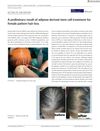 April 2021 in “Journal of Cosmetic Dermatology”
 Stem cell treatment improved hair density in female hair loss patient.
 28 citations
,
April 2023 in “Stem cell research & therapy”
28 citations
,
April 2023 in “Stem cell research & therapy” Tiny vesicles from stem cells could be a new treatment for healing wounds.
June 2026 in “Frontiers in Cell and Developmental Biology” Expanded ADSCs improve fat graft survival better than SVF.
 July 2025 in “World Journal of Stem Cells”
 Stem cell-derived exosomes could be a promising new treatment for hair regrowth.
10 citations
,
February 2022 in “Journal of cosmetic dermatology” Exosomes from fat-derived stem cells may help regrow hair.
18 citations
,
May 2022 in “Stem Cell Research & Therapy” Green OLED light improves stem cell effectiveness for better wound healing.
 November 2023 in “Journal of Investigative Dermatology”
 Adipose stem cell-derived exosomes may improve hair count and scalp health, potentially outperforming current treatments like minoxidil.
8 citations
,
January 2014 in “Journal of Stem Cell Research & Therapy” Stem cell therapy improves healing and reduces pain in cutaneous radiation syndrome.
 August 2024 in “Indian Journal of Skin Allergy”
 Stem-cell therapy shows promise for skin conditions but needs more research.
 136 citations
,
May 2019 in “Cells”
136 citations
,
May 2019 in “Cells” Stem cell therapy, particularly using certain types of cells, shows promise for treating hair loss by stimulating hair growth and development, but more extensive trials are needed to confirm these findings.
 21 citations
,
July 2020 in “Stem Cell Research & Therapy”
21 citations
,
July 2020 in “Stem Cell Research & Therapy” Fat stem cells from diabetic mice can still help heal wounds.
 12 citations
,
August 2018 in “Journal of Dermatological Science”
12 citations
,
August 2018 in “Journal of Dermatological Science” Scientists made stem cells that can grow hair by adding three specific factors to them.
 2 citations
,
September 2018 in “Tissue Engineering Part A”
2 citations
,
September 2018 in “Tissue Engineering Part A” Xeno-free three-dimensional stem cell masses are safe and effective for improving blood flow and tissue repair in limb ischemia.
 March 2025 in “Medical & Clinical Research”
 Stem cell therapy can help regrow hair and increase hair density.
Stem cell therapy shows promise for treating hair loss in androgenetic alopecia.
 November 2023 in “Cell Proliferation”
 A protein from fat-derived stem cells, DKK1, is linked to hair loss and blocking it may help treat alopecia areata.
 88 citations
,
July 2019 in “International Journal of Molecular Sciences”
88 citations
,
July 2019 in “International Journal of Molecular Sciences” Using human fat tissue derived stem cells in micrografts can safely and effectively increase hair density in people with hair loss.
March 2025 in “Regenerative Therapy” Spirulina maxima extract may help hair growth by boosting cell activity.
 8 citations
,
May 2019 in “Journal of Stem Cells & Regenerative Medicine”
8 citations
,
May 2019 in “Journal of Stem Cells & Regenerative Medicine” Dental pulp stem cells are better for tissue repair, while fat tissue stem cells may be more suited for wound healing and hair growth.
January 2010 in “Seoul National University Open Repository (Seoul National University)” The medium from stem cells in fat tissue may boost hair growth.
2 citations
,
May 2020 in “Research Square (Research Square)” Stem cells from diabetic mice can still help heal wounds effectively.