 25 citations
,
May 2020 in “Stem Cells Translational Medicine”
25 citations
,
May 2020 in “Stem Cells Translational Medicine” ADSC-CE treatment safely increases hair density and thickness in androgenetic alopecia patients.
April 2026 in “Clinical and Translational Science” Tofacitinib effectively treats severe alopecia areata, improving hair regrowth and patient satisfaction.
May 2025 in “OPAL (Open@LaTrobe) (La Trobe University)” Linoleic acid and magnesium are key in alopecia areata progression, and tofacitinib can help by affecting their pathway.
1 citations
,
September 1986 in “Journal of the Forensic Science Society” Hair root sheaths can be used to accurately analyze genetic markers.
 September 2024 in “Journal of the American Academy of Dermatology”
 AH-001 could be a safer and more effective treatment for hair loss.
15 citations
,
December 2019 in “European Journal of Dermatology” Low-dose tofacitinib is effective and cheaper for severe alopecia areata.
 19 citations
,
January 2016 in “Annals of Dermatology”
19 citations
,
January 2016 in “Annals of Dermatology” Dutasteride is safe and effective for treating hair loss, but may decrease libido.
42 citations
,
February 2019 in “Circulation” Targeting ATM could help manage heart cell enlargement due to pressure overload.
September 2025 in “The Open Dermatology Journal” The AI showed high accuracy in diagnosing skin conditions but needs improvement for immunological and infectious disorders.
 23 citations
,
September 2019 in “Dermatology practical & conceptual”
23 citations
,
September 2019 in “Dermatology practical & conceptual” The study concluded that AAI and DAA are forms of the same disease, with different symptoms in men and women, and that corticosteroid treatment is effective.
March 2012 in “Society for Endocrinology BES 2012” A new method was developed to analyze certain hormones and drugs in human blood efficiently.
33 citations
,
December 2005 in “British Journal of Clinical Pharmacology” The new testosterone patch works as well as the gel.
75 citations
,
June 2007 in “Journal of Biological Chemistry” MT-DADMe-ImmA can selectively kill head and neck cancer cells without harming normal cells.
Early combination therapy can effectively regrow hair in frontal fibrosing alopecia.
12 citations
,
September 2015 in “Drug Design Development and Therapy” AD198 is more effective than doxorubicin in stopping certain dog cancer cells.
 October 2022 in “Journal of Armed Forces Medical College, Bangladesh”
 Tofacitinib is effective and safe for treating alopecia areata.
 238 citations
,
November 2016 in “Journal of The American Academy of Dermatology”
238 citations
,
November 2016 in “Journal of The American Academy of Dermatology” Tofacitinib is effective and safe for severe hair loss, but full regrowth is less likely after 10 years of hair loss.
 8 citations
,
June 2022 in “Frontiers in Medicine”
8 citations
,
June 2022 in “Frontiers in Medicine” Both individual and combined treatments of tofacitinib and corticosteroids can help regrow hair in moderate-to-severe alopecia areata, but ongoing treatment may be necessary.
71 citations
,
February 2012 in “The American Journal of Human Genetics” A specific ATR gene mutation is linked to a hereditary oropharyngeal cancer syndrome.
 1 citations
,
September 2024 in “Indian Journal of Postgraduate Dermatology”
1 citations
,
September 2024 in “Indian Journal of Postgraduate Dermatology” Trichoscopy effectively diagnoses temporal triangular alopecia in children.
 10 citations
,
March 2016 in “Journal of The American Academy of Dermatology”
10 citations
,
March 2016 in “Journal of The American Academy of Dermatology” Antiandrogenic drugs could be a good treatment option for frontal fibrosing alopecia.
 6 citations
,
November 2017 in “Dermatologic Therapy”
6 citations
,
November 2017 in “Dermatologic Therapy” Combining mometasone furoate cream with adapalene gel is safer and more effective for hair regrowth in alopecia areata than using the cream alone.
April 2016 in “The journal of investigative dermatology/Journal of investigative dermatology” The ALADIN score can predict how well patients with alopecia areata will respond to JAK inhibitor treatments.
Arabidopsis Formin 2 stabilizes actin filaments, affecting cell-to-cell movement and virus susceptibility.
 688 citations
,
June 2007 in “Cell Stem Cell”
688 citations
,
June 2007 in “Cell Stem Cell” Removing the ATR gene in adult mice causes rapid aging and stem cell loss.
 10 citations
,
August 2011 in “Clinics”
10 citations
,
August 2011 in “Clinics” The author clarified that Alopecia Areata Incognita (AAI) and diffuse Alopecia Areata (AA) are different conditions and the case discussed was actually AA, not AAI.
4 citations
,
January 2025 in “Dermatologica Sinica” Experts recommend personalized treatment plans for alopecia areata, using corticosteroids and minoxidil for mild cases, and stronger medications for severe cases.
 65 citations
,
February 2015 in “Neuro-Oncology”
65 citations
,
February 2015 in “Neuro-Oncology” Alisertib was found to be an effective and tolerable treatment for children with recurrent brain tumors.
 41 citations
,
December 2015 in “JAMA Dermatology”
41 citations
,
December 2015 in “JAMA Dermatology” Tofacitinib citrate improved nail dystrophy and pain in patients with alopecia universalis without causing side effects.
 2 citations
,
April 2024 in “Dermatology Practical & Conceptual”
2 citations
,
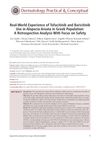
April 2024 in “Dermatology Practical & Conceptual” Tofacitinib and baricitinib are effective and safe for treating severe alopecia areata, especially in younger people.