CRPS I is complex, linked to immune and nerve issues, and needs comprehensive treatment.

Hair loss can cause significant social and emotional issues, especially for women and young men.
6 citations
,
August 2024 in “The Journal of Dermatology” Ozenoxacin reduces sebum production, helping manage acne.
Azelaic acid helps with skin pigmentation issues, but its full effects are not completely understood.
 1 citations
,
January 1989 in “Journal of dermatological treatment”
1 citations
,
January 1989 in “Journal of dermatological treatment” Azelaic acid may help treat acne by killing bacteria, reducing inflammation, and preventing clogged pores.
13 citations
,
April 2019 in “International journal of molecular sciences” Acyzol could help treat conditions caused by zinc deficiency.
56 citations
,
July 2020 in “Journal of Dermatological Treatment” Azelaic acid is safe and effective for treating rosacea and other skin issues.
 13 citations
,
November 2021 in “Pediatric Dermatology”
13 citations
,
November 2021 in “Pediatric Dermatology” Tofacitinib taken by mouth helps treat hair loss in children.
1 citations
,
June 1999 in “American Journal of Contact Dermatitis” Tazarotene gel is more effective for acne than tretinoin and works as well as adapalene.
3 citations
,
January 2011 in “Yearbook of Dermatology and Dermatologic Surgery” 87 citations
,
March 2013 in “Expert Review of Anticancer Therapy” Afatinib often causes skin problems that need proactive management.
December 2013 in “Cumhuriyet Tıp Dergisi/Cumhuriyet Üniversitesi Tıp Fakültesi dergisi” Erlotinib can cause acne-like skin issues, needing early treatment and possible dosage adjustments.
 27 citations
,
January 2005 in “American Journal of Clinical Dermatology”
27 citations
,
January 2005 in “American Journal of Clinical Dermatology” Azelaic acid and anthralin are similarly effective for treating patchy hair loss.
 10 citations
,
June 2018 in “Aaps Pharmscitech”
10 citations
,
June 2018 in “Aaps Pharmscitech” The flutamide-loaded hydrogel is a promising, skin-friendly treatment for acne and hair loss, potentially requiring less frequent application.
 6 citations
,
February 2023 in “Journal of nanobiotechnology”
6 citations
,
February 2023 in “Journal of nanobiotechnology” The new anti-acne treatment HA-P5 effectively reduces acne by targeting two key receptors and avoids an enzyme that can hinder treatment.
 109 citations
,
March 2011 in “Journal of controlled release”
109 citations
,
March 2011 in “Journal of controlled release” New micelle solutions greatly improve skin delivery of certain antifungal drugs.
 1 citations
,
August 2021 in “Consilium Medicum”
1 citations
,
August 2021 in “Consilium Medicum” Selencin effectively reduces hair loss and improves hair health in diffuse alopecia.
 7 citations
,
January 2012 in “PubMed”
7 citations
,
January 2012 in “PubMed” Azelaic acid and finasteride can help preserve skin flaps after surgery by increasing BCL-2 protein and decreasing bax protein.
 48 citations
,
November 2017 in “Journal of the American Academy of Dermatology”
48 citations
,
November 2017 in “Journal of the American Academy of Dermatology” Tofacitinib 2% ointment helped hair regrow in 3 out of 10 patients with alopecia areata, but caused side effects like scalp irritation and raised cholesterol in some.
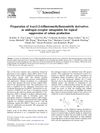 11 citations
,
August 2007 in “Bioorganic & Medicinal Chemistry Letters”
11 citations
,
August 2007 in “Bioorganic & Medicinal Chemistry Letters” Scientists made a chemical (compound 4e) that can be applied on skin to reduce oil production, which can help with acne, but it might cause skin sensitivity to light.
 March 2022 in “Journal of health sciences and medicine”
 Azelaic acid and permethrin both effectively kill the skin mite Demodex folliculorum in a lab setting.
50 citations
,
December 2017 in “Nanoscale” Polymeric micelle nanocarriers deliver adapalene more effectively to hair follicles than commercial products.
 1 citations
,
January 2020 in “PubMed”
1 citations
,
January 2020 in “PubMed” Azelaic acid helps protect hair cells from UV damage and encourages hair growth by increasing certain gene expressions and proteins.
 July 2022 in “SKIN The Journal of Cutaneous Medicine”
 A new lotion with halobetasol and tazarotene successfully treats acne keloidalis nuchae.
 January 2026 in “Lumbung Farmasi Jurnal Ilmu Kefarmasian”
 The topical formula with sidr leaves and roasted candlenut extracts significantly boosts hair growth for alopecia.
October 2024 in “Iraqi postgraduate medical journal”  26 citations
,
March 2014 in “International journal of pharmaceutics”
26 citations
,
March 2014 in “International journal of pharmaceutics” Researchers created a skin treatment that could effectively deliver medication into hair follicles.

The new gel with Zinc Oxide nanoparticles and finasteride shows promise for treating hair loss when applied to the skin.
 1 citations
,
March 2004 in “Journal of the American Academy of Dermatology”
1 citations
,
March 2004 in “Journal of the American Academy of Dermatology” ZD1839, a cancer drug, can cause mild skin rashes that are treatable without stopping the medication.
 69 citations
,
August 2008 in “Journal of The European Academy of Dermatology and Venereology”
69 citations
,
August 2008 in “Journal of The European Academy of Dermatology and Venereology” Oral dutasteride and topical pimecrolimus can safely and effectively treat Frontal Fibrosing Alopecia, leading to significant hair regrowth.