 2 citations
,
November 2023 in “Acta dermato-venereologica”
2 citations
,
November 2023 in “Acta dermato-venereologica” Tofacitinib is effective and safe for treating alopecia areata with a good drug survival rate.
10 citations
,
September 2016 in “Journal of cutaneous medicine and surgery” Patients on dabrafenib and trametinib for melanoma often experience skin side effects.
June 2025 in “Veterinary Sciences” Oclacitinib effectively treated a diabetic cat's severe skin issues without raising glucose levels, and surgery fixed eyelid fusion.
8 citations
,
January 2017 in “Dermatology online journal” Tofacitinib helped psoriasis but not alopecia universalis, needing more research.
8 citations
,
August 2023 in “Lasers in Surgery and Medicine” Concurrent laser and isotretinoin treatment improves acne scars more than delayed treatment.
 1 citations
,
November 2020 in “Journal of The American Academy of Dermatology”
1 citations
,
November 2020 in “Journal of The American Academy of Dermatology” The commentary suggests that certain hair and skin care products may be linked to frontal fibrosing alopecia, but not sunscreens, and calls for more thorough research on the causes.
November 2024 in “Actas Dermo-Sifiliográficas” Low-dose oral minoxidil can improve hair and eyebrow growth in frontal fibrosing alopecia.
 7 citations
,
October 2015 in “Actas Dermo-Sifiliográficas”
7 citations
,
October 2015 in “Actas Dermo-Sifiliográficas” New treatments for Frontal Fibrosing Alopecia show promise, especially finasteride and dutasteride, with most patients seeing improvement or stabilization.
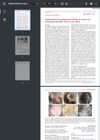 April 2024 in “JEADV clinical practice”
 Upadacitinib significantly improved both rheumatoid arthritis and alopecia areata in a patient.
 1 citations
,
May 2017 in “Journal of the American Academy of Dermatology”
1 citations
,
May 2017 in “Journal of the American Academy of Dermatology” Tofacitinib helped a teenager with severe hair loss grow hair back, but more research is needed.
 175 citations
,
April 1982 in “Journal of The American Academy of Dermatology”
175 citations
,
April 1982 in “Journal of The American Academy of Dermatology” Isotretinoin is highly effective in treating severe acne, rosacea, and gram-negative folliculitis.
 September 2024 in “Cutis”
 Sunscreen use may increase the risk of frontal fibrosing alopecia.
25 citations
,
February 2024 in “Pharmaceutics” Nanocarriers can make acne treatments more effective and gentle on the skin.
1 citations
,
January 2014 The emulgel formulation F6 released more Minoxidil than the gel formulation F1.
 January 2018 in “Springer eBooks”
 PDE inhibitors, especially PDE4 inhibitors like apremilast, are effective for certain inflammatory skin conditions but have side effects and can be costly.
 April 2026 in “Zenodo (CERN European Organization for Nuclear Research)”
 Potential compounds may inhibit hair loss by targeting a non-androgen pathway.
Isotretinoin effectively treats acne, often providing lasting relief.
 3 citations
,
June 2021 in “PLOS ONE”
3 citations
,
June 2021 in “PLOS ONE” A topical BRAF inhibitor, vemurafenib, can speed up wound healing and promote hair growth, especially in diabetic patients.
 March 2024 in “Journal of Pharmaceutical and Sciences”
 Zaleya pentandra extracts, especially acetone, may be useful for new medicines and food industry applications.
 January 2025 in “International Journal of Dermatology Venereology and Leprosy Sciences”
 Tofacitinib improved hair regrowth and quality of life in children with alopecia areata, with mild side effects.
 37 citations
,
November 1995 in “Journal of Investigative Dermatology”
37 citations
,
November 1995 in “Journal of Investigative Dermatology” Topical finasteride and flutamide reduce gland size and enzyme activity, with flutamide being more potent, potentially treating acne, seborrhea, hirsutism, and androgenic alopecia.
 January 2026 in “Frontiers in Natural Products”
 Combining shikimic acid and Prunus mume extract may effectively treat acne naturally.
7 citations
,
January 2022 in “SAGE open medical case reports” Upadacitinib successfully treated a child's severe skin and hair loss issues.
 November 2025 in “DOAJ (DOAJ: Directory of Open Access Journals)”
 The choice between belimumab and anifrolumab for treating lupus depends on the patient's specific symptoms.
10 citations
,
August 2022 in “JAAD Case Reports” Oral tofacitinib effectively regrows hair in children with alopecia areata without major side effects.
25 citations
,
July 2022 in “Pharmaceutics” Spanlastic nanovesicles can improve efinaconazole delivery through nails.
 October 2025 in “Dermatology and Therapy”
 Ritlecitinib is being tested for effectiveness and safety in treating severe alopecia areata.
The combination therapy improved hair growth and thickness in people with androgenetic alopecia.
1 citations
,
January 2023 in “Journal of Clinical Medicine” Minoxidil can cause a skin reaction called ALEP.
1 citations
,
April 2017 in “Journal of Investigative Dermatology” ZNF750 and MPZL3 are important in causing seborrheic dermatitis.