 October 2011 in “Iranian Journal of Dermatology”
 Men with male pattern baldness may have a higher risk of heart disease due to increased levels of a specific lipid in their blood.
 16 citations
,
February 2010 in “Journal of the European Academy of Dermatology and Venereology”
16 citations
,
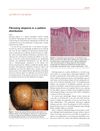
February 2010 in “Journal of the European Academy of Dermatology and Venereology” Fibrosing alopecia in a pattern distribution is a unique hair loss condition that may respond to antiandrogen therapy.

Men with androgenetic alopecia may have higher triglycerides, suggesting a link to lipid metabolism.
 January 2023 in “Dermatologic Therapy”
 The nutritional supplement Pilopeptan® WOMAN improved hair growth and thickness in women with hair loss.
 40 citations
,
May 1999 in “Journal of The European Academy of Dermatology and Venereology”
40 citations
,
May 1999 in “Journal of The European Academy of Dermatology and Venereology” Treat hair loss with finasteride, minoxidil, or surgery; consider side effects and severity.
14 citations
,
July 1994 in “Journal of Investigative Dermatology” May 2020 in “International journal of molecular biology” Mutations in the AR gene cause hair thinning and loss.
28 citations
,
June 2000 in “PubMed” Androgenetic alopecia is common hair loss due to genetics and DHT.
September 2025 in “OPAL (Open@LaTrobe) (La Trobe University)” Angiopoietin-1 helps hair follicle cells survive and grow, potentially treating hair loss.
 April 2018 in “Journal of Investigative Dermatology”
 Platelet Rich Plasma can potentially help in restoring hair loss, but more research with larger groups is needed to confirm its effectiveness and standardize its use.
January 2025 in “Journal of Controlled Release” A new microneedle patch helps treat hair loss by improving drug delivery to hair follicles.
 June 2024 in “Saudi Journal of Medicine”
 PRP therapy significantly improves hair thickness and density in male pattern baldness.
52 citations
,
July 2001 in “Molecular and cellular endocrinology” Activin A helps heal skin wounds and protects the brain after injury.
Women with androgenetic alopecia (hair loss) have normal prostate specific antigen levels but higher testosterone levels.
 April 2024 in “Biomedicine & pharmacotherapy”
 Pilose antler extract helps hair grow in mice with a type of hair loss by speeding up the growth phase.
May 2026 in “Skin Appendage Disorders” Combining PRP with other treatments may improve hair growth more than PRP alone.
 1 citations
,
January 2018 in “Journal of V. N. Karazin Kharkiv National University: Series Medicine”
1 citations
,
January 2018 in “Journal of V. N. Karazin Kharkiv National University: Series Medicine” Platelet-rich plasma can positively affect common hair loss, but more research is needed for standard use.
December 2025 in “Journal of Drug Delivery Science and Technology” Combining minoxidil with ginsenoside Rg3 and glycyrrhizic acid offers a more effective treatment for androgenic alopecia.
 January 2020 in “Medpulse International Journal of General Medicine”
 Trichoscopy helps diagnose and monitor hair loss, showing different signs at various stages of hair thinning.
July 2025 in “InnovAiT Education and inspiration for general practice”  July 2026 in “International Journal of Molecular Sciences”
 TSG-enriched Polygonum multiflorum extract may effectively treat hair loss by blocking 5α-reductase and activating hair growth pathways.
 March 2026 in “Dermatology Online Journal”
 Androgenetic alopecia is linked to higher cholesterol in both sexes and obesity in women.
 6 citations
,
September 2019 in “Archives of Dermatological Research”
6 citations
,
September 2019 in “Archives of Dermatological Research” Found 32 genes linked to male baldness, affecting hair growth and stress-related pathways.
 August 2024 in “International Journal of Molecular Sciences”
 Androgenetic alopecia involves immune cell disruptions, especially increased CD4+ T cells around hair follicles.
 June 2024 in “International journal of molecular sciences”
 Adenosine complex helps increase hair thickness and density in hair loss.
December 2022 in “Plastic and Reconstructive Surgery” PRP is an effective and safe treatment for hair loss.

The RNA AL136131.3 slows down hair growth and speeds up hair loss by affecting sugar breakdown in hair follicles.
 2 citations
,
October 2017 in “Journal of The American Academy of Dermatology”
2 citations
,
October 2017 in “Journal of The American Academy of Dermatology” Focal atrichia helps diagnose female pattern hair loss.
 June 2023 in “Skin Research and Technology”
 Using platelet-rich plasma injections and 5% minoxidil topically can safely and effectively treat mild-to-moderate male pattern baldness.
 February 2024 in “Drug Delivery and Translational Research”
 A new liposomal formulation improves drug delivery and hair growth for treating hair loss without causing skin irritation.