 51 citations
,
April 2021 in “JAMA network open”
51 citations
,
April 2021 in “JAMA network open” The AI tool helped primary care doctors and nurse practitioners diagnose skin conditions more accurately.
 3 citations
,
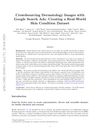
February 2024 in “arXiv (Cornell University)”
3 citations
,
February 2024 in “arXiv (Cornell University)” Google Search ads effectively gathered a diverse dermatology image dataset for research and AI development.
 11 citations
,
September 2012 in “Journal of Nanjing Medical University”
11 citations
,
September 2012 in “Journal of Nanjing Medical University” Cyclosporine A was found to increase hair growth in mouse whisker follicles.
70 citations
,
August 2019 in “European Journal of Medicinal Chemistry”  March 2026 in “Preprints.org”
 DRDE-07 shows promise for treating skin diseases due to its favorable properties.
 April 2026 in “Experimental & Molecular Medicine”
 Mouse and human skin development share similar fibroblast timelines.
2 citations
,
July 2025 in “Frontiers in Veterinary Science” MicroRNAs and AI can improve cashmere goat hair quality and aid in hair disorder diagnosis.
 February 2026 in “Dermatology and Therapy”
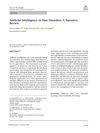
 AI can improve hair disorder diagnosis and treatment but can't replace doctors yet.
 22 citations
,
December 2016 in “PloS one”
22 citations
,
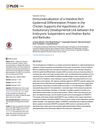
December 2016 in “PloS one” A specific protein in chicken embryos links early skin layers to feather development.
September 2025 in “The Open Dermatology Journal” The AI showed high accuracy in diagnosing skin conditions but needs improvement for immunological and infectious disorders.
 1 citations
,
January 2026 in “Frontiers in Cell and Developmental Biology”
1 citations
,
January 2026 in “Frontiers in Cell and Developmental Biology” AI improves biomaterial design by making it faster, cheaper, and more effective for personalized medicine.
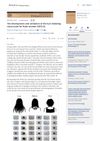 October 2023 in “The Journal of Dermatology”
 The HSVS-A is an effective tool for quickly screening hair shedding in Asian women.
37 citations
,
December 2020 in “Molecules” A new delivery system makes Curcumin more effective and safer against viruses.
 September 2024 in “Journal of Investigative Dermatology”
 A new tool can analyze hair to detect changes due to hormones, genetics, and aging.
 January 2024 in “Wiadomości Lekarskie”
 AI is advancing in dermatology and cosmetology, raising questions about its potential and trustworthiness.
 March 2026 in “Trends in Sciences”
 A mouse model was created to study hair loss similar to humans.
Kalya Research is an AI tool that effectively finds and analyzes alternative medicine literature, saving researchers time.
April 2023 in “Journal of Investigative Dermatology” The MDhair app accurately assesses hair loss severity with 94% accuracy.
 1 citations
,
January 2023 in “IEEE access”
1 citations
,
January 2023 in “IEEE access” Deep learning helps detect skin conditions and is advancing dermatology diagnosis and treatment.
December 2025 in “Pharmaceutics” Personalized skin rejuvenation using genomics shows promise but needs more research.
AI can personalize exercise routines to improve skin health.
April 2025 in “Preprints.org” AI can personalize exercise to improve skin health.
 June 2024 in “Nature Cell and Science”
 The Scalp Coverage Scoring method reliably measures hair density from images.
 October 2023 in “Biomedical science and engineering”
 Innovative methods are reducing animal testing and improving biomedical research.
 30 citations
,
April 2018 in “Experimental Dermatology”
30 citations
,
April 2018 in “Experimental Dermatology” The article concludes that developing in vitro models for human hair structures is important for research and reducing animal testing, but there are challenges like obtaining suitable samples and the models' limitations.
12 citations
,
June 2025 in “Gut Microbes” BroadAMP-GPT effectively creates antimicrobial peptides to fight drug-resistant bacteria.
 1 citations
,
March 2023 in “bioRxiv (Cold Spring Harbor Laboratory)”
1 citations
,
March 2023 in “bioRxiv (Cold Spring Harbor Laboratory)” Skin cell types develop when specific genes are turned on by removing certain chemical tags from DNA.
7 citations
,
March 2024 in “Skin Research and Technology” miR-200c-3p could help diagnose and treat alopecia areata.
 September 2022 in “Research Square (Research Square)”
 The AI model DIET-AI effectively diagnoses skin diseases as well as doctors.
 9 citations
,
January 2020 in “IEEE Access”
9 citations
,
January 2020 in “IEEE Access” The KEBOT system is a highly accurate AI tool for analyzing hair transplants.