 4 citations
,
January 2014 in “RSC Advances”
4 citations
,
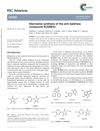
January 2014 in “RSC Advances” A new, less toxic and more efficient method to create the anti-baldness compound RU58841 was developed in 2014.

Deep eutectic solvents can replace toxic solvents in extracting useful compounds for medicines.
New steroid derivatives show promise as anticancer agents, even against resistant cells.
November 2025 in “Applied Research” Synthetic curcumin derivatives improve treatment for diabetes and cancer.
 15 citations
,
January 2020 in “RSC advances”
15 citations
,
January 2020 in “RSC advances” The new palladium catalyst is effective and reusable for making pharmaceutical ingredients.
 3 citations
,
January 2003 in “Synthetic Communications”
3 citations
,
January 2003 in “Synthetic Communications” Scientists made two new chemicals that might help treat diseases caused by male hormones.
![The Synthesis of (−)-4-Methyl-8-Chloro-Trans-1,2,3,4,4a,5,6,10b-Octahydrobenzo-[f]-Quinolin-3-One-[3-14C] (LY300502-14C) via a Circuitous Route](/images/assets/73bab8dc-bdf0-45e3-8ef7-73d0d4b93cb1/small/21074.jpg) 3 citations
,
October 1994 in “Journal of Labelled Compounds and Radiopharmaceuticals”
3 citations
,
October 1994 in “Journal of Labelled Compounds and Radiopharmaceuticals” Scientists made a carbon-14 labeled version of a drug with a 48% yield and over 99% purity.
 88 citations
,
February 2008 in “Journal of Medicinal Chemistry”
88 citations
,
February 2008 in “Journal of Medicinal Chemistry” Scientists made the first metal-based compounds from a nonsteroidal antiandrogen drug, which showed potential in fighting both hormone-dependent and independent prostate cancer cells.
August 2025 in “OPAL (Open@LaTrobe) (La Trobe University)” Certain hydroxycinnamate derivatives may effectively inhibit enzymes linked to hair loss with low toxicity.

The research created new azasteroids and pseudoazulenyl nitrones, which could be useful in medicine.
54 citations
,
March 2024 in “Journal of Medicinal Chemistry” N-oxides are important in medicine for improving drug properties and targeting.
6 citations
,
August 2024 in “Advanced Science” A new method efficiently creates biaryl N-oxides with potential for cancer treatment and drug development.
 June 2025 in “Natural Product Communications”
 Researchers created 10 new compounds similar to cercidin, which could lead to new antibiotics.
 November 2022 in “Journal of Investigative Dermatology”
 A new molecule was found to be a safe and effective skin lightener and anti-aging product.
 20 citations
,
June 1995 in “Tetrahedron Letters”
20 citations
,
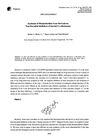
June 1995 in “Tetrahedron Letters” New chemicals were made that can block an enzyme linked to hair loss, prostate growth, and acne.
 January 2023 in “Bioorganičeskaâ himiâ”
 The new compound is a promising, less toxic alternative to finasteride for treating prostate issues.
 January 2026 in “Beilstein Journal of Organic Chemistry”
 A new, efficient method creates sulfinimidate esters from sulfenamides and alcohols without metals.
13 citations
,
February 2008 The new natural sindoor is safe, non-toxic, and eco-friendly.
 3 citations
,
August 2017 in “Synlett”
3 citations
,
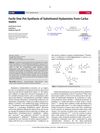
August 2017 in “Synlett” Scientists in India found a safer and efficient way to make a type of medicine called hydantoins from carbamates, which also worked well in making the seizure medicine, Ethotoin.
January 2009 in “Xiandai huagong” Finasteride was successfully synthesized from Pregnadienolone acetate.
 6 citations
,
January 2016 in “Bioorganic & Medicinal Chemistry Letters”
6 citations
,
January 2016 in “Bioorganic & Medicinal Chemistry Letters” Some minoxidil combinations can help differentiate leukemia cells without harming other cells.
 37 citations
,
October 2006 in “Steroids”
37 citations
,
October 2006 in “Steroids” New sulfur-containing steroid analogs show promise for more targeted medical treatments.

Customized dermatological treatments effectively address gaps in standard products, especially for complex cases.
70 citations
,
August 2019 in “European Journal of Medicinal Chemistry”  May 2024 in “Journal of molecular structure”
 A new compound, 3a, effectively fights prostate cancer better than finasteride.
 March 2026 in “Pharmaceutics”
 TheDES improve drug delivery through the skin but need more safety checks.
New substances were created that improve health and may treat dementia, osteoporosis, and cancer.
 June 2026 in “Acta Pharmacologica Sinica”
 Improving PROTAC delivery systems can enhance their effectiveness and speed up their use in medicine.
 January 2023 in “IntechOpen eBooks”
 The document concludes that specific methods for making diazine-based drugs can lead to high yields and are important for creating effective treatments for various diseases.
January 2015 in “Journals & Books Hosting (International Knowledge Sharing Platform)” Compound 1 showed promising anticancer activity.