2 citations
,
January 2016 in “Dermatology online journal” A 46-year-old man was diagnosed with frontal fibrosing alopecia, a condition usually seen in postmenopausal women.
 7 citations
,
May 2018 in “Indian Journal of Pharmacology”
7 citations
,
May 2018 in “Indian Journal of Pharmacology” Algerian Carthamus caeruleus L plant has anti-inflammatory properties, heals wounds effectively, and may help with hair growth.
Apeiba tibourbou seed oil has analgesic and anti-inflammatory effects, making it potentially useful for food and medicine.
 3 citations
,
February 2022 in “Cureus”
3 citations
,
February 2022 in “Cureus” Frontal fibrosing alopecia can sometimes look like syphilitic hair loss.
 April 2023 in “World Journal Of Advanced Research and Reviews”
 Cosmetic products or emotional factors might contribute to Frontal Fibrosing Alopecia, and trichoscopy is useful for diagnosis.
14 citations
,
October 1974 in “Archives of Dermatology” Females with alopecia areata have more fingerprint arches.
43 citations
,
November 2009 in “Archives of dermatology” Alefacept does not effectively treat severe alopecia areata.
May 2025 in “Skin Appendage Disorders” Frontal fibrosing alopecia can be diagnosed by examining facial areas and treated with specific medications to stop its progression.
 April 2023 in “Tikrit Journal of Pharmaceutical Sciences”
 Deferasirox effectively reduces iron overload in ß-thalassemia patients but may cause some manageable side effects.
 November 2021 in “Revista Ibero-Americana de Humanidades, Ciências e Educação”
 The document does not give specific results for hair loss treatment effectiveness.
 68 citations
,
May 2016 in “Experimental dermatology”
68 citations
,
May 2016 in “Experimental dermatology” FFA's causes may include environmental triggers and genetic factors.
 November 2023 in “International Journal of Pharmaceutics”
 The new delivery system improves treatment for hair loss by enhancing drug absorption and effectiveness.
April 2025 in “Australasian Journal of Dermatology” Daughters with affected mothers may develop frontal fibrosing alopecia early.
 14 citations
,
June 2021 in “British journal of dermatology/British journal of dermatology, Supplement”
14 citations
,
June 2021 in “British journal of dermatology/British journal of dermatology, Supplement” Experts agreed on guidelines to improve research on Frontal Fibrosing Alopecia.
August 2019 in “Journal of the American Academy of Dermatology” Frontal fibrosing alopecia may be caused by an autoimmune reaction and hormonal imbalance.
February 2026 in “Journal of the American Academy of Dermatology” Estrogen is not recommended for menopausal hair loss due to insufficient evidence.
 February 1993 in “PubMed”
 Minoxidil is used to treat hair loss.
October 2025 in “Pharmaceuticals” Auranofin shows promise as a cancer treatment, especially when combined with other therapies.
4 citations
,
March 2023 in “Molecules/Molecules online/Molecules annual” Gallic acid and ferulic acid can be sustainably extracted for hair supplements with high efficiency and stability.
January 2022 in “Drug Delivery” The aloe ferox gel with finasteride and oregano oil may effectively treat alopecia.
 1 citations
,
December 2017 in “Anais Brasileiros de Dermatologia”
1 citations
,
December 2017 in “Anais Brasileiros de Dermatologia” Frontal fibrosing alopecia can mimic traction alopecia but has distinct features like facial papules and eyebrow thinning.
June 2026 in “Frontiers in Medicine” The excimer laser is a promising and safe treatment for frontal fibrosing alopecia.
April 2021 in “Aktuelle Dermatologie” Frontal Fibrosing Alopecia is a type of hair loss that mainly affects postmenopausal women, has unclear causes, and lacks evidence-based treatments.
 August 2021 in “Annals of Agricultural and Environmental Medicine”
 The article concludes that understanding Frontal Fibrosing Alopecia (FFA) is crucial for effective treatment, which includes medication like 5α-reductase inhibitors and hydroxychloroquine.
 November 2025 in “Open Repository of the University of Porto (University of Porto)”
 Pharmacists play a crucial role in customizing treatments and ensuring medication safety.
 February 2024 in “Skin research and technology”
 The research suggests that immune cells and a specific type of cell death called ferroptosis are involved in Frontal fibrosis alopecia.
2 citations
,
January 2021 in “Journal of The American Academy of Dermatology” A simple scalp scraping can effectively distinguish fibrosing alopecia from androgenetic alopecia with seborrheic dermatitis.
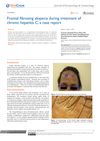 September 2017 in “Journal of Dermatology & Cosmetology”
 Hepatitis C treatment may cause frontal fibrosing alopecia.
April 2019 in “Journal of Investigative Dermatology” Frontal Fibrosing Alopecia involves disrupted cholesterol pathways, fibrosis, and increased mast cells.