7 citations
,
November 2023 in “JAAD Case Reports” Baricitinib helped regrow hair in patients with severe alopecia areata after other treatments failed.
7 citations
,
July 2011 in “Archives of Dermatology” Alopecia areata caused a boy's hair to regrow straight instead of curly, but the exact reason is unknown.
6 citations
,
December 2015 in “Journal of Dermatological Case Reports” Intradermal testing can better detect corticosteroid allergies than patch testing.
5 citations
,
October 2015 in “The Egyptian Journal of Otolaryngology” Alopecia areata patients may have hearing loss linked to the condition's severity and duration.
 5 citations
,
January 2010 in “International journal of trichology”
5 citations
,
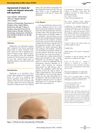
January 2010 in “International journal of trichology” PUVASOL might effectively treat complete scalp baldness.
 3 citations
,
December 2021 in “Dermatology reports”
3 citations
,
December 2021 in “Dermatology reports” Dupilumab can improve both atopic dermatitis and alopecia universalis.
2 citations
,
September 2024 in “Journal of the American Academy of Dermatology” Deuruxolitinib significantly helps regrow scalp hair in adults with moderate to severe alopecia areata.
2 citations
,
May 2023 in “Indian Journal of Dermatology Venereology and Leprology” A new genetic mutation in the CAST gene may link PLACK syndrome to alopecia areata.
 1 citations
,
October 2024 in “Journal of Nepal Paediatric Society”
1 citations
,
October 2024 in “Journal of Nepal Paediatric Society” Stopping Cyclosporine A led to hair regrowth in a child with alopecia.
 1 citations
,
January 2017 in “International Journal of Dermoscopy”
1 citations
,
January 2017 in “International Journal of Dermoscopy” Dermoscopy is useful for identifying and tracking different types of hair loss without scarring.
 April 2026 in “Frontiers in Medicine”
 Farudodstat may help prevent hair loss in alopecia areata by stopping immune attacks on hair follicles.
High CCL11 levels may indicate poor response to baricitinib in severe alopecia areata.
September 2025 in “JAAD Case Reports” Hair extensions can worsen scalp conditions and should be avoided in those with alopecia.
September 2025 in “Asian journal of pediatric dermatology.” Abrocitinib helped a 14-year-old girl with severe alopecia areata regrow her hair significantly.
 July 2025 in “Frontiers in Medicine”
 Topical immunotherapy can help with severe hair loss, but results vary and need personalized, long-term treatment.
 July 2025 in “Journal of Cosmetic Dermatology”
 Alternative treatments are needed when Tofacitinib alone fails for alopecia areata.
June 2025 in “British Journal of Dermatology” Ruxolitinib helped a woman with a genetic mutation regrow her hair and improved her health.
May 2025 in “Journal of the European Academy of Dermatology and Venereology” Ritlecitinib is effective for long-term hair regrowth in alopecia areata, especially in females and early treatment.

Oral betamethasone mini-pulses effectively treat moderate to severe alopecia areata with manageable side effects.
 April 2025 in “Frontiers in Immunology”
 Tofacitinib effectively regrows hair in alopecia areata but may need continuous use.
January 2025 in “JDDG Journal der Deutschen Dermatologischen Gesellschaft” Pediatric alopecia areata needs better treatments and psychological support.
Herbal therapies for alopecia show promise but need more research for safety and effectiveness.
 January 2025 in “International Journal of Dermatology Sciences”
 Androgenetic alopecia is the most common type of non-scarring hair loss, especially in young males, and early diagnosis and treatment are important.
January 2025 in “SiSli Etfal Hastanesi Tip Bulteni / The Medical Bulletin of Sisli Hospital” PRP injections are safe and effective for alopecia areata, but steroids are still the preferred treatment.
June 2024 in “Military Medicine” Access to JAK inhibitors for alopecia areata should be improved in the Military Healthcare System.
May 2024 in “Drugs & Therapy Perspectives” New treatments like JAK inhibitors offer hope for better alopecia areata management.
October 2023 in “Perinatology and reproductology from research to practice” Combining medication for dyslipidemia and insulin resistance with basic therapy improves outcomes for alopecia areata with metabolic syndrome.
 June 2023 in “Buletin de psihiatrie integrativă”
 Alopecia causes significant emotional distress and psychological issues, requiring combined skin and mental health treatment.
 March 2023 in “PARIPEX INDIAN JOURNAL OF RESEARCH”
 Dermoscopy helps diagnose different types of hair loss and may reduce the need for biopsies.
November 2022 in “Journal of Investigative Dermatology” Cell-based therapy using specific immune cells may help treat alopecia areata by promoting hair regrowth.