October 2021 in “Authorea (Authorea)” New hair perming method using tyrosine is gentler and can be done with a blow-dryer.
September 2016 in “Toxicology letters” The 5050 MHA42MCS45 hydrogel blend is suitable for repairing load-bearing soft tissues.
June 2025 in “OPAL (Open@LaTrobe) (La Trobe University)” A new hair dye method uses polyphenols and oxidation to create a long-lasting brown color on gray hair.
3 citations
,
October 2021 in “Journal of Cosmetic Dermatology” Topical patches with garlic extract effectively release allicin for hair loss treatment.
 1 citations
,
January 2013
1 citations
,
January 2013 Depilatories use chemicals to weaken hair for easy removal.
 March 2026 in “Journal of Hunan University Natural Sciences”
 Albizia saponaria stem bark shows promise as a natural antidandruff treatment.
August 2013 in “Toxicology letters”  7 citations
,
January 2007 in “Elsevier eBooks”
7 citations
,
January 2007 in “Elsevier eBooks” Shampoos clean hair mainly with surfactants and have added ingredients for extra benefits.
2 citations
,
July 2025 in “Biopolymers” Eggshells can be used to sustainably and cheaply produce important compounds like glycosaminoglycans.
 2 citations
,
April 2024 in “Science & Technology Indonesia”
2 citations
,
April 2024 in “Science & Technology Indonesia” Albizia saponaria bark extract, especially the ethyl acetate fraction, is a strong antioxidant source.
 December 2023 in “International Journal of Pharmaceutics”
 New nanoparticles deliver plant extracts to hair follicles to treat conditions like hair loss and acne.
130 citations
,
December 2022 in “Antioxidants” Natural polysaccharides have strong antioxidant properties that help fight diseases like Alzheimer's, diabetes, and heart disease.
January 2017 in “Durham e-Theses (Durham University)” Chemical stressors damage hair structure but the skin's outer layer protects living cells.
15 citations
,
January 2017 in “Polymers” Polyelectrolytes can improve cell surfaces for better medical applications.
February 2022 in “Cosmetic Dermatology” Permanent hair waving uses chemicals to create long-lasting curls.
 January 2023 in “Fashion and textiles”
 Cationic and nonionic surfactants provide better color intensity and resistance for semi-permanent hair dye than anionic surfactants.
23 citations
,
November 2021 in “Frontiers in Chemistry” Nanozymes could improve disease treatment and detection.
15 citations
,
October 2020 in “Journal of Nanomaterials” Strontium nanofibers can help repair and regenerate bones.
January 2025 in “Green energy and technology”  2 citations
,
June 2011 in “Journal of clinical and experimental investigations”
2 citations
,
June 2011 in “Journal of clinical and experimental investigations” Oral zinc sulphate is an effective and safe treatment for thallium poisoning, especially for skin and hair symptoms.
47 citations
,
October 2021 in “Journal of Nanobiotechnology” HPDAlR nanoparticles greatly improve skin wound healing without toxicity.
 37 citations
,
September 2003 in “Journal of Medicinal Chemistry”
37 citations
,
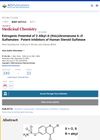
September 2003 in “Journal of Medicinal Chemistry” A substance called Compound 2g can strongly block STS (a hormone-related enzyme) without affecting estrogen levels, making it potentially good for treating breast cancer.

Limbal Mesenchymal Stem Cell Secretome might help heal eye injuries by reducing inflammation and promoting tissue repair.
 October 2023 in “Oriental Journal of Chemistry/Oriental journal of chemistry”
 Almond oil works well as a biodegradable lubricant and has health benefits.
 February 2025 in “International Journal of Cosmetic Science”
 A new amino acid derivative, ATS, improves hair texture and moisture, making it easier to straighten curly hair.
May 2025 in “OPAL (Open@LaTrobe) (La Trobe University)” Targeting specific metabolic and ionic pathways may improve alopecia areata treatment.
 June 2026 in “Gümüşhane Üniversitesi Fen Bilimleri Enstitüsü Dergisi”
 PVA/agar films with Achillea millefolium essential oil are promising for wound dressings due to good strength and selective antibacterial effects.
 8 citations
,
January 2021 in “Smart materials in medicine”
8 citations
,
January 2021 in “Smart materials in medicine” The new hydrogel is good for wound dressing because it absorbs water quickly, has high porosity, can release drugs, fights bacteria, and helps wounds heal with less scarring.
104 citations
,
January 2022 in “Materials Today Bio” Zn-incorporated gelatin hydrogels effectively heal infected wounds by reducing inflammation and promoting tissue growth.
May 2025 in “OPAL (Open@LaTrobe) (La Trobe University)” Targeting specific metabolic and ionic pathways may improve alopecia areata treatment.