2 citations
,
July 2025 in “Cells” Platelet lysate is better than fetal bovine serum for growing stem cells and healing wounds.
 91 citations
,
July 2010 in “Tissue Engineering Part A”
91 citations
,
July 2010 in “Tissue Engineering Part A” Low-oxygen conditions and ECM degradation products increase the healing abilities of perivascular stem cells.
 50 citations
,
February 2007 in “Expert Opinion on Biological Therapy”
50 citations
,
February 2007 in “Expert Opinion on Biological Therapy” Hair follicle stem cells could help repair nerves and avoid ethical issues linked to embryonic stem cells.
June 2025 in “Stem Cells and Cloning Advances and Applications” CFx-δ2 from stem cells helps heal burn wounds faster.
 May 2020 in “Research Square (Research Square)”
 Hair follicle stem cells may help treat strokes.
 1 citations
,
January 2016 in “Journal of stem cell research and medicine”
1 citations
,
January 2016 in “Journal of stem cell research and medicine” Fat-derived stem cell therapies can potentially increase hair growth and thickness in people with hair loss.
 1 citations
,
January 2016 in “Journal of stem cell research and medicine”
1 citations
,
January 2016 in “Journal of stem cell research and medicine” Fat-derived stem cell therapies can potentially increase hair growth and thickness in people with hair loss.
 25 citations
,
April 2012 in “Acta Biomaterialia”
25 citations
,
April 2012 in “Acta Biomaterialia” Using certain small proteins with a growth factor and specific materials can increase the creation of neurons from stem cells.
 9 citations
,
March 2013 in “Expert opinion on biological therapy”
9 citations
,
March 2013 in “Expert opinion on biological therapy” Epidermal stem cells have potential for personalized regenerative medicine but need careful handling to avoid cancer.
October 2012 in “Institutional Repositories DataBase (IRDB)” Stem cell treatment can effectively regrow hair.
November 2010 in “Faculty Opinions – Post-Publication Peer Review of the Biomedical Literature” Mesenchymal stem cells from bone marrow and umbilical cord can help regenerate hair follicles.
 8 citations
,
April 2023 in “Cureus”
8 citations
,
April 2023 in “Cureus” Stem cells could be a better treatment for hair loss by reactivating dormant hair follicles.
September 2016 in “Journal of dermatological science” HAP stem cells can repair nerves and spinal cords by becoming Schwann cells.
 8 citations
,
July 2022 in “BMC neuroscience”
8 citations
,
July 2022 in “BMC neuroscience” Transplanted hair follicle stem cells improved brain function and reduced damage after a stroke in rats.
13 citations
,
October 2021 in “International Journal of Molecular Sciences” The HATMSC1 cell line from fat tissue can produce helpful factors for regenerative and immune therapies.
August 2020 in “Research Square (Research Square)” Hair follicle stem cells may help treat strokes.
 4 citations
,
January 2022 in “BioMed Research International”
4 citations
,
January 2022 in “BioMed Research International” Using mesenchymal stem cells or their exosomes is safe for COVID-19 patients and helps improve lung healing and oxygen levels.
August 2022 in “Regenerative Medicine” Adipose-derived stem cells show promise for cosmetic treatments but need more research.

Stem cell therapies, especially adipose-derived ones, show promise for treating severe COVID-19 and related conditions.
 1 citations
,
January 2014 in “Journal of Cutaneous and Aesthetic Surgery”
1 citations
,
January 2014 in “Journal of Cutaneous and Aesthetic Surgery” Regenerative medicine shows promise for aesthetic surgery, but needs more research for widespread use.
 November 2024 in “Cells Tissues Organs”
 Stem cells from umbilical cord blood are more effective than minoxidil for treating hair loss.
14 citations
,
January 2019 in “Advances in experimental medicine and biology” Skin stem cells are promising for healing wounds and skin regeneration due to their accessibility and regenerative abilities.
 220 citations
,
March 2020 in “Advanced functional materials”
220 citations
,
March 2020 in “Advanced functional materials” Biomaterials with MSC-derived substances could improve tissue repair and have advantages over direct cell therapy.
 11 citations
,
August 2013 in “Facial Plastic Surgery Clinics of North America”
11 citations
,
August 2013 in “Facial Plastic Surgery Clinics of North America” New cell-based therapies may improve hair loss treatments in the future.
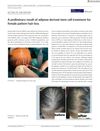 April 2021 in “Journal of Cosmetic Dermatology”
 Stem cell treatment improved hair density in female hair loss patient.
 November 2024 in “Journal of Translational Internal Medicine”
 Exosomes from stem cells help hair regrowth by activating a specific signaling pathway.
121 citations
,
June 2009 in “Journal of Cellular Biochemistry” Human hair follicle stem cells can safely and effectively help nerve regeneration.
 August 2024 in “Dermatological Reviews”
 Stem cells, PRP, and exosomes show promise in treating skin conditions but face regulatory and safety challenges.
2 citations
,
September 2025 in “Journal of Clinical Medicine” Regenerative medicine could revolutionize aesthetic surgery, but needs careful validation and ethical use.
15 citations
,
August 2008 in “Plastic & Reconstructive Surgery” New cell sources for bone tissue engineering are promising due to easier harvesting and availability.