 June 2024 in “Skin Research and Technology”
 Red fluorescence in AGA scalps is linked to different microbes.
 April 2016 in “Journal of The American Academy of Dermatology”
 A child on life support experienced rapid hair loss due to severe illness affecting hair growth.
 1 citations
,
September 2023 in “British journal of dermatology/British journal of dermatology, Supplement”
1 citations
,
September 2023 in “British journal of dermatology/British journal of dermatology, Supplement” WNT10A gene mutations cause short anagen hair syndrome.
2 citations
,
July 2019 in “Indian dermatology online journal” A 17-year-old girl and her brothers have a rare hair condition with long eyelashes, thick eyebrows, and easily pluckable hair.
 February 2024 in “International Journal of Molecular Sciences”
 Hair loss in Androgenetic Alopecia is caused by genetics, aging, and lifestyle, leading to hair follicle shrinkage and related health risks.
October 2023 in “University of Zadar Institutional Repository” Androgenetic alopecia is a common genetic and hormonal hair loss affecting many men and women.
 3 citations
,
November 2021 in “Journal of The American Academy of Dermatology”
3 citations
,
November 2021 in “Journal of The American Academy of Dermatology” Androgenetic alopecia, a genetic disorder affecting up to 50% of adults, is caused by an excessive response to androgens leading to hair follicle shrinkage. Treatments include FDA-approved drugs, other therapies like low-dose oral minoxidil, and hair transplantation.
 August 2024 in “Quality in Sport”
 New treatments for common hair loss are needed.
 2 citations
,
June 2017 in “Pediatric Dermatology”
2 citations
,
June 2017 in “Pediatric Dermatology” A critically ill boy experienced hair loss likely due to the stress of his medical treatments, but his hair regrew completely in 1.5 months.
 19 citations
,
January 2011 in “Clinics”
19 citations
,
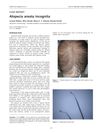
January 2011 in “Clinics” A young woman with a rare hair loss condition improved with steroid and biotin treatment.
1 citations
,
December 2022 in “Skin Appendage Disorders” Teledermatology can effectively diagnose Loose Anagen Syndrome remotely.
 5 citations
,
September 2011 in “Pediatric Dermatology”
5 citations
,
September 2011 in “Pediatric Dermatology” Two young siblings experienced hair loss without hormone issues or other skin problems.
Loose anagen syndrome causes easy hair shedding in children, often resolving on its own.
 November 2023 in “British Journal of Dermatology”
 Mutations in the WNT10A gene cause Short Anagen Hair syndrome and increase the risk of male pattern hair loss.
 4 citations
,
May 2017 in “Pediatric Dermatology”
4 citations
,
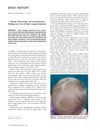
May 2017 in “Pediatric Dermatology” The study found that Short Anagen Syndrome results in short hair growth not due to hair fragility, and hair may grow longer after puberty.
A 14-year-old girl with Loose Anagen Hair Syndrome was successfully treated with oral Minoxidil and a Silicon supplement.
 July 2025 in “Journal of Investigative Dermatology”
 Miniaturized hair follicles in androgenetic alopecia show abnormal mitochondrial activity and damage.
 January 2025 in “International Journal of Dermatology Research”
 Anagen grow may effectively treat hair loss by blocking testosterone and reducing enzyme activity.
 1 citations
,
January 1997 in “Archives of Dermatology”
1 citations
,
January 1997 in “Archives of Dermatology” Hair loss from alopecia areata can sometimes regrow in a pattern similar to androgenetic alopecia.
 4 citations
,
October 2018 in “Experimental Dermatology”
4 citations
,
October 2018 in “Experimental Dermatology” Dermoscopy shows that diffuse alopecia areata progresses through specific hair growth stages.
 February 2026 in “Zenodo (CERN European Organization for Nuclear Research)”
 New treatments for androgenetic alopecia are emerging, improving hair loss management.
October 2021 in “European Journal of Dermatology” CAL-PDT is safer and more effective for treating actinic keratosis on the scalp.
 December 2023 in “bioRxiv (Cold Spring Harbor Laboratory)”
 Abnormal contraction of connective tissue in hair follicles causes hair loss by killing off important cells, and treating this could improve hair growth.
 February 2026 in “Zenodo (CERN European Organization for Nuclear Research)”
 New treatments for androgenetic alopecia are emerging, improving options for managing hair loss.
June 2011 in “European Journal of Pediatric Dermatology” An 11-year-old girl with hair thinning was diagnosed with monilethrix and early androgenetic alopecia.
October 2025 in “Annals of Medicine and Surgery” Retinoids may improve hair growth in androgenic alopecia when used with other treatments.
 September 2024 in “Journal of the American Academy of Dermatology”
 AH-001 could be a safer and more effective treatment for hair loss.
32 citations
,
December 1965 in “The Lancet” Argininosuccinic aciduria can cause hair loss.
 85 citations
,
February 1989 in “Journal of The American Academy of Dermatology”
85 citations
,
February 1989 in “Journal of The American Academy of Dermatology” Children with loose anagen hair have easily pluckable hair due to root sheath problems, and it might improve without treatment.
January 2017 in “대한피부과학회지” Minoxidil effectively improved hair loss in a teenage girl with androgenetic alopecia.