 40 citations
,
September 2018 in “Journal of the American Academy of Dermatology”
40 citations
,
September 2018 in “Journal of the American Academy of Dermatology” Tofacitinib helped some young children with severe hair loss grow their hair back without bad side effects.
290 citations
,
August 2021 in “Clinical Reviews in Allergy & Immunology” JAK inhibitors show promise for treating alopecia areata, but more research is needed.
69 citations
,
December 2006 in “Archives of dermatology” Adalimumab may cause severe hair loss in some patients.
 66 citations
,
December 2018 in “Dermatology”
66 citations
,
December 2018 in “Dermatology” Both ruxolitinib and tofacitinib are effective and safe for treating severe alopecia areata, but relapses are common.
 May 2025 in “The Journal of Rheumatology”
 Anifrolumab may help improve symptoms in patients with overlapping autoimmune diseases.
 37 citations
,
October 2017 in “Clinical and Experimental Dermatology”
37 citations
,
October 2017 in “Clinical and Experimental Dermatology” Oral tofacitinib shows promise in treating atopic dermatitis and alopecia areata, but only slight improvement in vitiligo.
24 citations
,
July 2021 in “Pharmaceutics” Ruxolitinib cream effectively targets and treats inflammatory skin diseases.
 March 2018 in “Suez Canal University Medical Journal”
 New drugs targeting the JAK-STAT pathway show promise for treating inflammatory skin diseases.
4 citations
,
January 2025 in “JAAD reviews.” Janus kinase inhibitors are promising for treating scarring alopecia, but more research is needed for safety and personalized treatments.

A girl with Crohn's disease developed hair loss due to her increased medication, a rare side effect seen in some children.
12 citations
,
July 2012 in “Journal of cutaneous medicine and surgery” Adalimumab was safe but mostly ineffective for severe alopecia areata.
 March 2026 in “Dermatology Online Journal”
 Medicaid coverage for alopecia areata treatments is inconsistent and often limited.
 November 2025 in “Reumatismo”
 The choice between belimumab and anifrolumab depends on the specific symptoms of the patient's lupus.
3 citations
,
November 2023 in “Вопросы современной педиатрии” Ustekinumab effectively treated psoriasis and ulcerative colitis in a teen after infliximab caused complications.
1 citations
,
April 2023 in “Portuguese Journal of Dermatology and Venereology” JAK inhibitors are effective treatments for alopecia areata.
June 2026 in “Frontiers in Immunology” JAK inhibitors effectively treat inflammatory skin diseases by targeting specific cytokine signals.
 2 citations
,
March 2023 in “Frontiers in medicine”
2 citations
,
March 2023 in “Frontiers in medicine” A 15-year-old boy's severe scalp condition improved significantly with adalimumab and baricitinib treatment.
January 2026 in “Journal of Clinical Medicine” Janus kinase inhibitors reduce inflammation markers in severe alopecia areata patients.
 2 citations
,
January 2020 in “Einstein (São Paulo)”
2 citations
,
January 2020 in “Einstein (São Paulo)” Topical tofacitinib shows promise as a future treatment for alopecia areata.
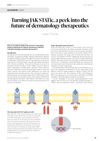 August 2024 in “New Zealand Medical Student Journal”
 JAK inhibitors show promise for treating skin diseases effectively and safely.
5 citations
,
April 2019 in “Journal of Investigative Dermatology” Oral JAK inhibitors improved alopecia areata by modulating immune responses and boosting hair growth.
 5 citations
,
July 2023 in “International Journal of Women’s Dermatology”
5 citations
,
July 2023 in “International Journal of Women’s Dermatology” Anifrolumab significantly improved skin lesions and hair regrowth in severe discoid lupus.
 2 citations
,
April 2017 in “Journal of Investigative Dermatology”
2 citations
,
April 2017 in “Journal of Investigative Dermatology” Tofacitinib helped over half of the patients with severe hair loss regrow at least 50% of their hair.
 70 citations
,
April 2016 in “Experimental Dermatology”
70 citations
,
April 2016 in “Experimental Dermatology” A patient with alopecia areata regrew hair after taking tofacitinib and showed changes in certain blood and skin markers.
71 citations
,
May 2024 in “New England Journal of Medicine” Ruxolitinib may effectively treat APS-1 by reducing harmful immune responses.
 April 2026 in “Clinical Journal of Gastroenterology”
 Upadacitinib can cause hypersensitivity that worsens ulcerative colitis symptoms.
 5 citations
,
June 2019 in “British Journal of Dermatology”
5 citations
,
June 2019 in “British Journal of Dermatology” Tofacitinib was more effective than apremilast in treating hair loss in a mouse model of alopecia areata.
 8 citations
,
October 2022 in “Dermatology practical & conceptual”
8 citations
,
October 2022 in “Dermatology practical & conceptual” Tofacitinib and ruxolitinib are effective and safe for treating various autoimmune skin and joint disorders.
2 citations
,
March 2025 in “International Journal of Dermatology” Tralokinumab successfully treated alopecia areata in a patient with atopic dermatitis.
 2 citations
,
February 2018 in “InTech eBooks”
2 citations
,
February 2018 in “InTech eBooks” TNF-alpha inhibitors can cause various immune-related skin issues.