19 citations
,
July 2019 in “Journal of Endocrinology” GTx-024 and Danazol affect the uterus like DHT, while GTx-007 has little impact.
April 2023 in “Journal of Investigative Dermatology” cp-asiAR may effectively treat hair loss by targeting androgen receptors.
3 citations
,
May 2020 in “Journal of The Korean Medical Association” Minoxidil and finasteride are effective for treating hair loss, with dutasteride showing potential but with side effects.
Hirsutism is excessive male-pattern hair growth in women, often treated cosmetically or with hormone therapy if contraception is also desired.
 68 citations
,
April 2014 in “Journal of Molecular Endocrinology”
68 citations
,
April 2014 in “Journal of Molecular Endocrinology” The document concludes that targeting the androgen receptor may be a promising breast cancer treatment, especially for certain types.
 May 2011 in “Expert Review of Endocrinology & Metabolism”
 Breast cancer survivors may have a higher risk of falls, tamoxifen could prevent breast cancer and deaths, new guidelines urge caution with prostate cancer therapy, and early balding in men may indicate a higher prostate cancer risk.
149 citations
,
January 2011 in “Nature reviews. Urology” Hormonal interactions, especially involving DHT and estrogen, play a key role in BPH development and treatment.
 49 citations
,
January 2010 in “International Journal of Pediatric Endocrinology”
49 citations
,
January 2010 in “International Journal of Pediatric Endocrinology” The document concludes that Nonclassic Congenital Adrenal Hyperplasia requires personalized treatment plans to manage symptoms and fertility, with glucocorticoids being a common therapy.
 5 citations
,
August 2012 in “Journal of Dermatology”
5 citations
,
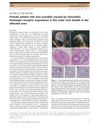
August 2012 in “Journal of Dermatology” Tamoxifen may cause female hair loss by increasing androgen receptor expression.
 January 2026 in “International Journal of Medicine in Developing Countries”
 Both hormonal and non-hormonal therapies improve hair growth in women, but non-hormonal methods may be more effective with fewer side effects.
 September 2024 in “Health Sciences”
 Androgenic alopecia can be treated with minoxidil, finasteride, and hormonal therapy.
The document concludes that hair loss in women can be caused by various factors and is managed with specific treatments like medication, therapy, and lifestyle changes.
 September 2004 in “PubMed”
 Androgenetic alopecia, or hair loss, is influenced by hormones and genetics, and can be treated with medications like minoxidil, finasteride, or hormone therapy, with effectiveness evaluated after 6 months.
 10 citations
,
November 2010 in “Journal of Dermatology”
10 citations
,
November 2010 in “Journal of Dermatology” Longer CAG repeats in gene linked to more severe hair loss in females.
February 2026 in “European Journal of Pharmacology” Teicoplanin may help treat hair loss by reducing androgen receptors and boosting hair cell growth.
September 2025 in “e-space (Manchester Metropolitan University)” Blocking androgen receptors helps immune cells better fight certain bacteria.
November 1993 in “PubMed” Hirsutism, excessive male-pattern hair in women, can be caused by high androgens or skin sensitivity, diagnosed by testosterone levels, and treated with hair removal and hormone therapy.
 September 2019 in “Journal of Investigative Dermatology”
 Finasteride treatment lowers urine androgen and prostaglandin levels, making them potential markers for effectiveness.
120 citations
,
April 2019 in “The Journal of clinical investigation/The journal of clinical investigation” Both estrogens and androgens are important for health in both males and females.
43 citations
,
April 2011 in “AJP Endocrinology and Metabolism” Androgens increase muscle mass by promoting myoblast growth through ornithine decarboxylase.
36 citations
,
October 2009 in “Journal of biological chemistry/The Journal of biological chemistry” Two new compounds were found to build bone and muscle without affecting reproductive organs and skin oil glands.
 18 citations
,
January 2001 in “Annual Reports in Medicinal Chemistry”
18 citations
,
January 2001 in “Annual Reports in Medicinal Chemistry” Selective Androgen Receptor Modulators (SARMs) are drugs that can control the effects of androgens in different tissues, potentially having fewer side effects and promising for treating various conditions.
7 citations
,
June 2024 in “iScience” Androgens increase cervical cancer risk and affect its development.
 4 citations
,
November 1996 in “European journal of endocrinology”
4 citations
,
November 1996 in “European journal of endocrinology” Spironolactone may help treat excessive hair growth in girls, but more research is needed.
 2 citations
,
November 2017 in “Elsevier eBooks”
2 citations
,
November 2017 in “Elsevier eBooks” Different substances that activate or block the androgen receptor can affect male development and treat conditions like prostate cancer.
 September 2025 in “Deleted Journal”
 Blocking androgen receptors boosts macrophages' ability to clear certain bacteria.
 May 2025 in “Anatolian journal of obstetrics and gynecology research.”
 Androgens affect many aspects of female health, and more research is needed to understand their roles and treatment potential.
 April 2018 in “Gynäkologische Endokrinologie”
 Testosterone in older women can increase bone density, muscle mass, fat mass, improve memory, and boost libido, but may cause nipple color changes.
 December 2015 in “University of Birmingham Institutional Research Archive (University of Birmingham)”
 AKR1C3 could be a treatment target for metabolic issues in PCOS.
224 citations
,
February 2013 in “The Journal of clinical investigation/The journal of clinical investigation” ERG increases SOX9, promoting prostate cancer growth and invasion.