
Alopecia areata and androgenic alopecia can be confused, but careful examination helps tell them apart.
April 2026 in “University of Southern Denmark Research Portal (University of Southern Denmark)”  May 2026 in “Zenodo (CERN European Organization for Nuclear Research)”
 New treatments for alopecia focus on personalized plans to improve hair regrowth and reduce side effects.
 December 2009 in “DergiPark (Istanbul University)”
 Check serum ferritin levels and total blood count for women with diffuse hair loss.
 5 citations
,
October 2016 in “Anais Brasileiros de Dermatologia”
5 citations
,
October 2016 in “Anais Brasileiros de Dermatologia” A man from Brazil had a rare case of leprosy on his scalp, which improved with treatment.
 March 2026 in “Open MIND”
 PRP and microneedling improve hair growth in early-stage alopecia, but effects reverse if treatment stops.
 November 2025 in “SKIN The Journal of Cutaneous Medicine”
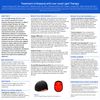
 Low-level light therapy safely increases hair growth in various types of hair loss.
 1 citations
,
August 2002 in “Zeitschrift für Hautkrankheiten”
1 citations
,
August 2002 in “Zeitschrift für Hautkrankheiten” Male androgenetic alopecia involves hair follicle miniaturization due to DHT, with potential treatments using inhibitors and blockers.
1 citations
,
March 2020 in “Meždunarodnyj medicinskij žurnal” PRP could be a promising treatment for hair loss but needs more research.
 June 2023 in “Zenodo (CERN European Organization for Nuclear Research)”
 Different non-surgical treatments like minoxidil, microneedling, and laser therapy can slow down and even reverse common hair loss, but each has its own limitations.
 July 2025 in “YAKUGAKU ZASSHI”
 Understanding skin microbes and sebum can help manage atopic dermatitis and hair loss.
October 2023 in “University of Zadar Institutional Repository” Androgenetic alopecia is a common genetic and hormonal hair loss affecting many men and women.
August 2020 in “Rossiiskii Zhurnal Kozhnykh i Venericheskikh Boleznei” PRP therapy is a promising and well-tolerated treatment for hair loss.
August 2018 in “Farmatsevtychnyĭ zhurnal” The emulgel with Saw Palmetto and Sophora Japonica shows promise for treating hair loss.
 October 2016 in “Rossiiskii Zhurnal Kozhnykh i Venericheskikh Boleznei”
 Using a combined treatment of minoxidil and metformin can improve hair loss in women by normalizing hormone and metabolism levels.
October 2025 in “University of Zadar Institutional Repository” Early hair loss may signal a risk for metabolic syndrome and related health issues.
October 2023 in “University of Zadar Institutional Repository” Androgenic alopecia is hereditary hair loss treated with medications, therapies, and support.
 December 2022 in “Rossiiskii Zhurnal Kozhnykh i Venericheskikh Boleznei”
 Androgenic alopecia in men is mainly linked to family history, hormonal imbalances, and metabolic issues, but can also be influenced by lifestyle habits, environmental factors, and deficiencies in certain vitamins and microelements like copper.
March 2020 in “Upravlìnnâ, ekonomìka ta zabezpečennâ âkostì v farmacìï” The "Flavosterol" emulgel meets quality standards for treating hair loss.
January 2009 in “Rossiiskii Zhurnal Kozhnykh i Venericheskikh Boleznei” 3 citations
,
January 2019 in “Xin li xue jin zhan” 3 citations
,
December 2021 in “Acta dermato-venereologica” People with androgenetic alopecia have a higher risk of metabolic syndrome.
 January 2017 in “DOAJ (DOAJ: Directory of Open Access Journals)”
 Hair loss from alopecia areata and androgenetic alopecia moderately affects the quality of life, especially in younger patients and those with long-term hair loss, impacting both their physical and emotional well-being.
 October 2011 in “Faculty Opinions – Post-Publication Peer Review of the Biomedical Literature”
 Certain gene variations are significantly linked to hair loss, especially in white people.
 January 2007 in “Revista del Centro Dermatológico Pascua”
 Hair loss in women, often not related to male hormones, increases with age and can cause significant emotional distress.
 8 citations
,
December 2017 in “Skin appendage disorders”
8 citations
,
December 2017 in “Skin appendage disorders” WNT7A gene expression is higher in early stages of androgenetic alopecia, showing the role of WNT pathway, apoptosis, and inflammation in the disorder.
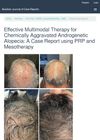 October 2025 in “Brazilian Journal of Case Reports”
 Combining PRP and mesotherapy effectively improved hair density and scalp health in a patient with severe hair loss.
 August 2024 in “Journal of Cosmetic Dermatology”
 Injectable treatments can effectively and safely improve hair growth in adults with androgenetic alopecia.
Finasteride and dutasteride are not recommended for feminizing therapy due to limited effectiveness and potential risks.
 June 2026 in “HAL (Le Centre pour la Communication Scientifique Directe)”
 SH-1 effectively treats hair loss without side effects.