 December 2025 in “Zenodo (CERN European Organization for Nuclear Research)”
 The herbal anti-dandruff shampoo is effective, safe, and a good alternative to synthetic shampoos.
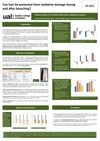 September 2018 in “University of the Arts London Research Online (University of the Arts London)”
 L-arginine, hydrolysed keratin, and cystine-silanol copolymer can help protect hair from damage during and after bleaching.
 September 2023 in “International Journal of Cosmetic Science”
 The shampoo improves hair conditioning without using silicone.
 March 2010 in “International Journal of Cosmetic Science”
 Disulfide bonds affect the melting behavior of hair's crystalline structure, but hair retains some stability even after these bonds are broken.
18 citations
,
July 2015 in “Journal of cosmetic dermatology” Straightening and coloring hair, especially with sodium hydroxide, greatly increases protein loss.
 21 citations
,
January 1995 in “Journal of the American Institute for Conservation”
21 citations
,
January 1995 in “Journal of the American Institute for Conservation” A new method extracts red dyes from wool without damaging it, although it slightly weakens the wool.
 10 citations
,
November 1984 in “Journal of Colloid and Interface Science”
10 citations
,
November 1984 in “Journal of Colloid and Interface Science” The study found that the Marangoni effect causes the uneven wetting of surfactant-coated hair due to the surfactant moving into the water.
 4 citations
,
December 2018 in “Macedonian Journal of Chemistry and Chemical Engineering”
4 citations
,
December 2018 in “Macedonian Journal of Chemistry and Chemical Engineering” A new method accurately measures amino acids in treated hair, showing bleaching reduces amino acids while protein treatments increase them.
25 citations
,
May 2008 in “Journal of cosmetic dermatology” Conditioning agents, especially jojoba oil and lauryl PEG/PPG-18/18 methicone, protect and strengthen chemically straightened Afro-ethnic hair.
8 citations
,
January 2018 in “Journal of cosmetic dermatology” Conditioners in hair dye reduce damage and improve combability.
1 citations
,
January 2013 in “PubMed” Permanent wave treatment with thioglycolic acid changes hair structure by altering disulfide bonds.
 December 2025 in “Universal library of medical and health sciences.”
 Amino acids like arginine and cysteine protect hair during chemical treatments, keeping it strong and less brittle.
 4 citations
,
January 1994 in “Yakugaku zasshi”
4 citations
,
January 1994 in “Yakugaku zasshi” EPC-K is stable except at very acidic pH or when exposed to sunlight, and it can decompose in low ethanol concentrations.
1 citations
,
November 2023 in “Cosmetics” Surfactants damage hair, but sealing the cuticle can prevent this.
45 citations
,
February 2002 in “International Journal of Cosmetic Science” Ceramide helps protect African–American hair from breakage.
 4 citations
,
October 2022 in “Elsevier eBooks”
4 citations
,
October 2022 in “Elsevier eBooks” Plant saponins from Indian plants are natural, cost-effective, and safe for use in soaps, detergents, and hair care products.
 18 citations
,
January 2008 in “Sen'i Gakkaishi”
18 citations
,
January 2008 in “Sen'i Gakkaishi” Thioglycolic acid and L-cysteine change hair structure differently during perms, affecting hair strength and curling efficiency.
Antiseptic nanoparticle-emulsions may improve skin disinfection by targeting hair follicles.
 May 2026 in “Zenodo (CERN European Organization for Nuclear Research)”
 The herbal shampoo effectively treats dandruff and is a good alternative to synthetic options.
February 1999 in “The anatomical record” Two mouse mutants have defective hair cuticle cross-linking.
2 citations
,
July 2025 in “Scientific Reports” Acinetobacter strain A1-4-2 can safely clean water pollutants.
7 citations
,
August 2007 in “Journal of Biotechnology” 7 citations
,
June 2019 in “Coloration Technology” Translucent keratin films are better for testing hair dyes.
January 2026 in “Molecules” A new perming method is less damaging to hair and works as well as traditional methods.
7 citations
,
October 2019 in “Brazilian Journal of Petroleum and Gas” The microemulsion-based fluid effectively removes mud cake during well cementation.
 March 2026 in “Journal of Hunan University Natural Sciences”
 Albizia saponaria stem bark shows promise as a natural antidandruff treatment.
 December 2023 in “The journal of physical chemistry. B (1997 : Online)”
 Human hair keratin might be good for filtering out harmful substances from water.
31 citations
,
February 1972 in “Experientia” The diphosphonate was the most effective at preventing calcification in rats.
 15 citations
,
January 2020 in “RSC advances”
15 citations
,
January 2020 in “RSC advances” The new palladium catalyst is effective and reusable for making pharmaceutical ingredients.
June 2025 in “Formosa Journal of Sustainable Research” Mangkokan leaf extract can fight bacteria and may help prevent hair loss and treat infections.