March 2022 in “Veterinary dermatology” A one-year-old cat had multiple benign skin tumors similar to those known in humans.
 6 citations
,
April 1996 in “Journal of histochemistry and cytochemistry/The journal of histochemistry and cytochemistry”
6 citations
,
April 1996 in “Journal of histochemistry and cytochemistry/The journal of histochemistry and cytochemistry” TGF-alpha is present in sheep and ferret skin and may affect hair growth without directly stimulating cell proliferation.
 9 citations
,
May 2005 in “Expert Review of Clinical Immunology”
9 citations
,
May 2005 in “Expert Review of Clinical Immunology” Blocking interferon-gamma might help treat various autoimmune diseases.
46 citations
,
April 2020 in “Drugs” Emerging therapies like JAK inhibitors show promise for hair regrowth in alopecia areata.
 2 citations
,
March 2023 in “Frontiers in medicine”
2 citations
,
March 2023 in “Frontiers in medicine” A 15-year-old boy's severe scalp condition improved significantly with adalimumab and baricitinib treatment.
58 citations
,
July 2018 in “Journal of Allergy and Clinical Immunology” Alopecia areata severity is linked to increased TH1 and TH2 activity.
 July 2025 in “SKIN The Journal of Cutaneous Medicine”
 Adding dupilumab led to almost complete hair regrowth in a patient with alopecia areata who only partially responded to baricitinib.
 14 citations
,
November 2011 in “Journal of The American Academy of Dermatology”
14 citations
,
November 2011 in “Journal of The American Academy of Dermatology” Alopecia Areata Incognita causes widespread hair thinning, and treatment with systemic corticosteroids and psychiatric support can lead to remission.
July 2024 in “Journal of Investigative Dermatology” The Fas/FasL pathway may play a role in alopecia areata.
 63 citations
,
October 2011 in “Archives of Dermatology”
63 citations
,
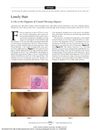
October 2011 in “Archives of Dermatology” Isolated long hairs at the original hairline can help diagnose Frontal Fibrosing Alopecia.
 March 2018 in “Dermatología Argentina”
 The study found that the average age of women diagnosed with Frontal Fibrosing Alopecia in Argentina is higher than in other countries, but their symptoms are similar.
 January 2024 in “Wiadomości Lekarskie”
 AI can help diagnose Follicular Lymphoma by accurately identifying specific cell types.
2 citations
,
May 2025 in “Diagnostics” ATR-FTIR spectroscopy could help monitor alopecia areata treatment response non-invasively.
 7 citations
,
August 2021 in “Journal of the European Academy of Dermatology and Venereology”
7 citations
,
August 2021 in “Journal of the European Academy of Dermatology and Venereology” Early treatment of fibrosing alopecia in a pattern distribution may improve outcomes.
8 citations
,
January 2013 in “International journal of trichology” Two people had unusual ring-shaped hair loss due to an autoimmune disorder.
 20 citations
,
November 2005 in “Journal of Investigative Dermatology Symposium Proceedings”
20 citations
,
November 2005 in “Journal of Investigative Dermatology Symposium Proceedings” IFN-γ and IL-2 are important for T cell activation in hair loss in mice.
1 citations
,
November 2023 in “Journal of Investigative Dermatology” Farudodstat may effectively treat alopecia areata without harming hair follicles.
 November 2015 in “European journal of dermatology/EJD. European journal of dermatology”
 A 55-year-old woman with several health conditions did not see hair regrowth after a transplant.
September 2011 in “American Journal of Transplantation” Hair regrowth in alopecia universalis may be possible by altering immune cells.
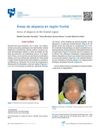 January 2025 in “Revista del Centro Dermatológico Pascua”
 Early diagnosis and treatment can help manage fibrosing alopecia in older women.
 1 citations
,
May 2025 in “The Journal of Rheumatology”
1 citations
,
May 2025 in “The Journal of Rheumatology” Anifrolumab effectively improved lupus headaches in a patient unresponsive to other treatments.
 18 citations
,
November 2012 in “Australasian Journal of Dermatology”
18 citations
,
November 2012 in “Australasian Journal of Dermatology” A 66-year-old man with a rare case of male frontal fibrosing alopecia did not regrow hair despite treatment.
research Hair
May 2024 in “Australasian Journal of Dermatology” Alopecia areata causes significant emotional and social challenges, especially with more hair loss.
226 citations
,
February 1999 in “British Journal of Dermatology” Folliculitis decalvans and tufted folliculitis are related, and a new treatment with rifampicin and clindamycin is effective.
79 citations
,
December 2013 in “Journal of Investigative Dermatology Symposium Proceedings” Alopecia areata may be treated by restoring hair follicle immune privilege and adjusting immune responses.
1 citations
,
November 2025 in “Journal of Dermatological Treatment” Baricitinib is effective and safe for treating severe alopecia areata.
 9 citations
,
October 2021 in “International Journal of Dermatology”
9 citations
,
October 2021 in “International Journal of Dermatology” Tofacitinib is effective and safe for treating severe hair loss in a Saudi population.
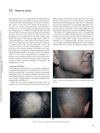 April 2012 in “Informa Healthcare eBooks”
 Alopecia areata is a common autoimmune condition causing varying hair loss, diagnosed by specific patterns of inflammation around hair follicles, with several treatment options available.
Combining anti-androgenic, anti-inflammatory, and anti-fibrotic treatments may improve hair loss outcomes.
August 2024 in “Journal of the Egyptian Womenʼs Dermatologic Society” SOX10 in hair follicles is linked to inflammation in alopecia areata.