36 citations
,
July 2017 in “Journal of controlled release” A new method allows for controlled, long-lasting delivery of retinoic acid through the skin with fewer side effects.
 September 2024 in “Cureus”
 A new method improves platelet testing for heart disease patients.
3 citations
,
May 2025 in “Carbohydrate Polymers” The new microneedle patch effectively treats alopecia areata with fewer side effects than oral medication.
 23 citations
,
September 2017 in “Journal of the American Academy of Dermatology”
23 citations
,
September 2017 in “Journal of the American Academy of Dermatology” Apremilast did not work for treating severe alopecia areata.
January 2024 in “Biomedicines” The review shows that skin symptoms like chronic fungal infections, hair loss, and skin depigmentation are key for early detection and management of APECED.
 1 citations
,
July 2025 in “Frontiers in Endocrinology”
1 citations
,
July 2025 in “Frontiers in Endocrinology” ApoBDs, once seen as waste, are now viewed as potential tools for disease treatment and tissue repair.
12 citations
,
June 2025 in “Gut Microbes” BroadAMP-GPT effectively creates antimicrobial peptides to fight drug-resistant bacteria.
22 citations
,
September 2020 in “Journal of the American Academy of Dermatology” Apremilast may be a promising long-term treatment for hidradenitis suppurativa.

Most patients with hair loss used alternative treatments, especially topical applications and health food supplements, based on recommendations from others.
April 2024 in “Demiroglu Science University Florence Nightingale Journal of Medicine” Understanding the APCDD1 gene can lead to new hair loss treatments.
 1 citations
,
April 2017 in “Journal of Investigative Dermatology”
1 citations
,
April 2017 in “Journal of Investigative Dermatology” SM04554 may increase hair growth as a topical treatment for androgenetic alopecia.
June 2026 in “Mendeley Data” June 2026 in “Mendeley Data” 8 citations
,
January 2014 in “Indian Journal of Paediatric Dermatology” Congenital atrichia with papular lesions causes permanent hair loss and skin bumps from birth.
 May 2015 in “Journal of The American Academy of Dermatology”
 Both treatments help with hair regrowth in alopecia areata, but azathioprine has milder side effects than betamethasone.
 3 citations
,
March 2010 in “Dermatologica Sinica”
3 citations
,
March 2010 in “Dermatologica Sinica” A Taiwanese patient had hair loss and skin bumps without the usual gene mutation, suggesting other genetic factors might be involved.
3 citations
,
September 2025 in “Plant Signaling & Behavior” Apyrase enzymes control ATP levels in Arabidopsis root growth zones.
 April 2026 in “Dermatology Practical & Conceptual”
 AMT may be more effective than finasteride for hair growth in androgenetic alopecia.

Inhibiting AP-1 changes skin tumor types and affects tumor cell identity.
50 citations
,
December 2017 in “Nanoscale” Polymeric micelle nanocarriers deliver adapalene more effectively to hair follicles than commercial products.
 6 citations
,
January 2011 in “Journal of pediatric endocrinology & metabolism/Journal of pediatric endocrinology and metabolism”
6 citations
,
January 2011 in “Journal of pediatric endocrinology & metabolism/Journal of pediatric endocrinology and metabolism” An 11-year-old Greek girl was diagnosed with a rare genetic disorder, highlighting the importance of genetic testing and family history.
 5 citations
,
January 2018 in “Acta Dermatovenerologica Alpina Pannonica et Adriatica”
5 citations
,
January 2018 in “Acta Dermatovenerologica Alpina Pannonica et Adriatica” Congenital atrichia with papular lesions causes permanent hair loss in children.
A specific gene change in APCDD1 increases the risk of hair loss.
 March 2022 in “Research Square (Research Square)”
 4-aminopyridine, a FDA-approved drug, speeds up skin wound healing and tissue regeneration.

The project developed and tested a method using plasma rich platelets to treat hair loss.
76 citations
,
July 2009 in “Neuroscience” Neurosteroids like allopregnanolone help control cell death and growth in the developing fetal brain.
August 2023 in “Zenodo (CERN European Organization for Nuclear Research)” January 2026 in “International Journal of Dermatology” Treatment improved scalp conditions and hair loss with no recurrence after 1 year.
 13 citations
,
January 2018 in “International Journal of Dermatology”
13 citations
,
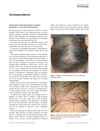
January 2018 in “International Journal of Dermatology” The study found that treatment improved hair condition in patients with Fibrosing Alopecia in a Pattern Distribution in Chile.
 April 2026 in “Zenodo (CERN European Organization for Nuclear Research)”
 The model improves understanding of androgen interactions by focusing on signal intensity and system capacity.