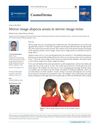
Mirror-image twins can have alopecia areata on opposite sides of their heads.
249 citations
,
May 2003 in “Developmental Biology” Ectodysplasin-A1 is crucial for developing hair, teeth, and glands.
1 citations
,
April 2016 in “PubMed” Epidermis and dermis cells together can regenerate hair follicles.
46 citations
,
October 2012 in “Seminars in reproductive medicine” Genetic defects in androgen production are linked to male developmental disorders and are improving treatment understanding.
9 citations
,
March 2023 in “Chemosphere” Certain pesticides may delay sexual maturity in teenage boys.
June 2026 in “Journal of Investigative Dermatology” Retinoic acids temporarily change skin stem cells to a slower cycle and more differentiated state.
April 2017 in “bioRxiv (Cold Spring Harbor Laboratory)” The dfRootChip revealed how Arabidopsis roots adapt and grow in uneven conditions.
July 2001 in “APMIS. Acta pathologica, microbiologica et immunologica Scandinavica./APMIS” Male children's genital development issues can be caused by genetic mutations or environmental factors affecting hormone action.
27 citations
,
September 2017 Pubic hair transplantation can improve self-esteem in those with sparse pubic hair.
 13 citations
,
February 2010 in “Stem Cell Reviews and Reports”
13 citations
,
February 2010 in “Stem Cell Reviews and Reports” Stem cells compete for space using cell adhesion, and mutations can affect their competitive success, with implications for tissue health and disease.
March 2025 in “Multidisciplinary Science Journal” Sonic hedgehog (Shh) is crucial for gecko tail regeneration.
January 2026 in “Case Reports in Dermatological Medicine” Intralesional steroids effectively treated a young female's scalp nodules without recurrence.
 24 citations
,
November 2016 in “Cell death and disease”
24 citations
,
November 2016 in “Cell death and disease” Skin-derived stem cells can become various cell types, including germ cell-like and oocyte-like cells.
20 citations
,
January 2002 in “Laboratory Animals” Mutations in the hairless gene cause hair loss and skin cysts in rhesus macaques.
20 citations
,
May 2011 in “Journal of Clinical Investigation” The study created a mouse model to mimic degenerative diseases for testing tissue repair and new therapies.
4 citations
,
December 1995 in “Archives of Dermatological Research” 1 citations
,
December 2020 in “International journal of molecular sciences” External factors can cause skin cancer cells that usually don't spread to grow and form tumors in mice.
March 2020 in “UTUPub (University of Turku)” Androgen-driven traits don't predict prostate cancer recurrence.
September 2025 in “Journal of the American Academy of Dermatology”  4 citations
,
July 2012 in “Linguistic Annotation Workshop”
4 citations
,
July 2012 in “Linguistic Annotation Workshop” Root hairs in barley improve growth and zinc uptake in zinc-deficient soil.
 45 citations
,
November 2017 in “Biomaterials”
45 citations
,
November 2017 in “Biomaterials” Researchers found a new way to create hair-growing structures in the lab that can grow hair when put into mice.
183 citations
,
July 2000 in “American Journal of Botany” Root hairs help Arabidopsis plants absorb more phosphorus when it's scarce.
 April 2024 in “Pigment cell & melanoma research”
 Different types of resting melanocyte stem cells have unique characteristics and vary in their potential to become other cells.
June 2008 in “Wound Repair and Regeneration” Msx-2 gene removal speeds up skin wound healing in mice.
 7 citations
,
January 2013 in “BioMed research international”
7 citations
,
January 2013 in “BioMed research international” Hair follicles and deer antlers regenerate similarly through stem cells and are influenced by hormones and growth factors.
January 2017 in “Springer eBooks” Understanding genes and hormones is crucial for managing male puberty and sex development disorders.
8 citations
,
August 2015 in “Endocrine” 2 citations
,
March 2016 in “The Journal of Urology” Male infertility often lacks thorough investigation, potentially missing reversible causes.
4 citations
,
December 2022 in “Skin Research and Technology” Reduced Sonic hedgehog signaling leads to increased HPV replication and wart formation.
April 2019 in “The journal of investigative dermatology/Journal of investigative dermatology” Spiny mice regenerate skin better than laboratory mice due to larger hair bulges, more stem cells, and different collagen ratios.