Search
for
Sort by
Research
690-720 / 1000+ resultsresearch Dihydrotestosteron und die Rolle der 5α-Reduktasehemmer bei der benignen Prostatahyperplasie
A stronger dual 5α-reductase inhibitor could improve treatment for benign prostatic hyperplasia by further reducing DHT levels.
research Oral tofacitinib: a promising treatment in atopic dermatitis, alopecia areata and vitiligo
Oral tofacitinib shows promise in treating atopic dermatitis and alopecia areata, but only slight improvement in vitiligo.
research Guidelines for perioperative antithrombotic therapy in hair restoration surgery: management of patients with coronary heart disease, mechanical heart valve, and atrial fibrillation
Hair restoration surgery can be safely done without major bleeding in patients on antithrombotic therapy, and these drugs shouldn't be stopped before surgery.
research 12 Treatment of hirsutism with 5α-reductase inhibitors
New compounds may soon be tested to treat excessive hair growth in women.
research Treatment Response to JAK Inhibitors in Long-standing Alopecia Areata (≥8 Years): A Real-world Observational Study
JAK inhibitors can help some people with long-standing alopecia areata regrow hair, but many stop treatment due to limited effectiveness.
research A case of acute vision loss due to retinal arteriolar occlusion after forehead injection of triamcinolone acetonide
A woman lost vision in one eye after a forehead injection, but prompt treatment led to partial vision recovery.

research Alopecia Areata in Skin of Color Patients: New Considerations Sparked by the Approval of Baricitinib
The paper concludes that the new medication baricitinib needs further testing in a more diverse group of patients with alopecia areata.
research JAK Inhibitors in the Treatment of Alopecia Areata: Efficacy, Safety, and Long-term Outcomes
JAK inhibitors can effectively regrow hair in alopecia areata patients, but ongoing treatment is needed to maintain results.
research 5ARIs and PSA: Evidences
5ARIs lower PSA levels, but other tests are needed to avoid missing aggressive prostate cancer.

research The emerging role of Janus kinase inhibitors in the treatment of autoimmune and inflammatory diseases
Janus kinase inhibitors are promising drugs for treating autoimmune and inflammatory diseases.
research Iatrogenic Cushing Syndrome and Secondary Adrenal Insufficiency Due to an Interaction Between Fluticasone and Ritonavir
A woman developed Cushing syndrome and adrenal insufficiency from using fluticasone and ritonavir together.

research Citrullination at the Inflammatory Skin Barrier
A potential treatment for atopic dermatitis could be to increase PADI1 expression to improve skin barrier function.
research 1116 Novel androgen receptor degrader for androgenetic alopecia (AGA) application
A new treatment for hair loss shows promise with fewer side effects.
research 5-alpha Reductase inhibitors and risk of male breast cancer: a systematic review and meta-analysis
Taking 5-alpha reductase inhibitors does not increase the risk of breast cancer in men.
research 5‐alpha‐reductase inhibitor treatment for frontal fibrosing alopecia: an evidence‐based treatment update
5-alpha-reductase inhibitors may help stabilize or slow down hair loss in some frontal fibrosing alopecia patients, but more research is needed to confirm their effectiveness and safety.
research Novel Janus Kinase Inhibitors in the Treatment of Dermatologic Conditions
JAK inhibitors show promise for treating various skin diseases.
research Reporte de caso: alopecia areata universal tratada exitosamente con baricitinib
Baricitinib successfully treated severe hair loss.
research ALOPESIA AREATA DENGAN TERAPI KOMBINASI INJEKSI PLATELET-RICH PLASMA (PRP) DAN TRIAMSINOLON ASETONID INTRALESI
The combination of PRP and triamcinolone injections improved hair growth in a man with alopecia areata.
research Use of 5-Alpha Reductase Inhibitors in Dermatology: A Narrative Review
5-Alpha Reductase Inhibitors are effective for male hair loss and some skin conditions, but their effectiveness in women and safety concerns require careful use.
research An update of anti-viral treatment of COVID-19
As of December 2021, the most effective COVID-19 treatments were monoclonal antibodies and possibly early-administered convalescent plasma, while several drugs were found ineffective or were still under evaluation.
research Safety and efficacy of the JAK inhibitor tofacitinib citrate in patients with alopecia areata
Tofacitinib is safe and effective for severe alopecia areata, but hair loss may return 2 months after stopping treatment.
research Oral abrocitinib for treatment of refractory alopecia areata: A retrospective study
Abrocitinib may help treat alopecia areata effectively with mild side effects.
research Tumor necrosis factor-alpha inhibitor associated psoriasiform alopecia (drug-induced psoriasiform alopecia)
Some drugs for inflammation may cause psoriasis-like hair loss.
research Protective effect of DA-9401 in finasteride-induced apoptosis in rat testis: inositol requiring kinase 1 and c-Jun N-terminal kinase pathway
DA-9401 helps protect rat testis from finasteride damage.
research Role of janus kinase inhibitors in the treatment of alopecia areata
Janus kinase inhibitors show promise in treating alopecia areata but need better topical formulations.
research Supplementary Material for: TOFACITINIB IN OVERLAPPING AUTOIMMUNE AND AUTOINFLAMMATORY DISORDERS: A CASE REPORT OF A DUAL GRAHAM-LITTLE-PICCARDI-LASSEUR SYNDROME AND HIDRADENITIS SUPPURATIVA
Tofacitinib significantly improved symptoms in a patient with overlapping autoimmune disorders.
research 378 Treatment of severe alopecia areata with the oral Janus kinase inhibitor, tofacitinib: A retrospective chart review
Tofacitinib may help regrow hair in severe alopecia areata, but results differ greatly between people.
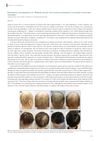
research Successful hair regrowth in a Korean patient with alopecia universalis following tofacitinib treatment
A Korean woman with complete hair loss regrew her hair after taking tofacitinib, with no side effects.
research MP-09.08
The study found that different criteria led to different patient groups in the CombAT study compared to the MTOPS study.