24 citations
,
March 2009 in “Archives of dermatological research” The combination of oral PUVA and corticosteroids helps regrow hair in severe alopecia areata.
 January 1998 in “Dermatology”
 Various dermatology events and meetings were announced for 1998.
October 2025 in “Diagnostics” Temporal triangular alopecia is a harmless, non-progressive hair loss condition.
1 citations
,
June 2023 in “Cosmoderma” Trichoscopy is better than the hair pull test for tracking alopecia areata.
1 citations
,
January 2013 in “Indian journal of dermatology, venereology, and leprology” A girl inherited excessive body hair from her mother and grandmother.
 48 citations
,
May 1991 in “The journal of investigative dermatology/Journal of investigative dermatology”
48 citations
,
May 1991 in “The journal of investigative dermatology/Journal of investigative dermatology” Trichohyalin is also found in the outer layers of normal human skin.
 June 2020 in “International journal of medical science and clinical invention”
 Modern research supports traditional uses of Yarrow for hair loss and skin issues.
December 2023 in “Panacea Journal of Medical Sciences” Alopecia areata is often linked to personal or family history of allergies and autoimmune diseases.

Deuruxolitinib is approved to treat severe alopecia areata in adults.
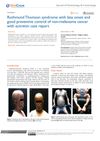 August 2024 in “Journal of Dermatology & Cosmetology”
 Acitretin effectively prevented skin cancer in a patient with late-onset Rothmund-Thomson syndrome.
1 citations
,
January 2019 in “Zenodo (CERN European Organization for Nuclear Research)” Eclipta alba has unique stem, leaf, and root features, including air cavities and secretory structures.
 April 2016 in “Journal of the American Academy of Dermatology”
 Tofacitinib helped a person with total body hair loss grow hair again without bad side effects.
3 citations
,
October 2020 in “The journal of investigative dermatology. Symposium proceedings/The Journal of investigative dermatology symposium proceedings” Alopecia areata is a hair loss disease caused by complex immune reactions, and new targeted treatments show promise.
 1 citations
,
March 2014 in “PubMed”
1 citations
,
March 2014 in “PubMed” Androgenic alopecia (AA) in Indian women is rarely reported, with varying severity and patterns, and hair pull tests and trichograms help understand it better.
 December 2020 in “International Journal of Biosciences (IJB)”
 Eclipta alba shows promise for medicinal use but needs more research.
November 2024 in “Dermatology Online Journal” Dupilumab may help treat alopecia areata, but more research is needed.
July 2019 in “Dermatology practical & conceptual” The study found that alopecia areata is strongly linked to autoimmune diseases and may indicate a genetic predisposition to such conditions.
December 2023 in “International Journal of Dermatology” Accurate diagnosis of alopecia areata incognito requires trichoscopy and histopathology.
5 citations
,
March 2013 in “Journal of Cutaneous Pathology” Granulomatous alopecia may be a distinct subtype of alopecia areata.
 April 2011 in “The FASEB Journal”
 Aralia continentalis root extract may help with hair growth.
 January 2025 in “Clinical Cosmetic and Investigational Dermatology”
 Genetic testing is crucial for diagnosing rare hair loss disorders.
April 2022 in “JAAD case reports” Alitretinoin helped clear up a skin condition called generalized granuloma annulare in an elderly man.
February 2021 in “Journal of the European Academy of Dermatology and Venereology” Alopecia areata is linked to more chronic illnesses, a specific lamp helps with notalgia paresthetica itch, pycnogenol aids melasma treatment, and dupilumab improves severe atopic dermatitis in children.
January 2026 in “Clinical and Experimental Dermatology” Ruxolitinib helped a patient with alopecia areata regrow hair.
December 2017 in “The Sri Lanka Journal of Dermatology” Infliximab successfully treated a severe hair loss case in Sri Lanka.
36 citations
,
March 1989 in “British journal of dermatology/British journal of dermatology, Supplement” DPCP is more effective than tretinoin gel for treating severe alopecia.
1 citations
,
September 2025 in “JAAD reviews.” Janus kinase inhibitors are effective for severe alopecia areata, promoting hair regrowth.
7 citations
,
February 2012 in “British Journal of Dermatology” TH antibodies in vitiligo and AA patients recognize the same protein parts.
23 citations
,
December 2013 in “Journal of Investigative Dermatology Symposium Proceedings” Genetic discoveries are leading to new treatments for alopecia areata.
 July 2023 in “Research Square (Research Square)”
 Certain gut bacteria may protect against alopecia areata, while others may increase the risk.