 November 2025 in “The Bioscan.”
 Pix Liquida may help treat alopecia areata.
 January 2021 in “The Ochsner journal”
 ADHD stimulant medications might be linked to a specific type of hair loss called Alopecia Universalis.
 37 citations
,
October 2015 in “Anais Brasileiros de Dermatologia”
37 citations
,
October 2015 in “Anais Brasileiros de Dermatologia” Lichen planopilaris mostly affects women with fair skin and can look different on each person, needing early treatment to prevent hair loss.
January 2026 in “JPRAS Open” PDLLA scalp injections improved hair regrowth in most patients with non-scarring alopecia.
 February 2024 in “Australasian journal of dermatology”
 Janus kinase inhibitors may help treat lichen planopilaris.
 19 citations
,
May 2014 in “Molecules”
19 citations
,
May 2014 in “Molecules” Avicequinone C, a compound found in the Avicennia marina plant, can reduce hair loss by inhibiting a hormone linked to androgenic alopecia.
July 2024 in “LA Referencia (Red Federada de Repositorios Institucionales de Publicaciones Científicas)” Adipose tissue and eccrine gland displacement are common in certain alopecias but don't help differentiate between them.
Lichen spinulosus, usually seen in young people, can rarely occur in adults, as shown by a 52-year-old woman with a rough, bumpy rash.
 January 2022 in “Archiv für Tierzucht”
 EPHA4 and Ephrin A3 are found in the skin of Aohan fine-wool sheep.
13 citations
,
January 2023 in “Frontiers in Nutrition” Lindera aggregata has many beneficial compounds that can help prevent and manage diseases.
January 2016 in “Indian dermatology online journal” The patient has frontal fibrosing alopecia (FFA).
January 2026 in “Cosmetics” The fermented solution from Platycladus orientalis leaves may boost hair growth and reduce inflammation.
 1 citations
,
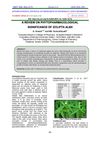
January 2020 in “International journal of research in pharmacy and chemistry”
1 citations
,
January 2020 in “International journal of research in pharmacy and chemistry” Eclipta alba has many health benefits and potential for medical and nutritional use.
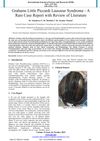 October 2023 in “International Journal of Science and Research (IJSR)”
 Early diagnosis of GLPLS is crucial to prevent complications, but scarring alopecia is irreversible.
October 2025 in “Lithuanian University of Health Sciences” Traditional plant-based remedies are still used in Lithuania for skin and hair care.
January 2023 in “Iranian Journal of Pharmaceutical Research” Stauntonia hexaphylla extract can help treat hair loss by blocking certain hormones.
 1 citations
,
December 2022 in “Current Issues in Molecular Biology”
1 citations
,
December 2022 in “Current Issues in Molecular Biology” Annurca apple extract improved hair growth in mice and could potentially prevent hair loss.
 May 2023 in “Journal of pharmacognosy and phytochemistry”
 The study established quality standards for Sphagneticola calendulacea stem and suggested it may have therapeutic benefits.
 January 2024 in “Sanjeevani Darshan National Journal of Ayurveda & Yoga”
 The treatment may help regrow hair in Alopecia Areata.
2 citations
,
March 2025 in “International Journal of Dermatology” Tralokinumab successfully treated alopecia areata in a patient with atopic dermatitis.
 February 2025 in “PubMed”
 Thorough scalp exams are crucial for diagnosing hair loss conditions in people with skin of color.
 December 2025 in “CyberLeninK (CyberLeninka)”
 Tamarix aphylla has compounds that may treat various health issues and needs more research.
 April 2017 in “Australasian Journal of Dermatology”
 Most patients with Lichen planopilaris improved with acitretin, but treatments often didn't work well; preventing infection in skin surgery is important, and bupivacaine might be a better anesthetic.
15 citations
,
September 2018 in “Frontiers in Plant Science” BcFLA1 protein is crucial for root hair growth in response to low phosphate in Brassica carinata.
 23 citations
,
September 2019 in “Dermatology practical & conceptual”
23 citations
,
September 2019 in “Dermatology practical & conceptual” The study concluded that AAI and DAA are forms of the same disease, with different symptoms in men and women, and that corticosteroid treatment is effective.
January 2021 in “Indonesian Journal on Medical Science” The hair tonic with aloe vera and celery was successfully made, with the first formula being the most stable.
1 citations
,
January 2016 in “Dermatology Online Journal” Triangular temporal alopecia can occur in adults and should be correctly identified to prevent misdiagnosis.
September 2022 in “The Korean Tea Society” Houttuynia cordata compounds may help with anti-aging and hair loss.
 June 2023 in “MPI (Media Pharmaceutica Indonesiana)”
 A hair tonic made from kale leaves is effective for hair growth and meets Indonesian standards.
 January 2024 in “Journal of Pharmacognosy and Phytochemistry”
 Kabīkaj has potential medicinal benefits for skin conditions but is less used now due to availability issues.