 June 2022 in “World Journal Of Advanced Research and Reviews”
 Low-level laser therapy can significantly regrow hair in alopecia areata.
 May 2022 in “Rossijskij žurnal kožnyh i veneričeskih boleznej”
 Alopecia areata is complex, often recurring, and needs personalized treatment, especially with other health issues.
 March 2022 in “Research Square (Research Square)”
 A girl with severe hair loss saw hair regrowth after using cannabis.
Fire needle therapy's benefits and safety for alopecia areata need more evidence.
October 2021 in “Book Publisher International (a part of SCIENCEDOMAIN International)” The combination therapy of microdermabrasion and steroid injections is more effective for treating scalp Alopecia Areata than steroid injections alone.
 August 2021 in “Revista Colombiana de Reumatología/Revista Colombiana de Reumatologia”
 Janus kinase inhibitors may effectively treat severe alopecia areata unresponsive to other treatments.
 July 2021 in “PARIPEX INDIAN JOURNAL OF RESEARCH”
 PRP injections significantly improve hair regrowth in alopecia areata.
 February 2021 in “Journal of pharmaceutical and biological sciences”
 No cure exists for alopecia areata, and treatments are personalized.
 April 2020 in “El-Minia Medical Bulletin”
 Microneedling is an effective treatment for hair regrowth in Alopecia Areata.
 March 2020 in “Faculty Opinions – Post-Publication Peer Review of the Biomedical Literature”
 Combining nonablative fractional laser with minoxidil was effective for alopecia areata with only one patient relapsing after a year.
 February 2020 in “Our Dermatology Online”
 A synthetic drug and a South American herb may help treat alopecia areata in Chinese men.
January 2020 in “Columbia Academic Commons (Columbia University)” Certain genetic changes in the STX17 and KRT82 genes contribute to hair loss in alopecia areata.
January 2020 in “Dermatology Review” Early diagnosis and treatment are crucial for managing alopecia areata, morphea, and psoriasis.
August 2019 in “Journal of the American Academy of Dermatology” Tofacitinib may help hair regrowth in alopecia areata, but more research is needed.
 July 2019 in “International journal of dermatology, venereology and leprosy sciences”
 Oral cyclosporine works better than betamethasone minipulse therapy for treating Alopecia Areata.
 April 2019 in “The journal of investigative dermatology/Journal of investigative dermatology”
 HDAC inhibitors, like Vorinostat and Entinostat, can help regrow hair in alopecia areata.
 February 2019 in “IP Indian journal of clinical and experimental dermatology”
 Psychological stress is a major factor in the onset and severity of alopecia areata, with atopic individuals being more prone to develop it.
Ayurvedic treatments improved alopecia areata symptoms.
 April 2018 in “bioRxiv (Cold Spring Harbor Laboratory)”
 A gene variant causes patched hair loss in mice, similar to alopecia areata in humans.
January 2018 in “Dermatology Online Journal” Alopecia areata is hard to treat, but new targeted therapies show promise.
 December 2017 in “The journal of investigative dermatology. Symposium proceedings/The Journal of investigative dermatology symposium proceedings”
 The summit aimed to speed up finding treatments for alopecia areata.
April 2017 in “The journal of investigative dermatology/Journal of investigative dermatology” Topical Vorinostat shows promise for treating alopecia areata by promoting hair regrowth.
March 2017 in “Medicina y Laboratorio” Alopecia areata symptoms may improve after treating Helicobacter pylori infection.
 February 2017 in “Medicina cutánea ibero-latino-americana”
 An 8-year-old boy with hair loss had hair regrowth and responded well to clobetasol propionate treatment.
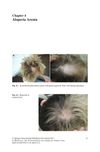 December 2016 in “Springer eBooks”
 A 45-year-old woman with autoimmune diseases experienced patchy hair loss due to alopecia areata, which has no cure but can be treated, with varying success.
New treatments for alopecia areata, like JAK inhibitors and immunomodulators, are promising.
 April 2016 in “Journal of The American Academy of Dermatology”
 Both atopy and eosinophilia are linked to more severe hair loss in people with alopecia areata.
 January 2016 in “Journal of The Korean Medical Association”
 The document says how to diagnose and treat hair loss from alopecia areata, but there's no cure and treatments vary.
May 2015 in “The Journal of Dermatology” Alopecia areata and polymyalgia rheumatica may be linked autoimmune conditions.
Some vaccines, like the hepatitis B vaccine, might be linked to the hair loss condition Alopecia Areata, but more research is needed.