 1 citations
,
October 2025 in “International Journal of Nanomedicine”
1 citations
,
October 2025 in “International Journal of Nanomedicine” Exosomes could revolutionize skin disease treatment and healing.
1 citations
,
January 2025 in “Genes & Diseases” Understanding T cells and signaling pathways can lead to better treatments for hair loss.
 1 citations
,
September 2023 in “Clinical, cosmetic and investigational dermatology”
1 citations
,
September 2023 in “Clinical, cosmetic and investigational dermatology” Certain genetic variants linked to immune response increase the risk of alopecia areata in Taiwanese people.
 1 citations
,
July 2023 in “Cutis”
1 citations
,
July 2023 in “Cutis” Scalp rolling might help regrow hair in people with a hair loss condition called Alopecia Areata.
 1 citations
,
June 2023 in “Journal of Dermatology”
1 citations
,
June 2023 in “Journal of Dermatology” People with Alopecia Areata are more likely to have autoimmune diseases, inflammatory diseases, and mental health issues like anxiety and depression.
 1 citations
,
January 2023 in “International Journal of Molecular Sciences”
1 citations
,
January 2023 in “International Journal of Molecular Sciences” Understanding how Regulatory T Cells work could help create treatments for certain skin diseases and cancers.
 1 citations
,
January 2020 in “Инфекционные болезни. Новости, мнения, обучение”
1 citations
,
January 2020 in “Инфекционные болезни. Новости, мнения, обучение” Lack of vitamin D might cause hair loss due to autoimmune problems, and fixing vitamin D levels could help treat it.
 1 citations
,
December 2018 in “IntechOpen eBooks”
1 citations
,
December 2018 in “IntechOpen eBooks” Human hair shows promise for non-invasive medical testing, but more research is needed to standardize its use.
 1 citations
,
October 2018 in “InTech eBooks”
1 citations
,
October 2018 in “InTech eBooks” Only minoxidil and finasteride are FDA-approved for hair loss, with other treatments available but less effective or with side effects.
 1 citations
,
August 2018 in “bioRxiv (Cold Spring Harbor Laboratory)”
1 citations
,
August 2018 in “bioRxiv (Cold Spring Harbor Laboratory)” A new mutation in the TMEM173 gene and a risk allele in IFIH1 cause a unique set of immune-related symptoms.
 June 2026 in “Frontiers in Immunology”
 EMT plays a key role in skin fibrosis and offers new therapy targets.
 May 2026 in “International Journal of Homoeopathic Sciences”
 Individualized Homeopathic Medicine shows promise for treating alopecia with lasting hair regrowth.

Microneedling may help treat some autoimmune skin conditions, but more research is needed.
 April 2026 in “International Journal of Molecular Sciences”
 Targeting non-Smad pathways in TGF-β signaling may improve keloid treatment.
 February 2026 in “Frontiers in Pharmacology”
 Genetics can help tailor treatments for male pattern hair loss, improving outcomes like stabilization or modest regrowth.
February 2026 in “Trends in Sciences” i-PRF-derived exosomes can effectively promote hair growth and improve hair health in androgenetic alopecia.
 January 2026 in “Clinical Cosmetic and Investigational Dermatology”
 Early diagnosis and targeted anti-inflammatory treatments can improve outcomes in androgenetic alopecia with perifollicular inflammation and fibrosis.
 January 2026 in “International Journal of All Research Education & Scientific Methods”
 Alopecia is caused by various factors, and new treatments like gene editing and regenerative medicine offer hope for personalized hair regrowth solutions.
 December 2025 in “Cureus”
 Alopecia areata and psoriasis vulgaris can inhibit each other in the same areas.
 November 2025 in “International Journal of Recent Innovations in Medicine and Clinical Research”
 Understanding different types of hair loss helps in accurate diagnosis and treatment.
 November 2025 in “International Journal of Innovative Research in Technology”
 Hormones significantly affect hair growth and loss, requiring personalized treatment.
 September 2025 in “Dermatology and Therapy”
 Baricitinib is a promising treatment for alopecia areata in the UAE, but there are challenges with data and access.
 July 2025 in “Scientific Reports”
 Pioglitazone, Trimipramine, and Dimetindene may be repurposed to treat psoriasis.
 July 2025 in “International Journal of Dermatology Venereology and Leprosy Sciences”
 Examining Survivin levels may help understand premature greying of hair.
 May 2025 in “The Journal of Rheumatology”
 Chronic granulomatous disease may be linked to developing systemic lupus erythematosus.
 January 2025 in “Cellular & Molecular Biology Letters”
 Eicosanoids are crucial for skin health, and targeting their pathways may help treat skin conditions.
 December 2024 in “Cureus”
 Baricitinib treatment for alopecia universalis can cause hair regrowth with unexpected whitening.
 August 2024 in “Bioscience of Microbiota Food and Health”
 Microbes might play a role in vitiligo.
 August 2024 in “Clinical and Medical Engineering Live”
 Alopecia treatment should use a modern, combined approach to effectively address hair loss.
 August 2024 in “New Zealand Medical Student Journal”
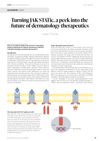
 JAK inhibitors show promise for treating skin diseases effectively and safely.