 December 2025 in “Journal of AI”
 The USA, China, Italy, and Türkiye lead in diverse PRP research, focusing on healing and pain management.
PRP may help reduce brain inflammation and protect brain cells.
 October 2025 in “Frontiers in Immunology”
 Platelet-rich plasma might help treat eczema by reducing inflammation and repairing the skin.
 August 2025 in “Research Square (Research Square)”
 High TNF-α levels may increase hair loss risk after PRP therapy.
 January 2025 in “Acta Clinica Croatica”
 Using platelet rich fibrin speeds up wound healing after revascularization.
 January 2025 in “International Research Journal of Innovations in Engineering and Technology”
 PRP shows promise in healing but needs standardization for better results.
 September 2024 in “Cureus”
 A new method improves platelet testing for heart disease patients.
 August 2024 in “UPI Journal of Pharmaceutical Medical and Health Sciences”
 PRP shows promise in musculoskeletal rehabilitation but needs standardized reporting for better outcomes.
 March 2024 in “Intisari Sains Medis”
 PRP injections improve periorbital wrinkles and show promise as a treatment.
 January 2024 in “Dermatology Review”
 Combining PRP with hydroquinone is more effective for treating melasma than using hydroquinone alone.
 December 2023 in “International journal of research in dermatology”
 Adding PRP to topical mometasone improves and speeds up alopecia areata treatment.
 May 2023 in “PARIPEX INDIAN JOURNAL OF RESEARCH”
 Platelet-rich plasma is an effective and safe treatment for male pattern hair loss.
 January 2023 in “Journal of orthopedics & bone disorders”
 Platelet-rich plasma may not be very effective for bone healing and hair growth due to a substance it contains that blocks these processes.
 May 2022 in “Journal of advances in medicine and medical research”
 Adding PRP to hair transplants improves treatment for cicatricial alopecia.
 August 2021 in “Journal of emerging technologies and innovative research”
 PRP combined with Ayurvedic medicine may effectively treat hair loss.
 September 2020 in “Medicina Moderna - Modern Medicine”
 A simple, cost-effective method to prepare high-quality PRP is suitable for smaller medical institutions.
 January 2019 in “Georg Thieme Verlag eBooks”
 Platelet-Rich Plasma (PRP) therapy can effectively treat various hair loss conditions, improve hair count, thickness, and density, and potentially speed up results when combined with surgical techniques.
 December 2022 in “Journal of Dermatology Research”
 Platelet Rich Plasma (PRP) treatment significantly improved Female Pattern Hair Loss in a study, but more trials are needed for confirmation.
 July 2021 in “Medical journal, Armed Forces India”
 Using platelet-rich plasma in hair restoration surgery significantly improves hair density after 6 months and is safe to use.
 December 2020 in “Journal of Aesthetic Nursing”
 Injecting platelet-rich plasma into the scalp stimulates hair growth, increases hair density, and treats hair loss effectively with minimal side effects.
 October 2020 in “Journal of Aesthetic Nursing”
 Platelet-rich plasma (PRP) injections effectively treat hair loss and thinning in both men and women, with high satisfaction and no major side effects.
 June 2020 in “Journal of Evolution of medical and Dental Sciences”
 Platelet Rich Plasma (PRP) treatment effectively reduces hair fall and increases hair growth in patients with Androgenetic Alopecia (AGA), but it may cause pain.
 23 citations
,
June 2018 in “Facial Plastic Surgery”
23 citations
,
June 2018 in “Facial Plastic Surgery” Platelet-Rich Plasma (PRP) is a low-risk treatment for Androgenic Alopecia (AGA) that generally improves hair count or density, but more research is needed for optimization.
 19 citations
,
May 2017 in “Dermatologic Surgery”
19 citations
,
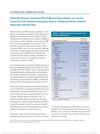
May 2017 in “Dermatologic Surgery” Combining platelet-rich plasma with 5% minoxidil solution improves hair regrowth in androgenetic alopecia patients.
 3 citations
,
August 2019 in “Journal of The American Academy of Dermatology”
3 citations
,
August 2019 in “Journal of The American Academy of Dermatology” PRP with microneedling is generally safe but can cause minor side effects like scalp itching, temporary hair shedding, and swollen lymph nodes.
 March 2026 in “Frontiers in Cell and Developmental Biology”
 Autologous cell-based therapies, especially SVF, effectively and safely improve atrophic acne scars.
 March 2021 in “British Journal of Dermatology”
 PRP helps hair regrowth and thickness.
 45 citations
,
May 2018 in “Stem Cell Research & Therapy”
45 citations
,
May 2018 in “Stem Cell Research & Therapy” Using patients' own fat-derived cells to treat alopecia areata significantly improved hair growth and was safe.
 15 citations
,
August 2019 in “Dermatologic Therapy”
15 citations
,
August 2019 in “Dermatologic Therapy” Platelet-rich plasma (PRP) may help treat hair loss in patients with frontal fibrosing alopecia who don't respond to other treatments.
 6 citations
,
September 2019 in “Skin pharmacology and physiology”
6 citations
,
September 2019 in “Skin pharmacology and physiology” RCS-01 therapy is safe and may improve skin structure by affecting gene expression.