258 citations
,
July 2005 in “Journal of lipid research” DGAT1 enzyme helps make diacylglycerols, waxes, and retinyl esters.
 4 citations
,
March 2014 in “The FASEB Journal”
4 citations
,
March 2014 in “The FASEB Journal” The HIF-2α/ARNT complex is important for hair follicle development by controlling cell growth.
 7 citations
,
January 2018 in “Neurodegenerative Diseases”
7 citations
,
January 2018 in “Neurodegenerative Diseases” Researchers found a new ABCD1 gene mutation linked to a rare brain and nerve disorder with unusual brain changes.
20 citations
,
January 2017 in “Genetica” The methylation of the HOXC8 gene's exon 1 affects cashmere fiber length in goats.
33 citations
,
February 2012 in “British Journal of Dermatology” Mutations in the p63 gene affect skin adhesion, barrier integrity, and hair growth.
 27 citations
,
January 2012 in “Current Topics in Microbiology and Immunology”
27 citations
,
January 2012 in “Current Topics in Microbiology and Immunology” Mice that can regenerate tissue have cells that pause in the cell cycle, which is important for healing, similar to axolotls.
 17 citations
,
August 2012 in “Archives of Pharmacal Research”
17 citations
,
August 2012 in “Archives of Pharmacal Research” Acankoreoside J from Acanthopanax koreanum may help promote hair growth.
 4 citations
,
January 2017 in “Biological & pharmaceutical bulletin”
4 citations
,
January 2017 in “Biological & pharmaceutical bulletin” Inhibiting ALOX12 can help hair cuticle maturation by increasing S100A3 citrullination.
 4 citations
,
December 2020 in “Mammalian genome”
4 citations
,
December 2020 in “Mammalian genome” Harlequin mutant mice have hair loss due to low AIF protein levels and retroviral element activity.
 May 2025 in “Proceedings of the National Academy of Sciences”
 UTX is crucial for skin differentiation and health, especially in females.
April 2026 in “Proceedings of the National Academy of Sciences” Tmem30b is essential for hearing by maintaining hair cell structure in the ear.

CaBP1 and CaBP2 are important for maintaining hearing by supporting continuous calcium currents and nerve signaling in the ear.
January 2013 in “edoc (University of Basel)” TRF1 is crucial for creating and maintaining stem cells and marks both pluripotent and adult stem cells.
86 citations
,
May 2002 in “Journal of Investigative Dermatology” A new keratin, hK6irs1, is found in all layers of the hair follicle's inner root sheath.
A new imaging method helps see and study touch nerve endings in mouse skin.
 January 2023 in “Methods in molecular biology”
 ROP GTPase helps control the growth of pollen tubes and root hairs by managing cell structure and movement.
Activin A and follistatin control when ear hair cells form in mice.
43 citations
,
December 2006 in “The American journal of pathology” Edar signaling is crucial for controlling hair growth and regression.
 January 2025 in “Cell Communication and Signaling”
 CXXC5 can both suppress and promote cancer, making it a complex target for treatment.
24 citations
,
June 2015 in “Journal of Investigative Dermatology” aPKCλ is crucial for keeping hair follicle stem cells inactive and maintaining normal hair growth.
3 citations
,
July 2022 in “Brain and Behavior” The HtrA1L364P mutation causes brain dysfunction and blood vessel damage.
3 citations
,
January 2016 NuMA-microtubule interactions are crucial for proper skin structure and hair growth.
November 2022 in “Journal of Investigative Dermatology” ILC1-like cells can cause alopecia areata by themselves.
 October 2023 in “IBRO neuroscience reports”
 Rat hair follicle stem cells have functional oxytocin receptors, useful for studying neuropsychiatric disorders.
 10 citations
,
June 2005 in “The journal of investigative dermatology/Journal of investigative dermatology”
10 citations
,
June 2005 in “The journal of investigative dermatology/Journal of investigative dermatology” FP-1 is a key protein in rat hair growth, active only during the growth phase.
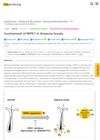
RIPK1 inhibitors might help prevent alopecia areata.
Sphingosine 1-phosphate helps control mechanical pain.
January 1998 in “Differentiation” Basonuclin is crucial for hair follicle development and cycling in mice.
 February 2024 in “Planta”
 TRM21 helps control flavonoid production and root hair growth in Arabidopsis thaliana.
2 citations
,
April 2024 in “Molecular Plant” Auxin promotes root hair growth through oxidative processes involving reactive oxygen species.