February 2018 in “Zenodo (CERN European Organization for Nuclear Research)” Mulethi and Amla effectively kill E. coli bacteria.
 8 citations
,
July 2024 in “PLoS ONE”
8 citations
,
July 2024 in “PLoS ONE” Botryococcus braunii's three chemical races should be reclassified as separate species.
 1 citations
,
August 2024 in “Polymers”
1 citations
,
August 2024 in “Polymers” Bacterial cellulose is a promising material for biomedical uses but needs improvements in antimicrobial properties and degradation rate.
3 citations
,
January 2023 in “Biodiversitas Journal of Biological Diversity” Bacillus tequilensis from Leea indica leaves is a strong natural antioxidant source.
 March 2026 in “Brazilian Journal of Microbiology”
 Restoring skin bacteria may help reduce hair loss.
 12 citations
,
November 2014 in “Bioscience, Biotechnology, and Biochemistry”
12 citations
,
November 2014 in “Bioscience, Biotechnology, and Biochemistry” Genetically modifying a bacteria and changing its growth conditions significantly increased the production of a chemical called dipicolinic acid.
 December 2023 in “Urogenital tract infection”
 Seminal bacteria can lower sperm quality in subfertile men.
February 2018 in “Open MIND” Mulethi and Amla effectively kill E. coli bacteria.
1 citations
,
January 2013 in “INTAS POLIVET” Cephalexin effectively treats canine bacterial dermatitis, showing improvement within 72 hours.
3 citations
,
November 2024 in “Current Research in Microbial Sciences” Echinops echinatus and Tridax procumbens have compounds that fight bacteria.
Camel hair textiles treated with Rose Bengal effectively kill bacteria under light.
Bacterial augmentation improves hair composting and nutrient availability.
 2 citations
,
June 2022 in “The Bulletin of Contemporary Clinical Medicine”
2 citations
,
June 2022 in “The Bulletin of Contemporary Clinical Medicine” Sequential use of hydroxyapatite gel and platelet-enriched blood autoplasm may improve treatment for chronic apical periodontitis.

Camel hair textiles treated with Rose Bengal effectively kill bacteria under light.
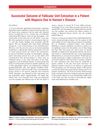 January 2021 in “Journal of Cutaneous and Aesthetic Surgery”
 Follicular unit extraction successfully restored hair growth in a leprosy patient without disease relapse.
The study identified a key protein involved in producing underarm odor and found ways to inhibit it.
A 5 cm hair sample can reveal blood type and keratin type for forensic use.
 3 citations
,
May 2020 in “Gynecology Obstetrics and Reproductive Medicine”
3 citations
,
May 2020 in “Gynecology Obstetrics and Reproductive Medicine” Bacterial vaginosis is not linked to skin disorders in these patients.
January 2013 in “Hunan Agricultural Sciences” Lactobacillus reuteri and Bacillus natto can replace antibiotics to improve piglet health and growth.
April 2024 in “Iranian Journal of Microbiology” Shallot extract from Palu Valley can effectively kill Salmonella typhi.
 February 2024 in “Bangladesh pharmaceutical journal”
 The conclusion is that the tested yogurts from Bangladesh are rich in vitamins thiamine and riboflavin, and the testing method is reliable.
June 2014 in “Toxicologie analytique et clinique/Annales de toxicologie analytique” Hair analysis can be unreliable due to external contamination and varying drug concentrations.
January 1990 in “Medical Entomology and Zoology” A new method can quickly detect alcohol abuse by analyzing hair in under an hour.
2 citations
,
April 2022 in “Nusantara Bioscience” The method accurately measures vancomycin using silver nanoparticles.
8 citations
,
February 2025 in “Cell Systems” Engineered bacteria can deliver antioxidants to protect skin.
1 citations
,
January 2020 in “Progressive Agriculture” Buffaloes with skin issues were cured using tetracycline injections.
109 citations
,
January 1980 in “Science of the total environment” Analyzing trace elements in human hair is complex and needs a standardized method.
 11 citations
,
August 2017 in “Journal of Chromatographic Science”
11 citations
,
August 2017 in “Journal of Chromatographic Science” The new method is rapid, sensitive, and accurate for evaluating the quality of the medicinal herb Platycladi cacumen.
January 2026 in “Microorganisms” Bifidobacterium animalis subsp. lactis J12 helps reduce atopic dermatitis symptoms.
 53 citations
,
May 1987 in “The Lancet”
53 citations
,
May 1987 in “The Lancet” The document suggests a possible link between Crohn's disease and Johne's disease and calls for more research.