10 citations
,
September 1994 in “International Journal of Dermatology” Three Iranian men had reddish-brown facial pigmentation with no effective treatment.
 11 citations
,
June 2012 in “Acta histochemica”
11 citations
,
June 2012 in “Acta histochemica” Mice with a Gsdma3 gene mutation have thicker skin and longer hair follicle openings due to increased β-catenin levels.
16 citations
,
September 2015 in “International Journal of Molecular Sciences” A specific gene variant causes severe skin issues and increases infection risk, requiring careful medical monitoring.
25 citations
,
October 2005 in “PubMed” Keratin 19 expression in certain skin cells is temporary and not a reliable stem cell marker.
 February 2025 in “bioRxiv (Cold Spring Harbor Laboratory)”
 Hair follicles protect melanocytes from sun damage, helping them replenish skin.
88 citations
,
March 2004 in “Journal of Investigative Dermatology” 1 citations
,
January 2021 in “Journal of the American Academy of Dermatology” Careful histologic examination is crucial to differentiate types of bullous lesions in cutaneous lupus erythematosus.
150 citations
,
May 1993 in “The journal of cell biology/The Journal of cell biology” Mouse Notch is important for determining cell roles in hair follicles.
46 citations
,
July 2015 in “Wound repair and regeneration” Keloid scars may form due to changes in skin cell characteristics and specific protein signaling.
January 2009 in “China Practical Medicine” Certain genes help dermal papillae cells in hair follicles grow and group together.
69 citations
,
January 1995 in “PubMed” Mouse melanocyte structure and function are influenced by genetics, hormones, and environmental factors.
13 citations
,
August 2017 in “Journal of Cellular Physiology” PD‐L1 and PD‐L2 may not effectively control immune activation in alopecia areata.
38 citations
,
June 2005 in “Acta Biochimica Polonica” Splenic eumelanin in C57BL/6 mice is different from hair eumelanin.
 8 citations
,
June 2016 in “Journal of Cutaneous Pathology”
8 citations
,
June 2016 in “Journal of Cutaneous Pathology” Two women were diagnosed with a rare melanoma that looked like hair loss but was actually a type of skin cancer.
13 citations
,
June 2012 in “European journal of medical genetics” Identical twins had different symptoms because one had more cells with an extra chromosome fragment in different tissues.
 31 citations
,
May 2019 in “Nature communications”
31 citations
,
May 2019 in “Nature communications” Single Blimp1+ cells can create functional sebaceous gland organoids in the lab.
Dermal papilla cells can help form hair-like structures in lab-grown skin cells.
 September 1997 in “Journal of The European Academy of Dermatology and Venereology”
 Skin lymphoproliferative disorders are hard to diagnose and often linked to systemic diseases, but most have a good prognosis with accurate diagnosis.
75 citations
,
October 1999 in “Differentiation” Mouse keratin 6 isoforms have different expression patterns in various tissues.
 1 citations
,
March 2024 in “Ophthalmic Plastic and Reconstructive Surgery”
1 citations
,
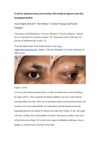
March 2024 in “Ophthalmic Plastic and Reconstructive Surgery” A pilomatrixoma in the eyebrow can cause hair loss and skin lightening.
11 citations
,
June 2001 in “British Journal of Dermatology” c-Myc, Max, and Bin1 help hair follicle cells mature and die.
January 2014 in “eScholarship (California Digital Library)” Lrig1 and Lgr6 stem cells help maintain hair follicles and influence skin cancer development.
37 citations
,
August 2000 in “Journal of Cutaneous Pathology” Poromas are related to sweat duct cells, and CK patterns help distinguish apocrine poromas from other neoplasms.
August 2023 in “Journal of Investigative Dermatology” 11 citations
,
November 2019 in “The FASEB Journal” A mutation in the MAP2 gene causes reduced hair follicle density, leading to hairlessness.
64 citations
,
May 2015 in “Cell Cycle” Hair follicle stem cells can become heart muscle cells.
9 citations
,
July 2014 in “PubMed” Different S100 proteins have specific roles in various parts of the hair follicle.
October 2021 in “The journal of investigative dermatology/Journal of investigative dermatology” Desmoglein 3 is important for keeping hair follicle stem cells inactive and maintaining their special properties.
 January 2008 in “Yearbook of Dermatology and Dermatologic Surgery”
 One type of progenitor cell can maintain normal skin in mice.
12 citations
,
April 2004 in “PubMed” A rare skin condition in a baby showed unusual fat and hair follicle changes.