 1 citations
,
April 2017 in “Journal of Investigative Dermatology”
1 citations
,
April 2017 in “Journal of Investigative Dermatology” Topical glucocorticoids thin the skin and change collagen structure.
1 citations
,
June 2016 in “FEBS open bio” Fish oil increased cell growth and macrophages in the skin but didn't affect COX-2 expression.
April 2026 in “Meditsinskiy sovet = Medical Council” Scalp psoriasis is a chronic condition that can be managed with treatments like corticosteroids and salicylic acid.
 December 2025 in “Cosmoderma”
 Systemic corticosteroids help manage vitiligo by slowing progression and aiding repigmentation.
 May 2025 in “Russian Journal of Allergy”
 Combining antihistamines with topical treatment improves hair regrowth in alopecia areata.
Brunsting-Perry pemphigoid can cause scarring hair loss and may be underdiagnosed.
 January 2025 in “International Journal of Dermatology”
 Tofacitinib improved hair and nail conditions in a teen with alopecia areata.
January 2025 in “International Journal of Applied and Basic Medical Research” Effective treatment of folliculitis decalvans requires accurate diagnosis and more research for better therapies.
 December 2024 in “Indian Journal of Dermatology Venereology and Leprology”
 Atypical male hair loss may not respond to usual treatments.
 November 2024 in “IP Indian Journal of Clinical and Experimental Dermatology”
 Dermoscopy is a useful tool for diagnosing and managing topical steroid dependent face.
 July 2024 in “Medical alphabet”
 Betamethasone injections are more effective than Clobetasol for treating alopecia areata in children.
 October 2023 in “Dermatology practical & conceptual”
 Pulse corticosteroids help regrow hair in alopecia areata but have side effects, especially betamethasone.
 September 2023 in “International Journal of Trichology”
 Tofacitinib helped a woman regrow hair with no major side effects.
 August 2023 in “The Journal of Dermatology”
 Intralesional corticosteroid injections effectively treat scalp vitiligo.
July 2023 in “Zenodo (CERN European Organization for Nuclear Research)” Ketoconazole effectively treated a scalp infection in a 6-year-old boy, leading to full recovery.
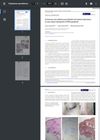 June 2023 in “Journal of cosmetic dermatology”
 A woman developed skin lesions after PRP injections, possibly linked to COVID-19 infection and vaccination.
 May 2023 in “Journal of medical case reports”
 A young girl with skin and scalp conditions showed some improvement with treatment.
 May 2023 in “International Journal of Trichology”
 Tofacitinib effectively treated severe hair loss in a patient who didn't respond to other treatments.
January 2022 in “Clinical Cases in Dermatology” Scalp psoriasis is hard to treat and may need various medications.
September 2021 in “Pediatrics in review” The girl's leg lesion was a fungal infection that improved with antifungal medication but kept coming back before finally clearing up after 5 years.
July 2019 in “Dermatology practical & conceptual” The study found that alopecia areata is strongly linked to autoimmune diseases and may indicate a genetic predisposition to such conditions.
January 2019 in “Egyptian Journal of Dermatology and Venereology /Egyptian Journal of Dermatology and Venerology” Mixing calcipotriol with a steroid is almost as effective as using a steroid alone for alopecia areata and has fewer side effects.
 August 2018 in “Journal of The American Academy of Dermatology”
 A 5-year-old girl with a rare skin disorder was effectively treated with skin creams instead of oral medication.
 January 2015 in “Springer eBooks”
 Some alternative treatments may help with hair loss, but more evidence is needed to confirm their effectiveness.
November 2012 in “Annales de Dermatologie et de Vénéréologie” Frontal fibrosing alopecia can occur in children, not just postmenopausal women.
January 2012 in “Journal of Islamic International Medical College” Using topical steroids for acne is a bad idea and causes many skin problems.
 December 2011 in “InTech eBooks”
 Systemic corticosteroids can help treat rapidly spreading vitiligo but require more research for safer use.
January 2003 in “Journal of Practical Aesthetic and Plastic Surgery” Both steroid treatments effectively regrow hair in severe alopecia areata.
January 2001 in “대한피부과학회지” Minipulse therapy with betamethasone effectively promotes hair regrowth in alopecia areata with fewer side effects.
January 2001 in “대한피부과학회지” Oral minipulse therapy with betamethasone effectively promotes hair regrowth in alopecia areata with fewer side effects.