 42 citations
,
September 2007 in “The Journal of Clinical Endocrinology and Metabolism”
42 citations
,
September 2007 in “The Journal of Clinical Endocrinology and Metabolism” The research found that polycystic ovary syndrome (PCOS) has two distinct types, with one having more severe hormone and insulin issues.
January 2026 in “Advances in Dermatology and Allergology” Stress significantly affects the quality of life in patients with lichen planopilaris and frontal fibrosing alopecia.
December 2012 in “Expert review of dermatology” New findings suggest the protein linked to Birt–Hogg–Dubé syndrome is important in cell signaling and could affect treatment understanding.
2 citations
,
August 2025 in “JAAD reviews.” Frontal fibrosing alopecia significantly affects men, often causing hair loss in eyebrows, beard, and sideburns.
August 2025 in “Biomolecules” Fibroblast growth factors could be a better, safer treatment for hair loss than current options.
 March 2023 in “Enciclopédia Biosfera”
 Finasteride effectively treats BPH but requires continuous use to maintain benefits.
 December 2025 in “PubMed”
 Fish collagen peptide may boost hair growth and health.
Frontal fibrosing alopecia can be managed with personalized combination therapies, but no cure exists yet.
 April 2026 in “Zenodo (CERN European Organization for Nuclear Research)”
 Gut bacteria imbalance may cause Post-Finasteride Syndrome symptoms.
 5 citations
,
January 2003 in “Oilseeds and fats, crops and lipids/OCL. Oilseeds & fats crops and lipids”
5 citations
,
January 2003 in “Oilseeds and fats, crops and lipids/OCL. Oilseeds & fats crops and lipids” Vegetable protein lowers cholesterol and protein deficiency can cause health issues.
 September 2021 in “Physiology News”
 The Future Physiology 2021 conference was successful in providing networking and learning opportunities for early career physiologists online.
1 citations
,
May 2020 in “bioRxiv (Cold Spring Harbor Laboratory)” The fer-ts mutation in plants prevents root hair growth at high temperatures.
 September 2018 in “Dermatologic Therapy”
 Finasteride at 2.5mg/day may help postmenopausal women with hair loss.
May 2026 in “International Journal of Homoeopathic Sciences” Homeopathy improved hair health and emotional well-being in severe female baldness.

Enhanced stem cells from the placenta can reduce fat cell formation in eye disease.
Frontal Fibrosing Alopecia mainly affects postmenopausal women and is linked to thyroid disease, hyperlipidemia, and anemia.
 November 2023 in “The journal of investigative dermatology/Journal of investigative dermatology”
 Early treatment and multidisciplinary care are key to managing Frontal Fibrosing Alopecia and preventing further hair loss.
5 citations
,
October 2020 in “Veterinary record case reports” Fluorescent light energy may help treat skin infections in dogs with calcinosis cutis.
August 2020 in “Research Square (Research Square)” Enhanced stem cells can reduce fat buildup in eye tissue for Graves' disease.
April 2012 in “The Journal of Urology” Finasteride therapy reduces PSA levels and prostate size, helping diagnose prostate cancer.
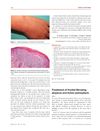 20 citations
,
January 2014 in “Journal of the European Academy of Dermatology and Venereology”
20 citations
,
January 2014 in “Journal of the European Academy of Dermatology and Venereology” The critique highlights an error in a review about hair loss treatment, stressing the need for accurate information and caution due to poor evidence quality.
7 citations
,
July 2021 in “The Journal of Dermatology” Facial care products are not linked to causing frontal fibrosing alopecia.
January 2026 in “Andrology” PRP injections are safe but don't significantly improve Peyronie's Disease.
September 2017 in “The journal of investigative dermatology/Journal of investigative dermatology” Different types of human skin cells respond uniquely to various colors and doses of light, which could lead to specialized light treatments for skin conditions.
2 citations
,
January 2023 in “Uro” UHP-sCESr is as effective as HESr for treating BPH symptoms.
47 citations
,
April 2012 in “Analytical and Bioanalytical Chemistry”  October 2022 in “Journal of Pharmaceutical Negative Results”
 Photobiomodulation therapy shows promise in treating various health conditions by using specific light wavelengths.

Rice bran polysaccharides have potential uses in food, health, and cosmetics due to their beneficial bioactive properties.
 September 2023 in “bioRxiv (Cold Spring Harbor Laboratory)”
 FOL-026 peptide can help repair blood vessels and promote growth, offering potential treatment for vascular diseases.
 November 2018 in “Biomedical Journal of Scientific and Technical Research”
 Long-Acting Platelet Rich Plasma therapy can effectively reduce hair shedding, thicken hair, and promote new growth in women with pattern hair loss.