 1 citations
,
November 2023 in “BMC chemistry”
1 citations
,
November 2023 in “BMC chemistry” Tadalafil and Finasteride may help treat aggressive melanoma.
December 2025 in “Pediatric Dermatology” Trametinib can cause skin issues, but they can often be managed without stopping the drug.
4 citations
,
March 2007 in “British Journal of Dermatology” Gefitinib therapy can cause unusual hair growth on the nose.
 136 citations
,
April 2013 in “Clinical Cancer Research”
136 citations
,
April 2013 in “Clinical Cancer Research” The drug IPI-926 is safe at 160 mg daily and may help treat certain tumors, especially basal cell carcinoma.
 21 citations
,
February 2013 in “Clinics in Dermatology”
21 citations
,
February 2013 in “Clinics in Dermatology” New treatments for advanced skin cancer are improving patient outcomes, but drug resistance and finding the right treatment combinations are still big challenges.
7 citations
,
January 2009 in “BMJ Case Reports” Gefitinib can cause slower, finer, brittle, and curly scalp hair.
1 citations
,
November 2025 in “Neuro-Oncology” Safusidenib erbumine shows promise as a treatment for certain brain tumors, but mild side effects like hair loss need attention.
 65 citations
,
February 2015 in “Neuro-Oncology”
65 citations
,
February 2015 in “Neuro-Oncology” Alisertib was found to be an effective and tolerable treatment for children with recurrent brain tumors.
 29 citations
,
April 2019 in “Acta neuropathologica communications”
29 citations
,
April 2019 in “Acta neuropathologica communications” Stopping mitochondrial respiration can prevent brain cancer spread in skin cancer patients, and plant compound β-sitosterol could help achieve this.
February 2024 in “Frontiers in Cell and Developmental Biology” Eribulin-based chemotherapy is more effective and has fewer side effects for advanced triple-negative breast cancer.
Finasteride may help treat childhood brain tumors by activating certain genes.
Ivarmacitinib effectively regrows hair in severe alopecia areata.
10 citations
,
September 2016 in “Journal of cutaneous medicine and surgery” Patients on dabrafenib and trametinib for melanoma often experience skin side effects.

New cancer drugs can cause skin side effects like rashes, dry skin, hair changes, and nail problems.
10 citations
,
August 2016 in “Dermatology Online Journal” Nilotinib can cause skin issues like red bumps and hair loss.
 8 citations
,
May 2019 in “Journal of dermatological treatment”
8 citations
,
May 2019 in “Journal of dermatological treatment” Vismodegib is effective for basal cell carcinoma but has severe side effects.
 6 citations
,
April 2013 in “Current Dermatology Reports”
6 citations
,
April 2013 in “Current Dermatology Reports” Dermatologists are crucial for managing skin side effects in metastatic melanoma patients using vemurafenib and ipilimumab.
12 citations
,
May 2010 in “Journal of Clinical Oncology” MK-5108 is safe and shows potential against tumors, especially alone.
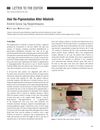 April 2025 in “Turkish Journal of Hematology”
 Nilotinib may cause gray hair to return to its original color.
 April 2016 in “Journal of Investigative Dermatology”
 Mefloquine, an antimalarial drug, is effective in killing melanoma cells resistant to other treatments by causing lethal stress in the cells.
 44 citations
,
April 2006 in “Expert opinion on drug safety”
44 citations
,
April 2006 in “Expert opinion on drug safety” Gefitinib can cause skin problems, diarrhea, and nausea, but rarely causes severe lung disease or hair loss.
 1 citations
,
July 2014 in “International Journal of Dermatology”
1 citations
,
July 2014 in “International Journal of Dermatology” A cancer patient developed a type of hair loss after starting a cancer drug called vandetanib.
2 citations
,
February 2021 in “Indian Dermatology Online Journal” Imatinib can cause hair loss due to lichen planopilaris.
 3 citations
,
July 2022 in “Problemy èndokrinologii”
3 citations
,
July 2022 in “Problemy èndokrinologii” Metformin, a diabetes drug, may also help fight cancer, but more research is needed to understand how.
![Discovery of 7-Methoxy-6-[4-(4-Methyl-1,3-Thiazol-2-yl)-1H-Imidazol-5-yl]-1,3-Benzothiazole (TASP0382088): A Potent and Selective Transforming Growth Factor-β Type I Receptor Inhibitor as a Topical Drug for Alopecia](/images/assets/9620bd26-3366-4f2a-bcac-f511697bbc41/small/35997.jpg) 6 citations
,
January 2013 in “Chemical & pharmaceutical bulletin/Chemical and pharmaceutical bulletin”
6 citations
,
January 2013 in “Chemical & pharmaceutical bulletin/Chemical and pharmaceutical bulletin” A new compound shows promise as a topical treatment for hair loss.
5 citations
,
January 2021 in “Indian Journal of Pharmacology” Nilotinib can cause generalized keratosis pilaris.
68 citations
,
January 2013 in “BMC Pharmacology and Toxicology” Glibenclamide slows breast cancer cell growth by stopping cell division.
 August 2025 in “Ophthalmic Plastic and Reconstructive Surgery”
 Selumetinib significantly reduced tumor size and improved vision in a child with neurofibromatosis type 1.
2 citations
,
September 2024 in “PLoS ONE” Bendamustine combined with tucidinostat may effectively treat adult T-cell leukemia.
23 citations
,
December 2013 in “Molecular cancer therapeutics” Breast cancer treatments work better with AR activation, improving results and reducing side effects.