4 citations
,
June 2025 in “MedComm” PROTACs show promise for cancer treatment, but designing them effectively is challenging.
 2 citations
,
December 2019 in “Bioanalysis”
2 citations
,
December 2019 in “Bioanalysis” Accurate quantitative bioanalysis using LC-MS/MS is challenging due to matrix effects, but using internal standards and new methods like in-sample calibration could improve results.
 1 citations
,
August 2024 in “Polymers”
1 citations
,
August 2024 in “Polymers” Bacterial cellulose is a promising material for biomedical uses but needs improvements in antimicrobial properties and degradation rate.
 15 citations
,
July 2023 in “EClinicalMedicine”
15 citations
,
July 2023 in “EClinicalMedicine” ADCs can effectively treat breast cancer but may cause side effects like nausea and hair loss.
 26 citations
,
August 2016 in “ACS Applied Materials & Interfaces”
26 citations
,
August 2016 in “ACS Applied Materials & Interfaces” A boronic acid copolymer quickly forms cell clusters, useful for tissue and tumor modeling.
1 citations
,
February 2023 in “Pharmaceutics” Cell proteomic footprinting enhances cancer vaccine quality by ensuring correct antigen composition.
 December 2025 in “Journal of Composites and Compounds”
 Composite biomaterials can precisely control immune responses for better disease treatment.
3 citations
,
July 2025 in “Gels” Engineered protein hydrogels improve medical treatments by mimicking natural body structures.
 6 citations
,
February 2025 in “Scientific Reports”
6 citations
,
February 2025 in “Scientific Reports” MEGA PROTAC improves prediction and ranking of protein complexes better than existing methods.

Bio-enhanced hair restoration improves hair growth.
April 2016 in “CRC Press eBooks” Biotechnology could lead to new hair growth products.
 February 2026 in “Oncology Reviews”
 Sacituzumab tirumotecan shows promise in treating breast cancer with manageable side effects.
 24 citations
,
June 2012 in “BMC Research Notes”
24 citations
,
June 2012 in “BMC Research Notes” The HGCA tool helps identify genes that work together by analyzing their co-expression patterns.
 September 2023 in “HAL (Le Centre pour la Communication Scientifique Directe)”
 Peptide nanoparticles can effectively deliver CRISPR-Cas9 to target KRAS mutations in cancer.
 106 citations
,
April 2010 in “ACS Nano”
106 citations
,
April 2010 in “ACS Nano” C60 fullerenes can alter protein function and may help develop new disease inhibitors.
April 2026 in “Future Medicinal Chemistry” PROTACs have become a breakthrough in medicine by effectively targeting and degrading specific proteins to treat diseases.
9 citations
,
October 2025 in “MedComm” PROTACs offer new ways to treat hard-to-target diseases, with promising drugs for cancer in advanced trials.
130 citations
,
January 2000 in “Nature biotechnology” 8 citations
,
February 2025 in “Cell Systems” Engineered bacteria can deliver antioxidants to protect skin.
51 citations
,
September 2020 in “Nucleic Acids Research” The package helps analyze and interpret gene expression data by comparing it to a database of conditions.
5 citations
,
March 2025 in “Tissue Engineering and Regenerative Medicine” 54 citations
,
January 1984 in “Molecular and Cellular Biochemistry” 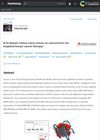 January 2025 in “Nanoscale”
 Boron/nitrogen-doped carbon nano-onions improve targeted breast cancer treatment by enhancing drug delivery and reducing side effects.
November 2025 in “Advanced Healthcare Materials” Charge-conversion chemistry improves hair-rebonding by enhancing penetration and strength.
 10 citations
,
January 2024 in “Polymer Chemistry”
10 citations
,
January 2024 in “Polymer Chemistry” Lipid–polymer hybrid nanoparticles can improve genome editing delivery and outcomes.
124 citations
,
April 2000 in “Nature biotechnology” June 2020 in “Zenodo (CERN European Organization for Nuclear Research)” Integrating medical biochemistry with other subjects improves clinical problem-solving skills.
 October 2025 in “Advanced Materials”
 New lipid/fiber microplexes improve mRNA therapy for degenerative diseases by enhancing cell function and treatment effectiveness.
4 citations
,
March 2023 in “Cancer Innovation” Flexible bioelectronics show promise in non-invasive cancer detection and treatment but need improvements in stability and effectiveness.
1 citations
,
January 2017 in “Science” A new method was developed to create complex molecular knots using iron ions.