Collaboration among experts is crucial to design hydrogels that improve immune therapies.
 6 citations
,
February 2023 in “Plant and Soil”
6 citations
,
February 2023 in “Plant and Soil” Bacillus subtilis strain WM13-24 helps plant root growth through volatile compounds.
1 citations
,
January 1886 September 2025 in “Cermin Dunia Kedokteran” Antibiotic resistance in children's UTIs, especially from E. coli, is rising due to misuse and easy access to antibiotics.
9 citations
,
July 2025 in “Pharmaceuticals” Plant-derived exosomes can help deliver drugs and enable communication between different organisms.
January 2024 in “IntechOpen eBooks” Honeybees face serious threats from various diseases, but beekeepers use several methods to manage and control them.
 April 2026 in “Zenodo (CERN European Organization for Nuclear Research)”
 Post-exposure syndromes are persistent conditions caused by past exposures, needing unique interventions.
8 citations
,
January 2020 in “Evidence-based Complementary and Alternative Medicine” Cinobufacin with chemotherapy improves treatment response and quality of life in advanced breast cancer patients while reducing some side effects.
45 citations
,
October 2018 in “JCI Insight” Entospletinib effectively prevents eye and skin GVHD in mice.
3 citations
,
April 2023 in “Cytotechnology” 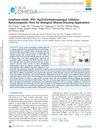 22 citations
,
September 2019 in “ACS omega”
22 citations
,
September 2019 in “ACS omega” The new nanocomposite films are stronger, protect against UV, speed up wound healing, and are antibacterial without being toxic.
 September 2023 in “HAL (Le Centre pour la Communication Scientifique Directe)”
 Peptide nanoparticles can effectively deliver CRISPR-Cas9 to target KRAS mutations in cancer.
December 2025 in “Fertility and Sterility” Both LNG-IUD and systemic progestins are effective for fertility-sparing treatment, but close monitoring is needed due to recurrence risk.
January 1980 in “Lluc: revista de cultura i d'idees” Agaricus bisporus β-Glucan particles could effectively treat cervical cancer and offer antimicrobial and antioxidant benefits.
4 citations
,
January 1886 5 citations
,
July 2025 in “Nutrients” Nanotechnology can improve food safety, nutrition, and health, but safety and regulation challenges need addressing.
26 citations
,
March 2023 in “Food Science and Biotechnology”  20 citations
,
February 2013 in “Nutrition”
20 citations
,
February 2013 in “Nutrition” Selenium-enriched green tea might be a safe prebiotic for gut health.
1 citations
,
February 2020 in “The Journal of clinical investigation/The journal of clinical investigation” Certain cancer drugs interact with skin bacteria to cause acne-like rashes.
 October 2018 in “Exercise Biochemistry Review”
 Aerobic exercise helps protect the intestines by improving their barrier function.
37 citations
,
August 2019 in “Frontiers in Microbiology” Staphylococcus epidermidis A/C strains are more antibiotic-resistant and infection-adapted, while B strains thrive in hair follicles.
 25 citations
,
August 2007 in “Molecular Therapy”
25 citations
,
August 2007 in “Molecular Therapy” Researchers found a safe and effective way to pick genetically modified skin cells with high growth potential using CD24.
October 2023 in “Frontiers in Pharmacology” Research on HIV-1 capsid inhibitors has progressed significantly, with the U.S. leading in contributions.
4 citations
,
November 2024 in “Nano Biomedicine and Engineering” Jackfruit leaf-derived silver nanoparticles in gel form effectively fight infections, especially against E. coli.
5 citations
,
April 2022 in “The journal of investigative dermatology/Journal of investigative dermatology” A new therapy for a skin blistering condition has not been developed yet.
8 citations
,
April 2012 in “Laser Physics Letters” Antiseptic particles penetrate deeper into hair follicles than non-antiseptic ones.
October 2022 in “Hair Transplantation” Ensuring safety in hair transplant practices requires following OSHA rules, preoperative screenings, and state regulations.
1 citations
,
April 2024 in “Pathogens” A pet ferret had a serious infection from Mycobacterium xenopi, which can spread to humans.