15 citations
,
July 2022 in “Biomedicines” UGRSKIN absorbs UV like native skin after 21-28 days, making it potentially suitable for clinical use.

Mechanical surface cues can control macrophage behavior for better immunotherapy and tissue healing.

Regenerative cosmetics can improve skin and hair by reducing wrinkles, healing wounds, and promoting hair growth.
 September 2012 in “Faculty Opinions – Post-Publication Peer Review of the Biomedical Literature”
 Scientists successfully created fully functional hair follicles using bioengineering methods and stem cells.
 2 citations
,
January 2015 in “Nihon Rinshō Men'eki Gakkai kaishi”
2 citations
,
January 2015 in “Nihon Rinshō Men'eki Gakkai kaishi” Scientists developed a method to regenerate salivary glands using stem cells.
32 citations
,
September 2003 in “European journal of oral sciences” People with ectodermal dysplasias often have reduced saliva production and should get saliva tests.
7 citations
,
January 2024 in “Burns & Trauma” Sebaceous gland organoids could improve skin regeneration and treatment.
 18 citations
,
April 2014 in “Stem cells”
18 citations
,
April 2014 in “Stem cells” The study found stem cells in minor salivary glands that can differentiate and are involved in tumor formation when exposed to tobacco.
26 citations
,
September 2023 in “Bioengineered” Brown seaweed oligosaccharides have health benefits and potential uses in food and medicine.
13 citations
,
February 2023 in “Biology” Cell extracts may effectively and safely repair radiation-damaged salivary glands.
5 citations
,
July 2022 in “Radiation Research” The mouse model helps study and develop treatments for radiation-induced saliva reduction.
9 citations
,
March 2022 in “Military Medical Research” Small molecules can help turn skin cells into sweat gland-like cells for potential skin repair.
1 citations
,
June 2011 in “대한구강악안면외과학회지” A woman had a cyst in her salivary gland, likely from Botox, which was removed and confirmed as an epidermoid cyst.
 3 citations
,
May 2013 in “Pediatric Dermatology”
3 citations
,
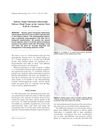
May 2013 in “Pediatric Dermatology” A newborn girl had a rare case of salivary gland tissue on her chest, which was safely removed.
March 2024 in “International journal of molecular sciences” Meibomian glands are highly specialized and differ significantly from other sebaceous glands in structure and function.
41 citations
,
July 2016 in “Radiation Research” Radiation damages salivary glands by harming blood vessels, but antioxidants might help protect them.
 13 citations
,
October 2020 in “Journal of Neural Transmission”
13 citations
,
October 2020 in “Journal of Neural Transmission” CD34-positive cells help repair and form new blood vessels in salivary glands after radiation.
 5 citations
,
April 2021 in “Biomedicines”
5 citations
,
April 2021 in “Biomedicines” The engineered skin substitute helped grow skin with hair on mice.
 31 citations
,
May 2019 in “Nature communications”
31 citations
,
May 2019 in “Nature communications” Single Blimp1+ cells can create functional sebaceous gland organoids in the lab.
 9 citations
,
May 2010 in “Journal of Investigative Dermatology”
9 citations
,
May 2010 in “Journal of Investigative Dermatology” Human sebaceous glands can grow back in skin grafts on mice and work like normal human glands.
January 2009 in “Xumu shouyi xuebao” Sheep cells were successfully modified to include a spider silk protein gene.
 41 citations
,
June 2013 in “PLOS ONE”
41 citations
,
June 2013 in “PLOS ONE” Engineered skin substitutes can grow hair but have limitations like missing sebaceous glands and hair not breaking through the skin naturally.
 5 citations
,
January 2011 in “Journal of the Korean Association of Oral and Maxillofacial Surgeons”
5 citations
,
January 2011 in “Journal of the Korean Association of Oral and Maxillofacial Surgeons” A woman developed a cyst in her parotid gland after a botox injection, which was successfully removed with surgery.
January 1990 in “UCL Discovery (University College London)” The guinea pig α-lactalbumin gene was successfully expressed in the mammary glands of transgenic mice.
22 citations
,
July 2016 in “Cellular and Molecular Life Sciences” Genetic changes in mice help understand skin and hair disorders, aiding treatment development for acne and hair loss.
 February 2024 in “International Journal of Biological Macromolecules”
 The study created a new type of microsphere that effectively regrows hair.
January 2011 in “Zhongguo nongye Kexue” Transgenic sheep cells with spider silk gene were successfully created for future sheep hair expression.
 January 2026 in “Open Life Sciences”
 Exosomes from stem cells help repair irradiated salivary glands by boosting cell growth.
8 citations
,
February 2025 in “Cell Systems” Engineered bacteria can deliver antioxidants to protect skin.
28 citations
,
October 2023 in “Trends in biotechnology”